
Domaine Slapšak is a producer of high-quality sparkling wines, made using the traditional method, just like in Champagne. Their specialty is blending classic Champagne grape varieties with the local Žametna Črnina grape. The winery has been producing wines for several generations, but it is only recently that they have started producing sparkling wines—and there is a special story behind this.
The region
The winery is located in the Dolenjska Hills in the Dolenjska (Lower Carniola) region, an area of gently rolling hills renowned for its wine production. The region is known for its picturesque vineyards and several grape varieties that are unique to the area. The soil, composed of marl and sandstone, provides excellent conditions for growing grapes.
Domaine Slapšak
This region is not traditionally known for producing sparkling wines, but chance and a desire for innovation led to the discovery that excellent sparkling wines can be made here.
When daughter Urška met her partner, Frenchman François Botton, an expert in the production of sparkling wines using the traditional method, things began to change. Together with the family, François discovered that the local grape Žametna Črnina is very well-suited for sparkling wine production. The brand name Domaine Slapšak reflects a blend of French winemaking techniques and Slovenian traditions.
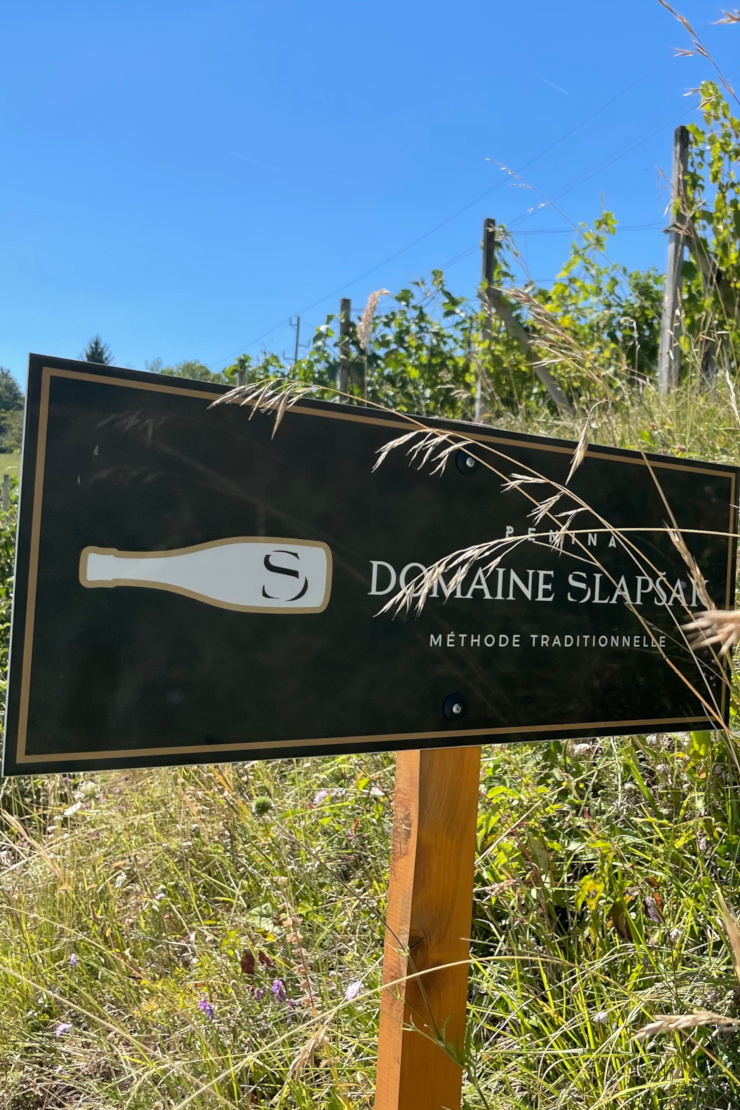
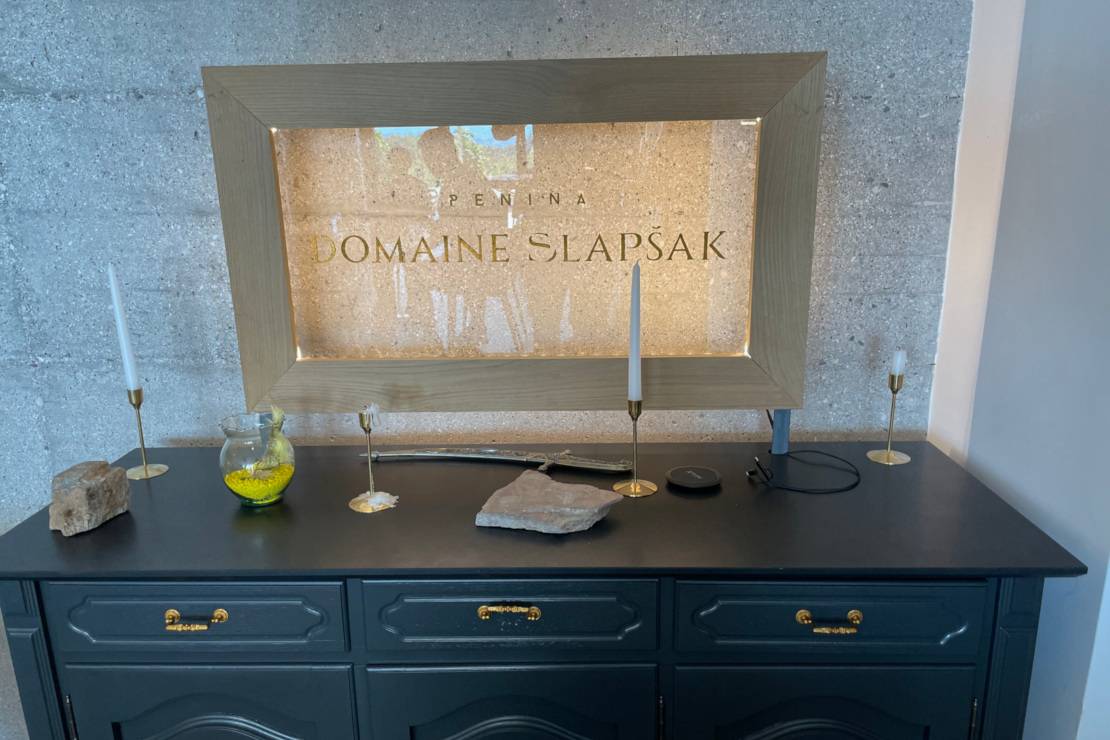
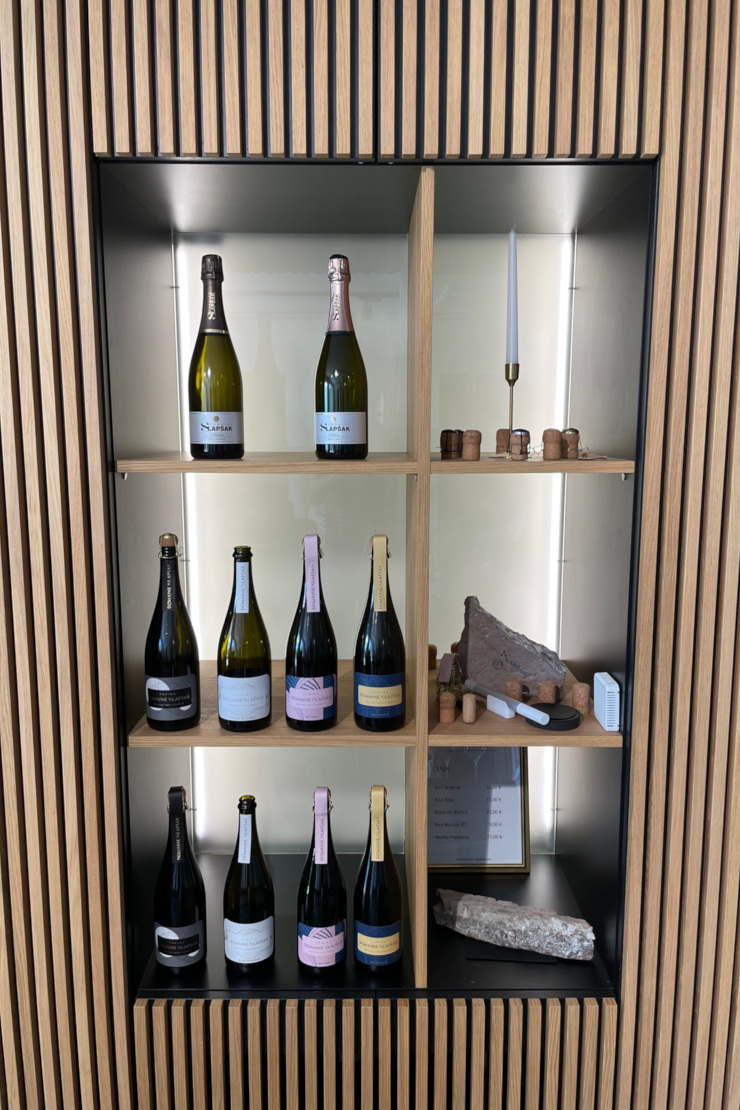
Given our strong interest in wine, visiting the winery on July 21, 2022, was the perfect birthday gift.
If you plan to visit, you can email info@domaine-slapsak.com or call +386(0) 40 221 908.
The wines
In our opinion Domaine Slapšak is one of the best producers of sparkling wines in Slovenia. We have tried most of their wines.
- Penina Brut Réserve - A blend of 30% Pinot Noir, 30% Chardonnay, and 40% Žametna Črnina. Well-balanced with hints of yeast, toast, nuts, and citrus, with a pleasant finish and fine bubbles.
- Penina Brut Rosé - Made from the local Žametna Črnina grape. Notes of strawberry, green apple, and brioche. Well-balanced, with a slight emphasis on acidity.
- Penina Blancs de Blancs - Made from Chardonnay. Hints of green apple, citrus, and brioche, with noticeable acidity.
- Penina Brut Nature ŽČ - Aromas of green apple, minerals, and a touch of yeast. Crisp and acidic. A delightful wine.
- Modra Frankinja - 100% Blaufränkisch. We haven’t tried this wine yet—a perfect reason to visit again.
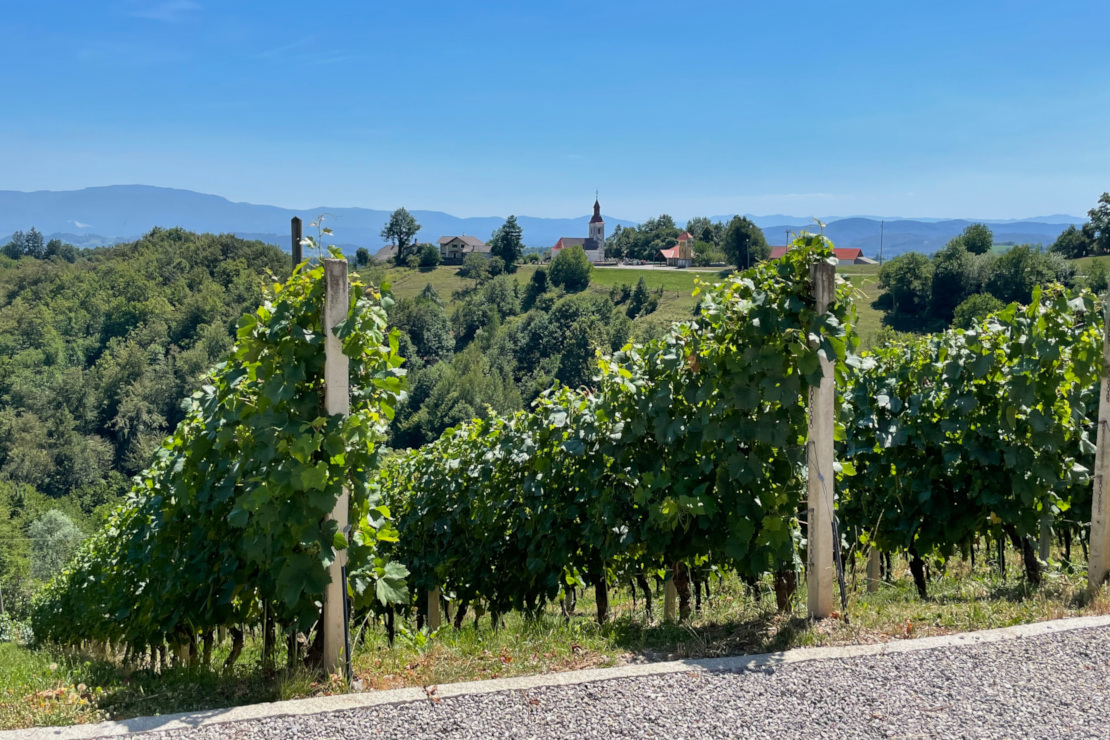
The grapes
The Dolenjska region is known for several grape varieties unique to the area. Some of these grapes are used to produce the local Cviček wine.
Red grapes
- Žametovka (or Žametna Črnina) - The most common red grape in the region, used in the local Cviček wine.
- Modra Frankinja (Blaufränkisch) - Another important grape in Dolenjska. Anyone familiar with Austrian wines will recognize this variety.
- Portugalka (Blauer Portugieser) - A local grape often used in Cviček.
- Modri Pinot (Pinot Noir) - An international grape that is also commonly grown in the region.
White grapes
- Kraljevina - an important white grape, often used in Cviček.
- Laški Rizling (Welschriesling) - widely grown in the region and most often used in blends.
Places to stay
If you want to explore the area, here are some excellent places to stay.
- Hotel Grad Otočec - Beautifully located in a castle on an island in the Krka River.
- Gostilna Repovž - A combination of restaurant and small hotel in the village of Šentjanž, not far from Domaine Slapšak. Staying here gives you the opportunity to explore the surroundings of Domaine Slapšak and the wider Dolenjska region.
- Villas and apartments - there are also many villas and apartments available for rent in the area.
Where to Eat
If you’re interested in enjoying good food in the area, here are two recommended restaurants.
- Gostilna Repovž - Located not far from Domaine Slapšak, this restaurant uses only local suppliers for its ingredients and wines, including Domaine Slapšak itself. You can book a table on their website.
- Gostilna Grad Otočec - A restaurant set in a castle on a small island in the Krka River. Featured in the Michelin Guide, it focuses on organic and locally grown ingredients, some of which are cultivated by the restaurant itself.


