
Ending the day in Piran after a full day along the Slovenian Adriatic coast is one of our favorite traditions. We do it almost every year when we are in Slovenia. There is much to love about Piran—the architecture, the narrow alleys, and, above all, enjoying a good dinner along the Prešeren Embankment while watching the sun set over the sea. Piran is unique in Slovenia.
The town of Piran is rich in history, culture, and hospitality. Its architecture is predominantly Venetian, with elements of Austro-Hungarian influence, and it is one of the best-preserved medieval towns along the Adriatic coast. The narrow alleys between the houses were designed to provide shade from the sun, and it is easy to lose your way among them like in a labyrinth. Fortunately, the town is compact, so you quickly find your way out again. Piran is also one of the best destinations in the region for seafood.
How to Get to Piran
Piran is about 120 kilometers from Ljubljana and can be reached by car in approximately 1 hour and 20 minutes. Most of the journey follows the A1 motorway. Piran is a car-free town, and only residents are permitted to drive in and out. Visitors should park outside the town. The best options are the Fornače parking garage or the outdoor Piran parking lot along the waterfront. The parking garage is recommended, as cars can become very hot when parked outside.
From the parking areas, free shuttle buses run to Tartini Square. You can also choose to walk and explore the town on foot through its narrow alleys. The distance from the parking area to Tartini Square is about 900 meters.
If you are reading this in our app, you can select Show on map in the upper-right menu to get directions from your current location to Piran.
Piran History
Piran is a town rich in history, situated at the crossroads of different cultures and once at the intersection of several empires.
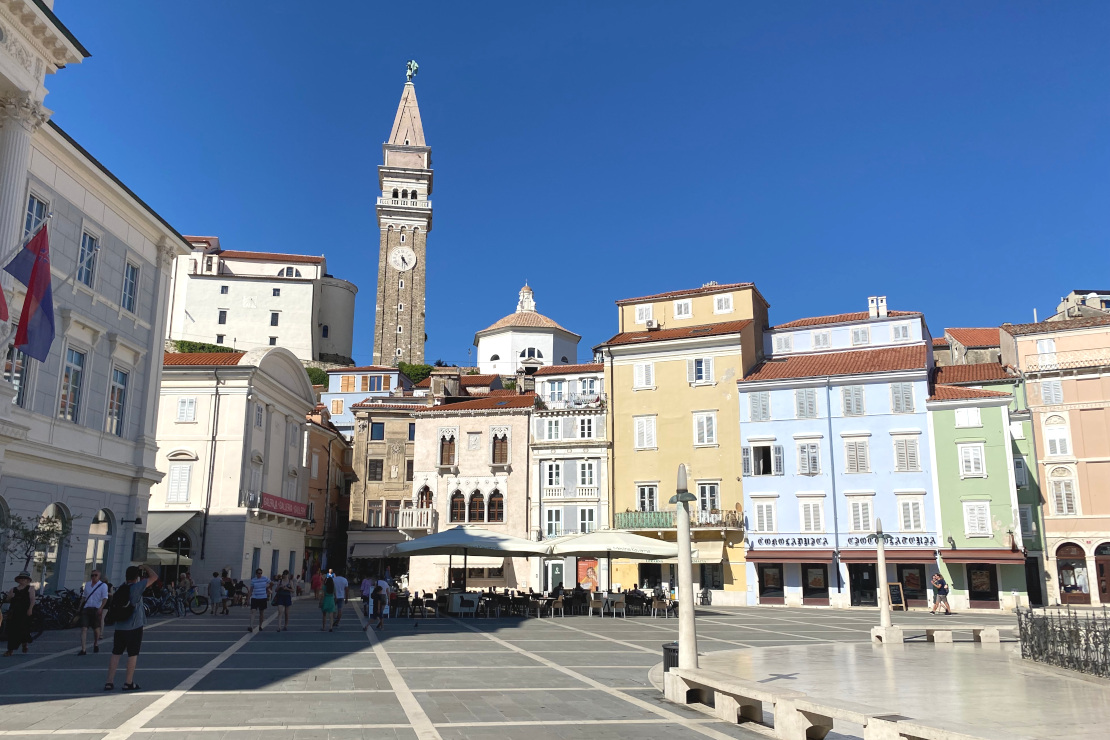
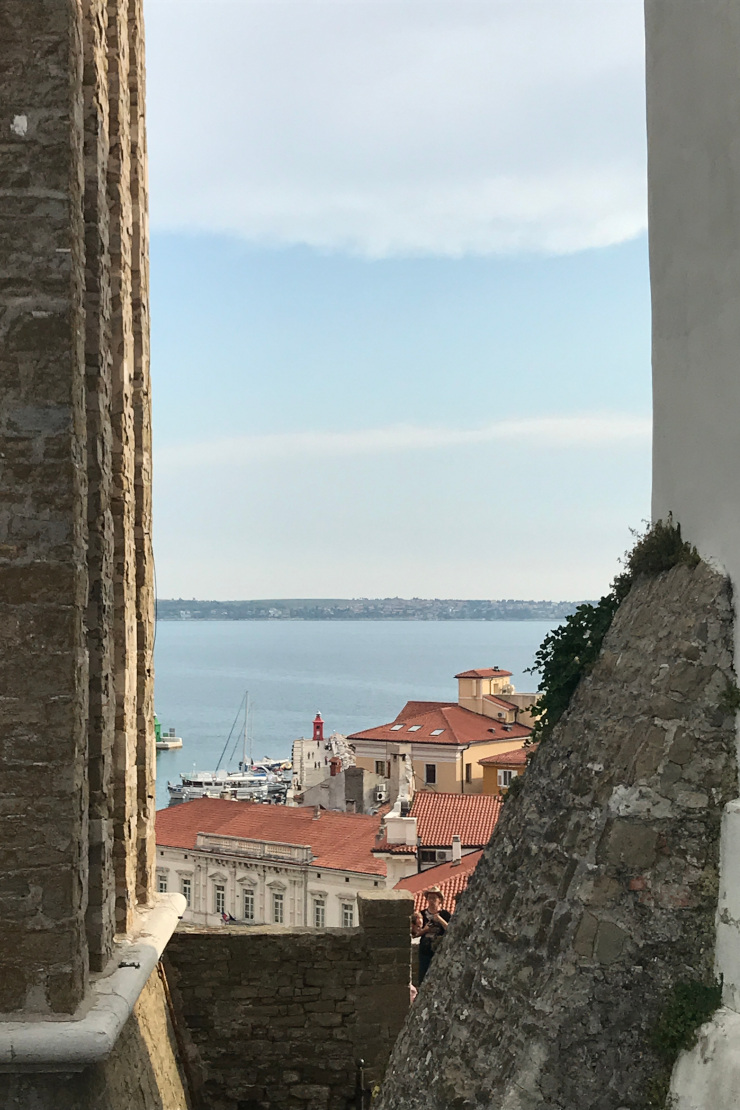
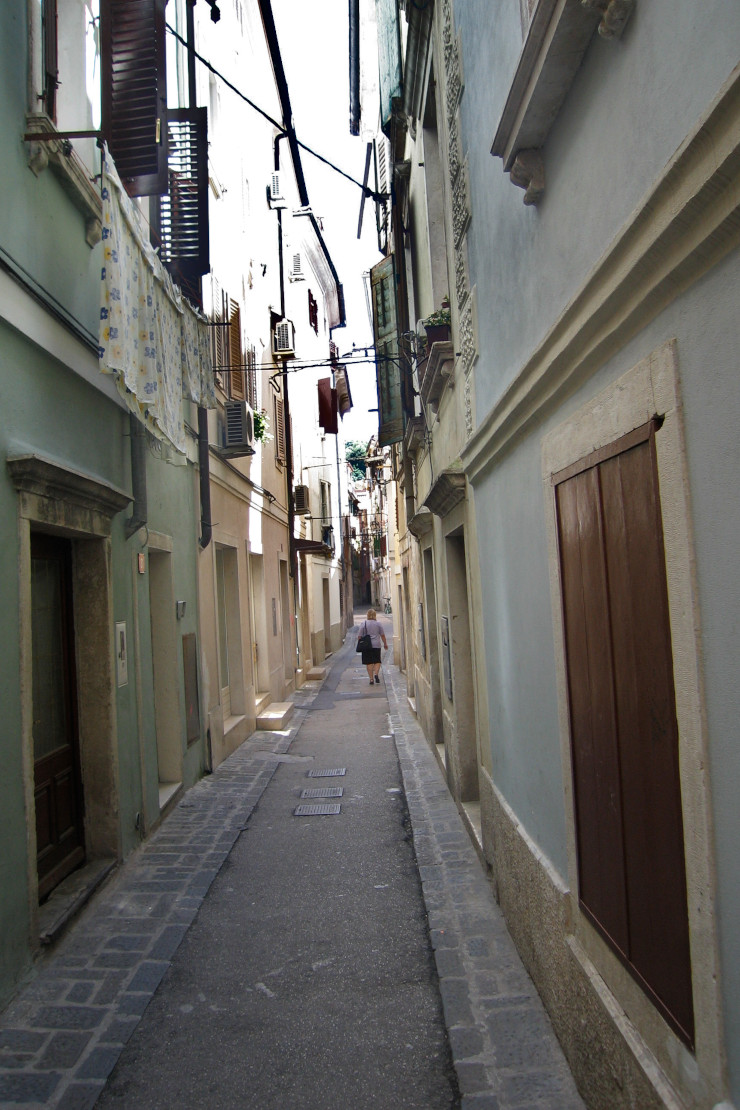
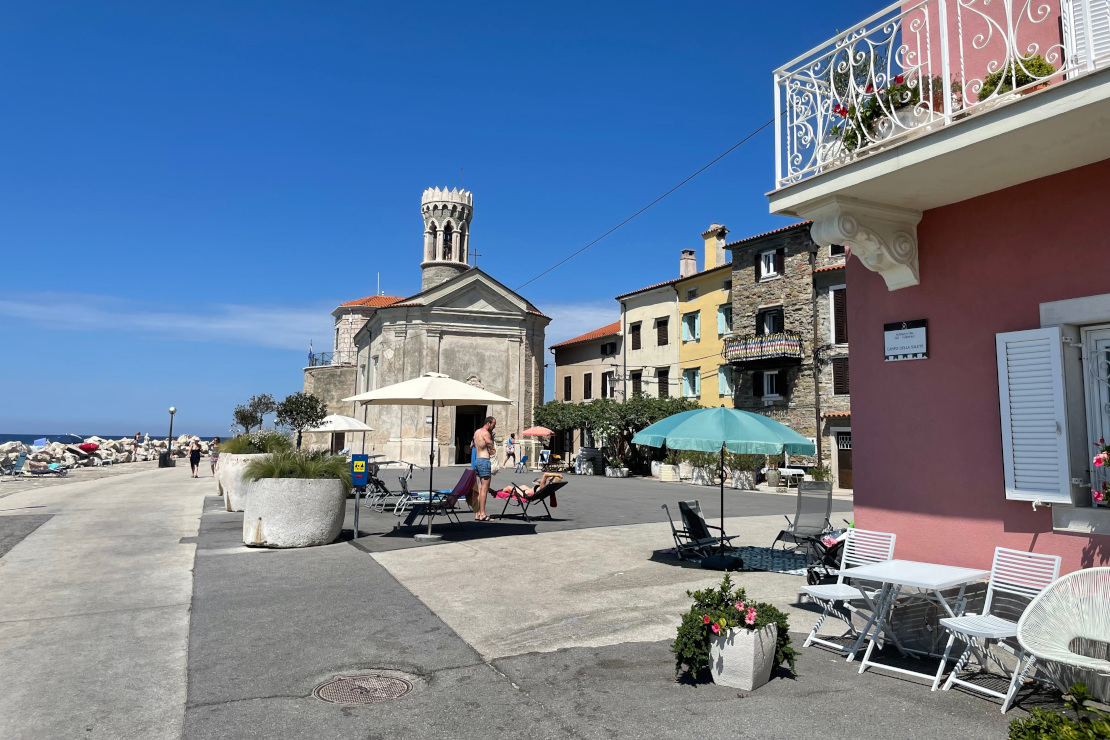
Piran was already settled during the Roman period. From 1283 to 1797, it was part of the Venetian Republic. Toward the end of this period, Piran faced increasing competition from Trieste, which was part of the Austro-Hungarian Monarchy and located on the opposite side of the Bay of Trieste.
In 1797, Piran came under the rule of the Austro-Hungarian Monarchy and remained so until the First World War, except for the years 1806–1814, when it was part of the Napoleonic Empire. During this period, the town was predominantly Austro-Hungarian, with approximately 80% Italians and a 20% Slovenian minority. After the First World War, Piran was ceded to Italy.
After the Second World War, the Istrian coast was divided into zones, with Piran included in Trieste Zone B. In 1954, this zone was assigned to Yugoslavia. Until that time, Italian had been the dominant language. After Piran became part of Yugoslavia, most Italians moved away, as happened in much of Croatian Istria, while Slovenians moved into the town during the same period.
Since Slovenia gained independence in 1991, Piran has been part of Slovenia. Italian influences remain, and the entire Slovenian Istrian coast is bilingual. The town is still strongly shaped by the architecture and culture of the Venetian Republic, as well as the period under the Austro-Hungarian Monarchy.
Giuseppe Tartini
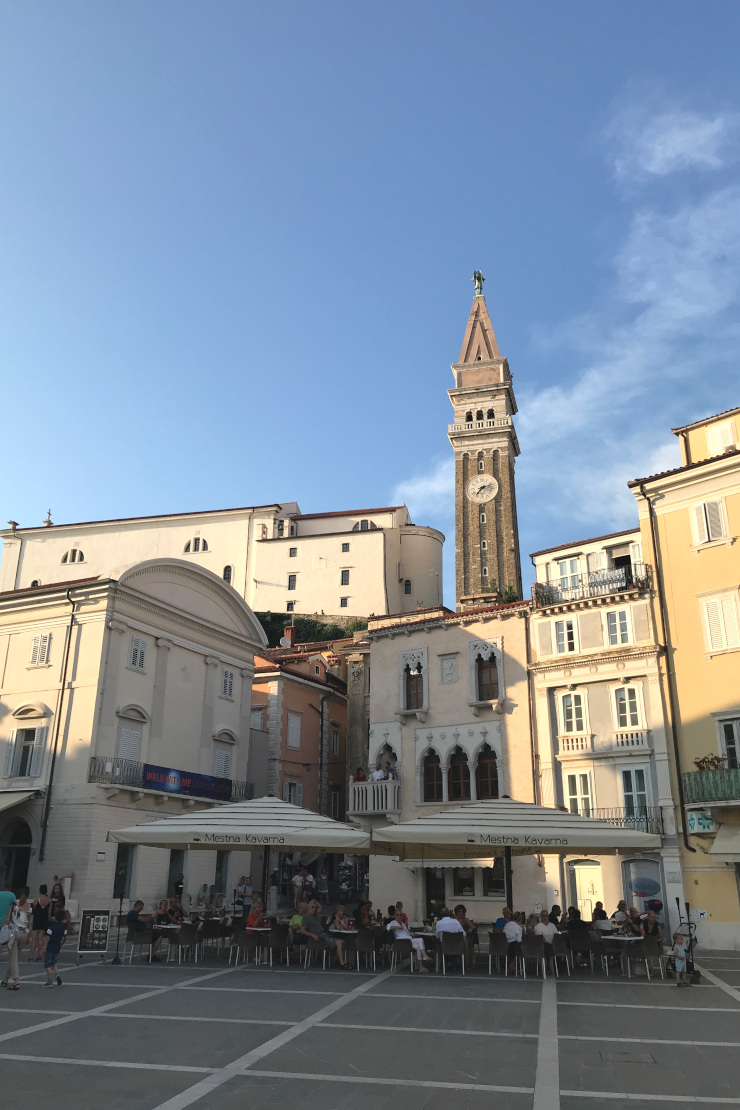
The most famous person from Piran is Giuseppe Tartini, an Italian composer born in the town in 1692. Although he worked mainly in Genoa, many places in Piran are named after him, most notably Tartini Square in the town center, where a statue of him stands.
Sunsets
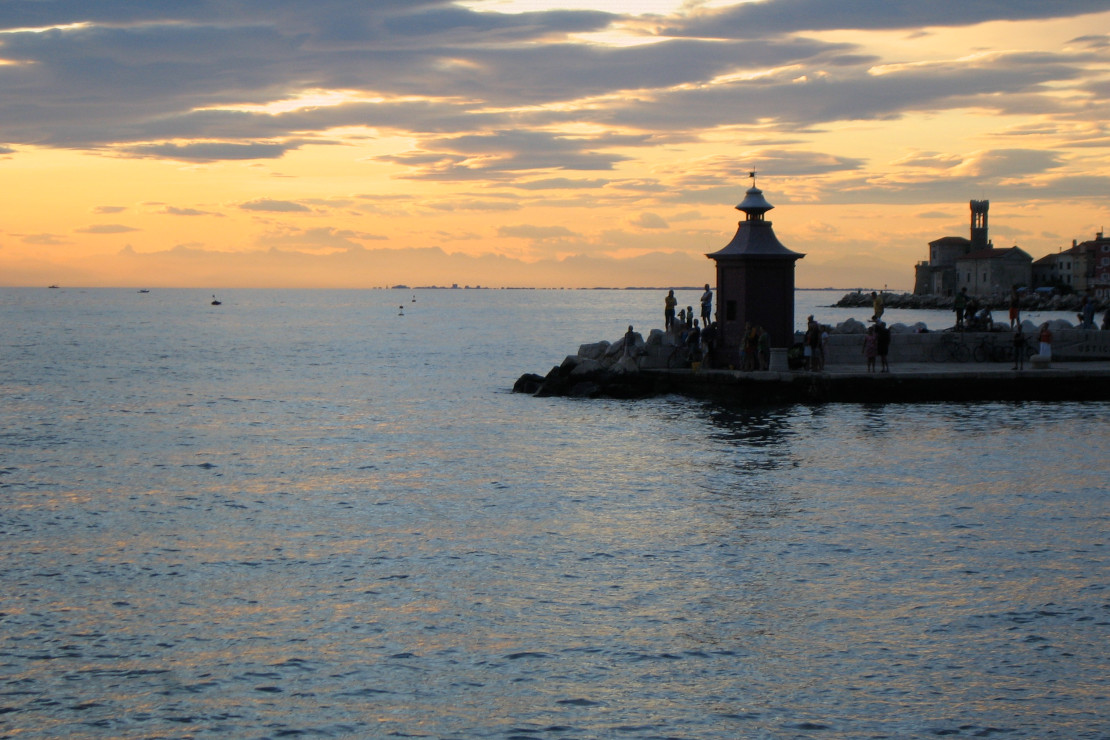
A major reason for us to visit Piran is to watch the fantastic evening sunset. On clear days, you can see the sun set behind the silhouettes of the Italian Alps, including the Dolomites, as well as over the Adriatic Sea. The town of Grado, on the opposite side of the Bay of Trieste, is also visible. Sitting at a restaurant along the Prešeren Embankment and enjoying the sunset with this backdrop is pure pleasure.
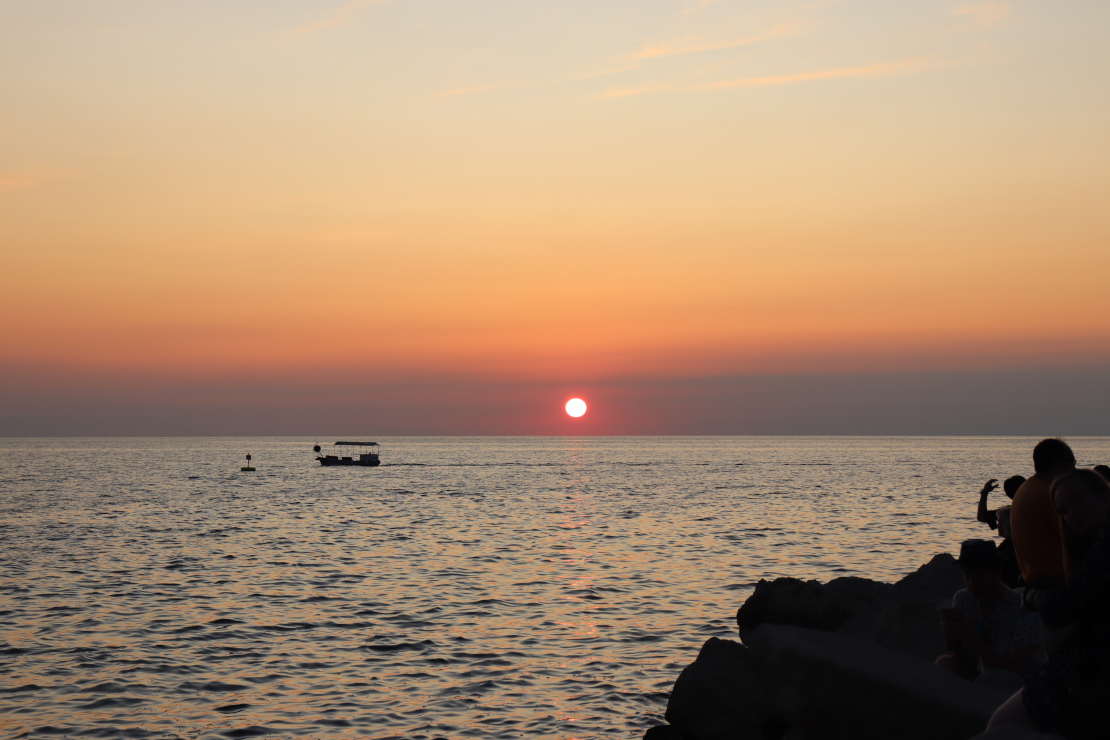
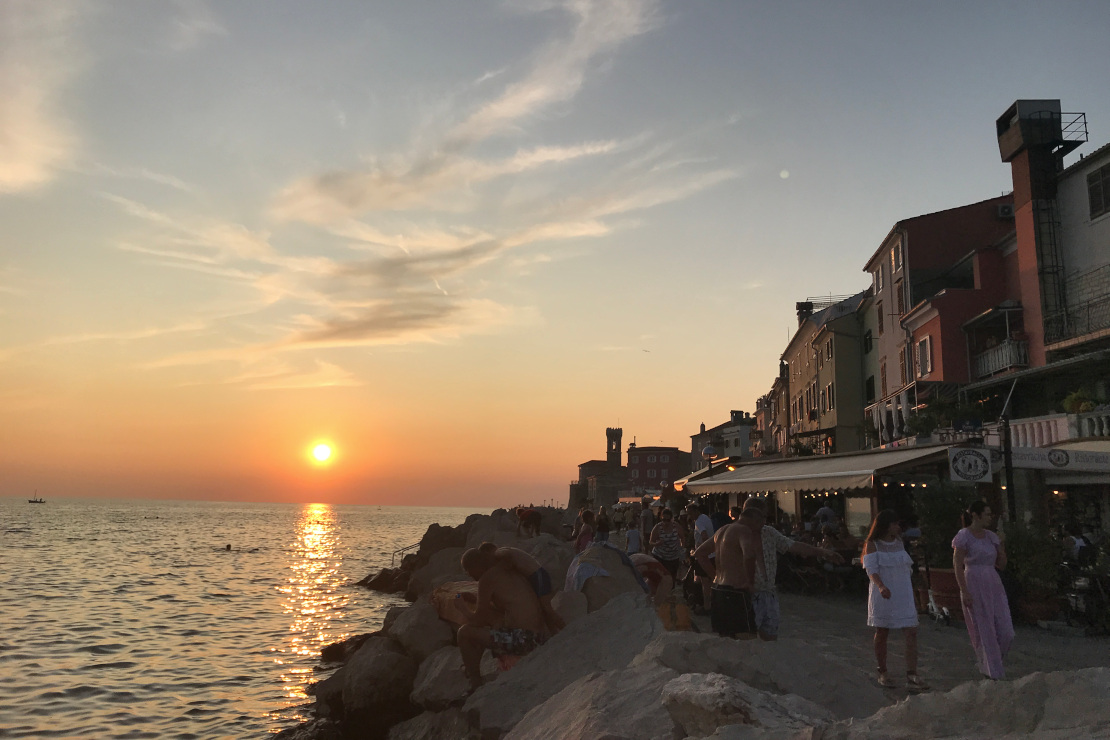
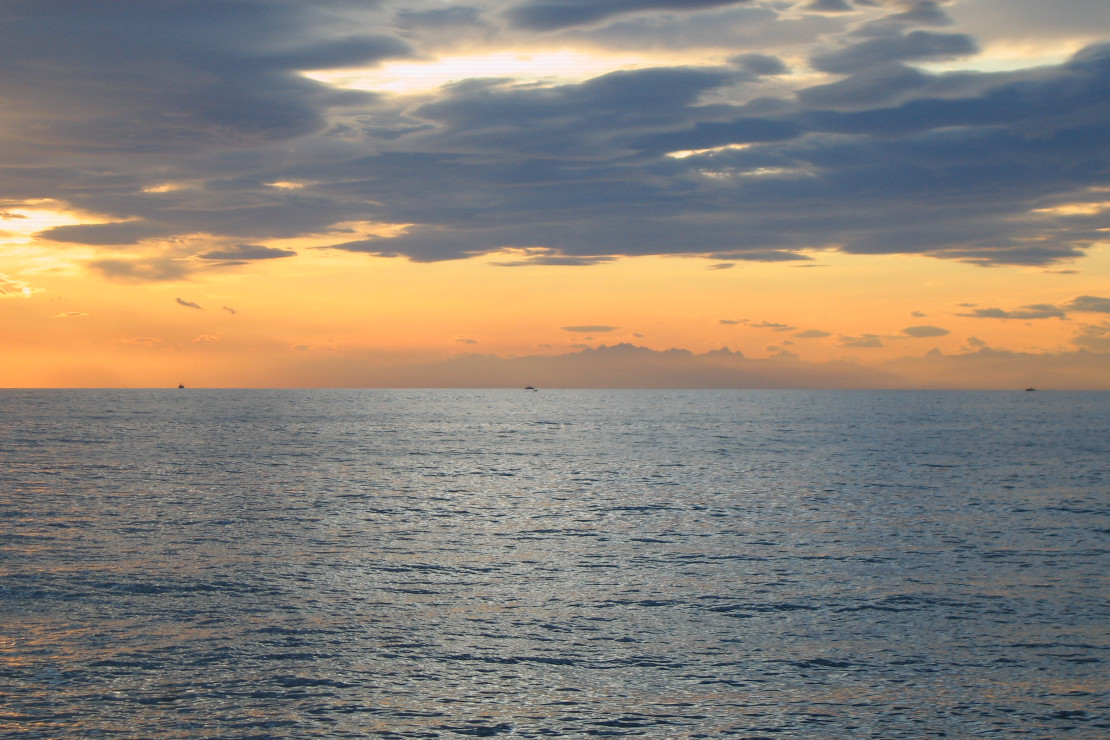
From Savudrija, on the opposite side of Piran Bay in Croatia, there is a fantastic view of Piran with the Julian Alps behind it, including Slovenia’s highest peak, Triglav. The blog will return with pictures of this view in a future post.
Interesting places
In fact, the whole of Piran is fascinating. You can wander down any narrow street and discover hidden gems. We recommend taking the time to explore the town on foot—don’t be afraid to get a little lost in the alleys. Below are some of the city’s most important sights.
- Tartini square - Tartinijev Trg in Slovenian, or Piazza Tartini in Italian, is the central square of Piran, dedicated to the town’s most famous native, the composer Giuseppe Tartini. The square is surrounded by several restaurants and cafés and hosts a rich cultural life, with evening performances—especially during the summer months.
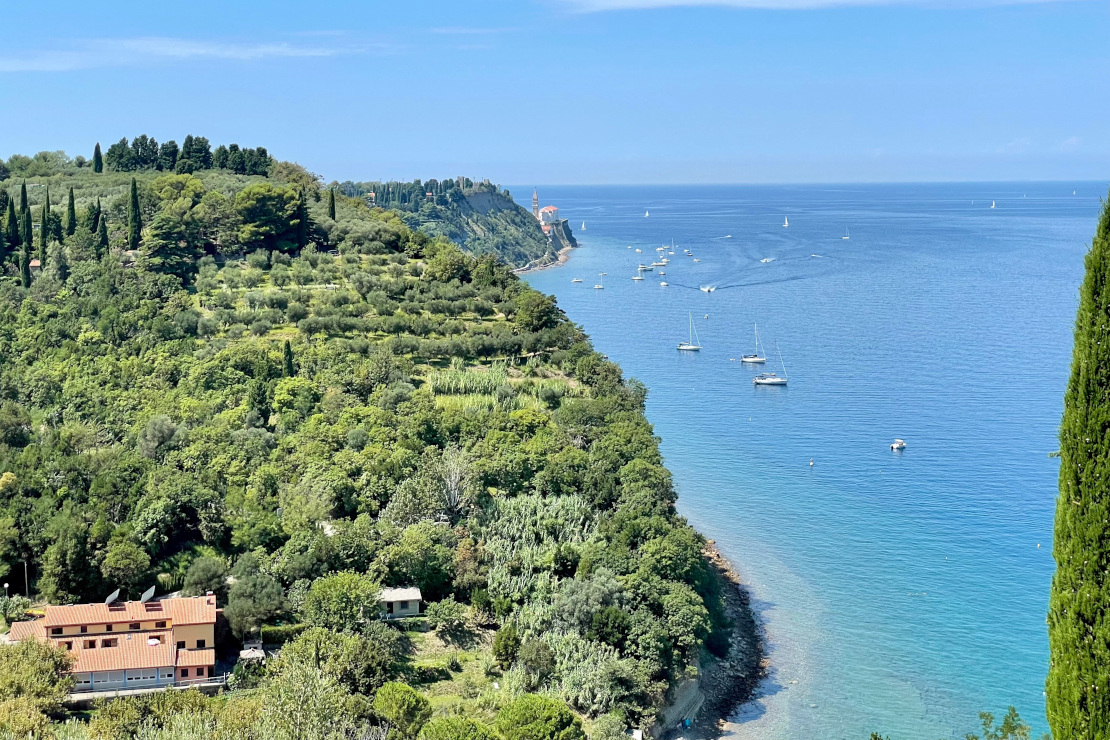
- Prešeren Embarkment - The promenade circles all the way around Piran and offers fantastic views of the Adriatic Sea. At the far end of the cape, you can watch the spectacular evening sunset. Along the entire promenade, there are plenty of restaurants and cafés to choose from.
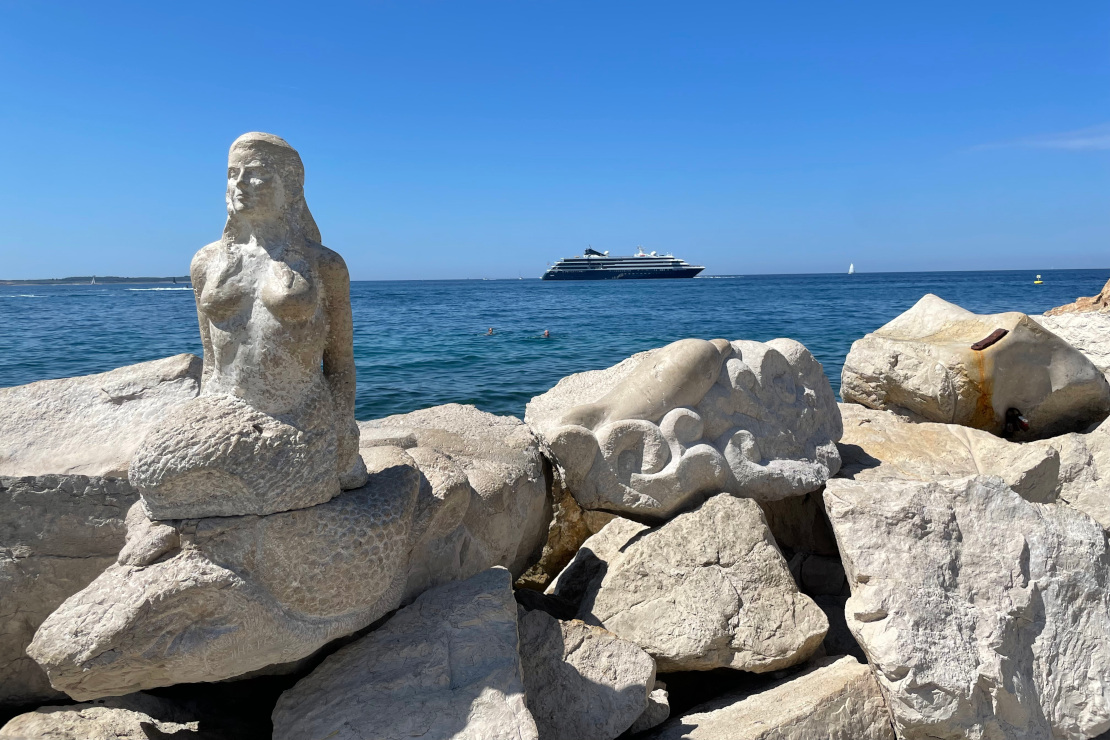
- Piran Mermaid - At the far end of the cape stands the statue of the Piran Mermaid.
- Piran Lighthouse - Also at the far end of the Piran cape is the majestic 19th-century lighthouse, which played a key role in navigation on the Adriatic Sea. The lighthouse is open to visitors.
- St. George’s Parish Church - The church is located high on a hill and is visible from much of Piran. Built in the Venetian Renaissance style, its construction began in 1592. From the church’s courtyard, there is a fantastic view of the town and the Adriatic Sea.
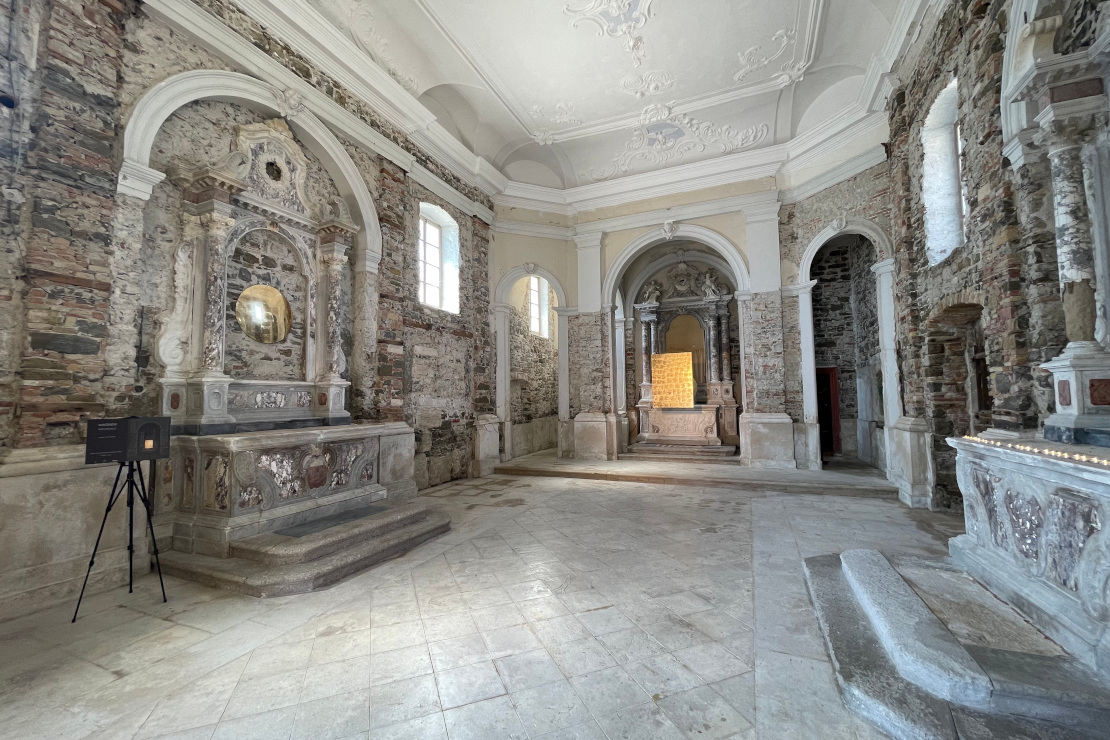
- Minorite Monastery - Construction of the monastery began in 1301 and was completed in 1318. From 1954 to 1990, the monastery was nationalized, but it was returned to the Church in 1996 as part of the denationalization process following Slovenia’s independence.
- The Walls of Piran - The walls surrounding Piran were built for defense, primarily against attacks from the Ottoman Empire. The earliest sections date back to the 7th century, and construction and expansion continued during Venetian rule. Large portions of the walls are well preserved and open to visitors.
Where to Stay
Piran offers a wide range of hotels, apartments, and rooms to rent, as it is a popular tourist destination. Below is a selection of accommodations that we recommend.
- Art Hotel Tarini - Art Hotel Tartini is a small boutique hotel, ideally located right at the entrance to Tartini Square.
- Hotel Piran - Hotel Piran is located right on the beach in Piran, at the start of the Prešeren Embankment. It offers fantastic views over Piran Bay.
- Hotel Kempinksi Palace - A five-star luxury hotel in the nearby town of Portorož, dating back to the Austro-Hungarian Monarchy era.
- Villas and apartments - Piran is one of Slovenia’s most popular tourist destinations, with a wide range of private rooms and apartments available for rent.
Where to Eat and Drink
Piran and the nearby town of Portorož offer a number of excellent restaurants. Below is a selection, but don’t hesitate to try others, as most are of high quality.
- Tri Vdove - Restaurant Tri Vdove (Three Widows) has been a favorite for as long as I can remember, and I have visited it many times. It is a straightforward restaurant serving traditional Istrian seafood and is located on the Prešeren Embankment. The highlight is enjoying dinner while watching the sunset over the Adriatic Sea. To book a table, send an email to info@restaurants-portoroz.si or call +386(0) 5 673 02 90
- Rostelin - Rostelin is a popular restaurant, highly recommended for its homemade pasta dishes and traditional Istrian seafood of excellent quality. It is located on 1 May Square. To reserve a table, call +386 (0) 820 05 987.
- Stara Gostilna - Vecchia Osteria (Italian) is a hidden gem between the old houses of Piran and is mentioned in the Michelin Guide. The restaurant serves local Istrian dishes with a modern touch. To complement the meals, there is a large wine cellar with over 500 Slovenian and international wines, allowing you to find the perfect pairing. You can book a table here.
- COB - COB (Cooking Outside the Box) is located in the neighboring town of Portorož, in the upper part of town, offering a fantastic view of Piran Bay. The menu features both meat and fish dishes, focusing on local ingredients and traditional recipes. You can book a table on their website.


