
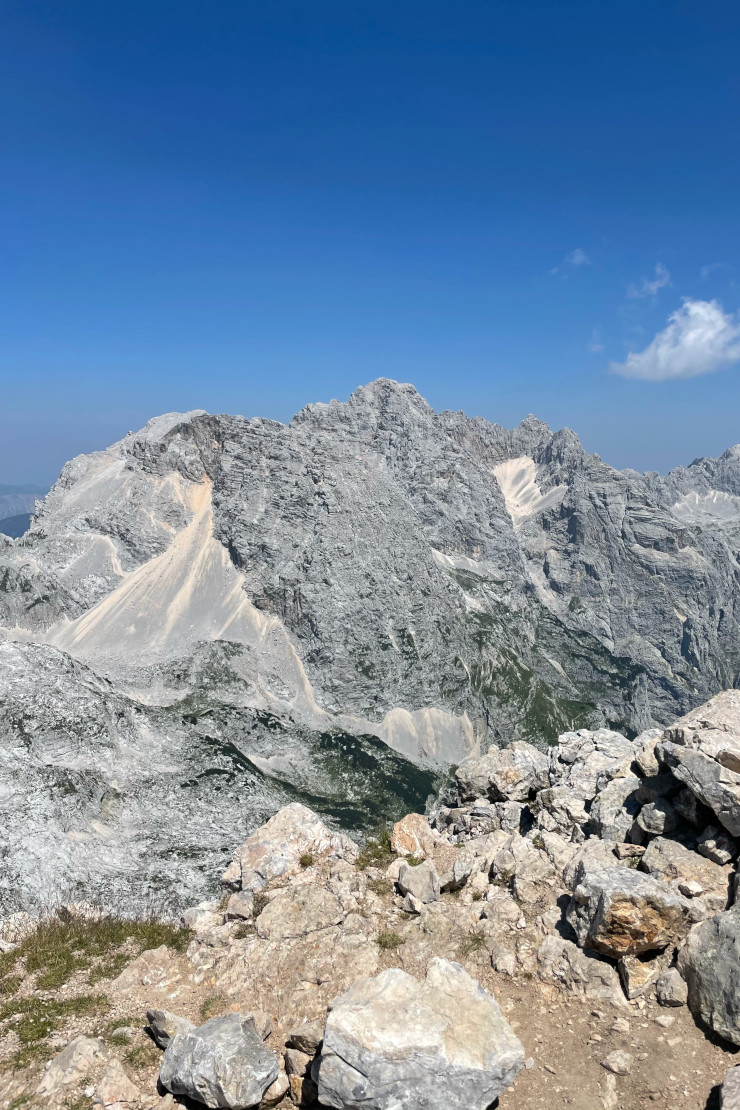
If you’ve done some easier hikes and feel ready to take the next step, Mount Stenar in the Julian Alps could be a great option. Climbing Stenar offers a good mix of challenge and moderate exposure. The route is long but not overly technical, with only one easy via ferrata section. For most of the climb, you’ll be rewarded with fantastic views of the Julian Alps in all directions. The north face of Triglav will be your constant companion, visible all the way from the parking area in the Vrata Valley to the summit of Stenar.
There is no direct explanation of the mountain’s name, but Stenar is likely derived from stena, which means “wall” in Slovenian—probably a reference to its steep northern rock face.
How to Get to Vrata Valley
From Ljubljana, it takes about 1 hour and 15 minutes to drive to the parking area in the Vrata Valley. Currently, only 195 cars are allowed to enter the valley at the same time. An exception is made for guests who have booked accommodation in one of the huts within the valley. If the quota is full, you can park in Mojstrana and take a free bus up to the valley. Bring some cash just in case you can only pay for parking with cash.
Hiking to the top of Stenar
There are several routes to the summit from the Vrata Valley. In the summer of 2022, I climbed to the top via the Sovatna Valley, a steep meadow between Mount Stenar and Mount Pihavec.
The trail is not technically difficult, but you should be in good shape, as the climb takes about 5 hours and 15 minutes to reach the summit and around 3 to 4 hours to descend. The total elevation gain is just over 1,500 meters, from 980 meters in the Vrata Valley to 2,501 meters at the summit.
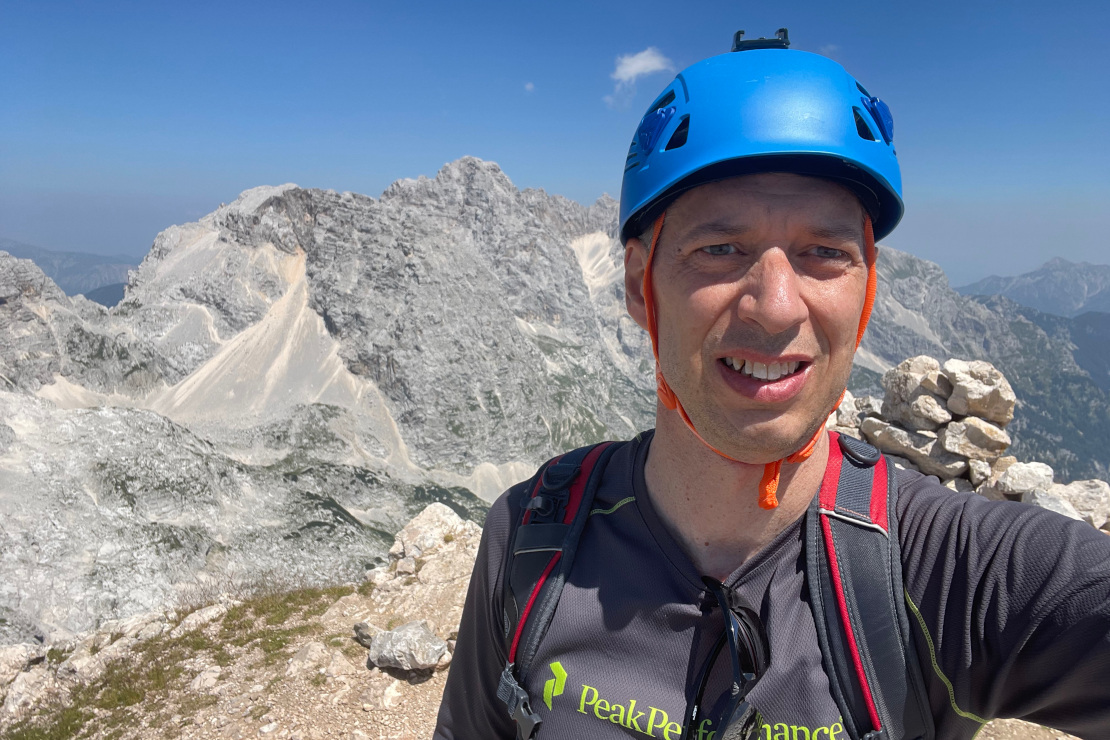
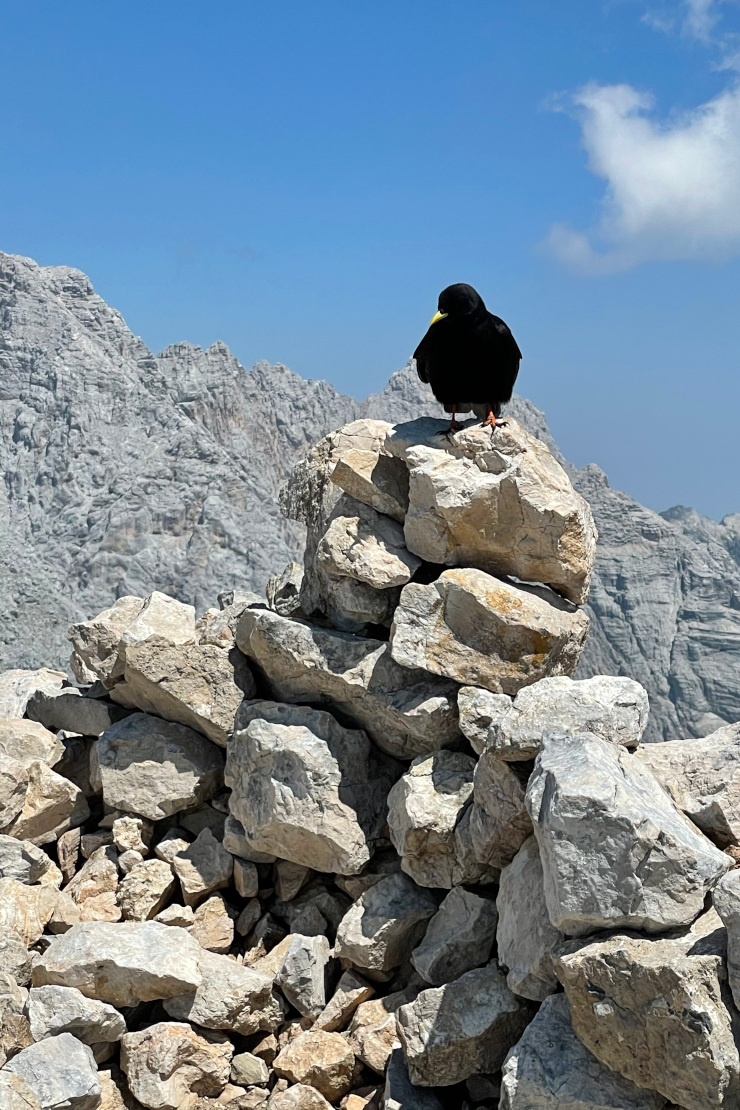
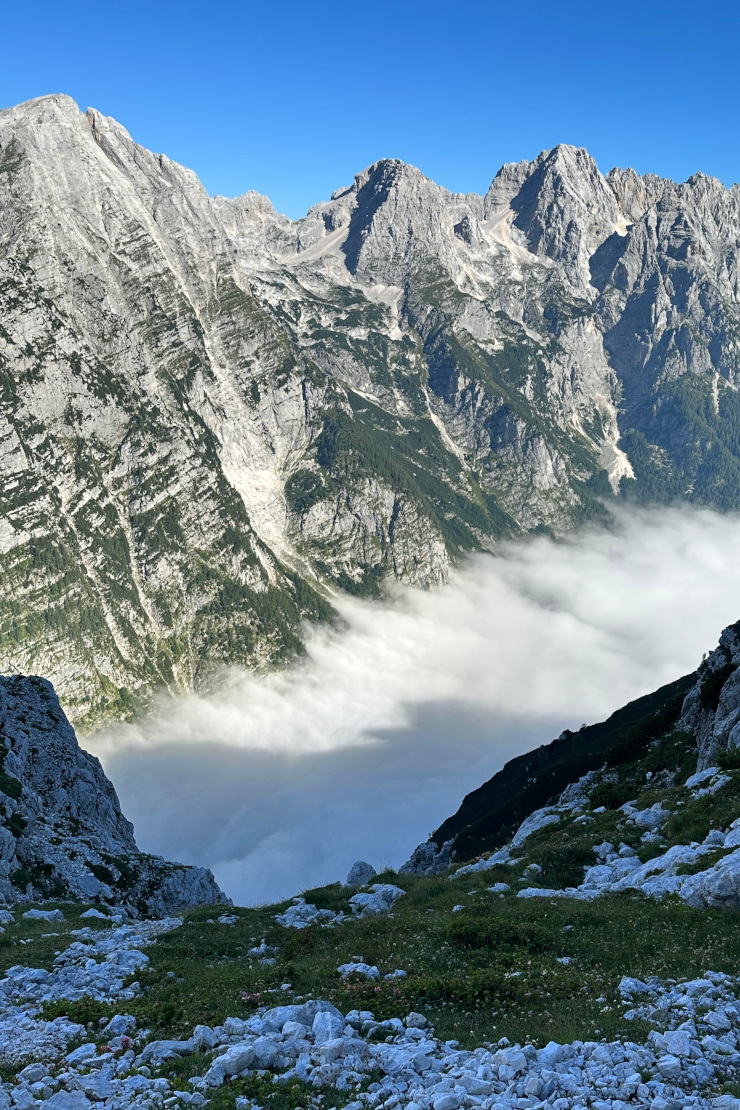
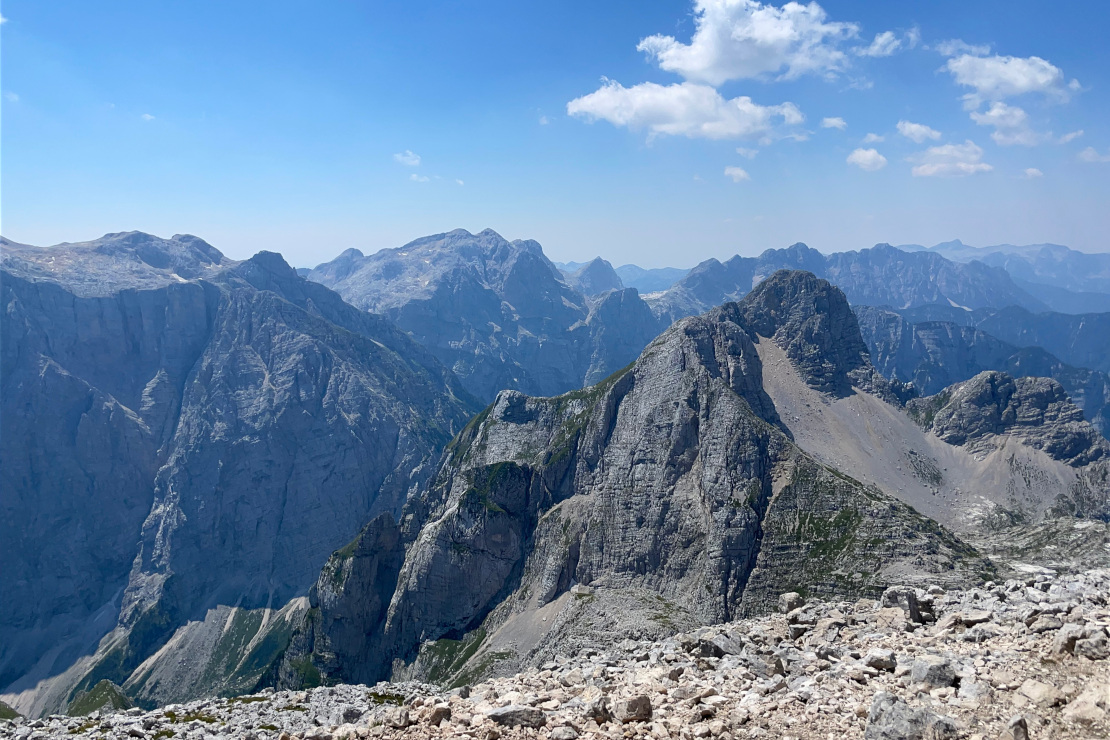
It’s always hard to judge how your pace compares to the official times. When I was younger, it used to take me between half and two-thirds of the suggested time. These days, I tend to be only slightly faster than the official times.
The Path to the Summit
The trail up to Stenar consists of two sections. The first section climbs through the Sovatna Valley to the Dovška Vrata pass and takes about 4 hours. The second section continues from the pass to the summit and takes approximately 1 hour and 15 minutes.
If you are reading this post in our app, you can select Hiking directions in the app’s menu at the top right to view a map with the route highlighted.
Part 1 - Vrata Valley - Dovška Vrata pass (4 hours)
Our hike begins at the parking lot in the Vrata Valley and soon takes us past the Aljaž Hut. We continue straight ahead along a fairly wide gravel road with a gentle upward slope. Along the way, we pass a monument resembling a carabiner, dedicated to the fallen soldiers of the resistance movement during World War II.
We continue straight ahead for a while, then turn right onto the path leading to the Pogačnik Hut. The trail that continues straight heads toward Triglav. From here, the path climbs steeply through a beech forest that gradually thins as we gain altitude. At around 1,300 meters, we emerge onto Sovatna, a steep meadow.
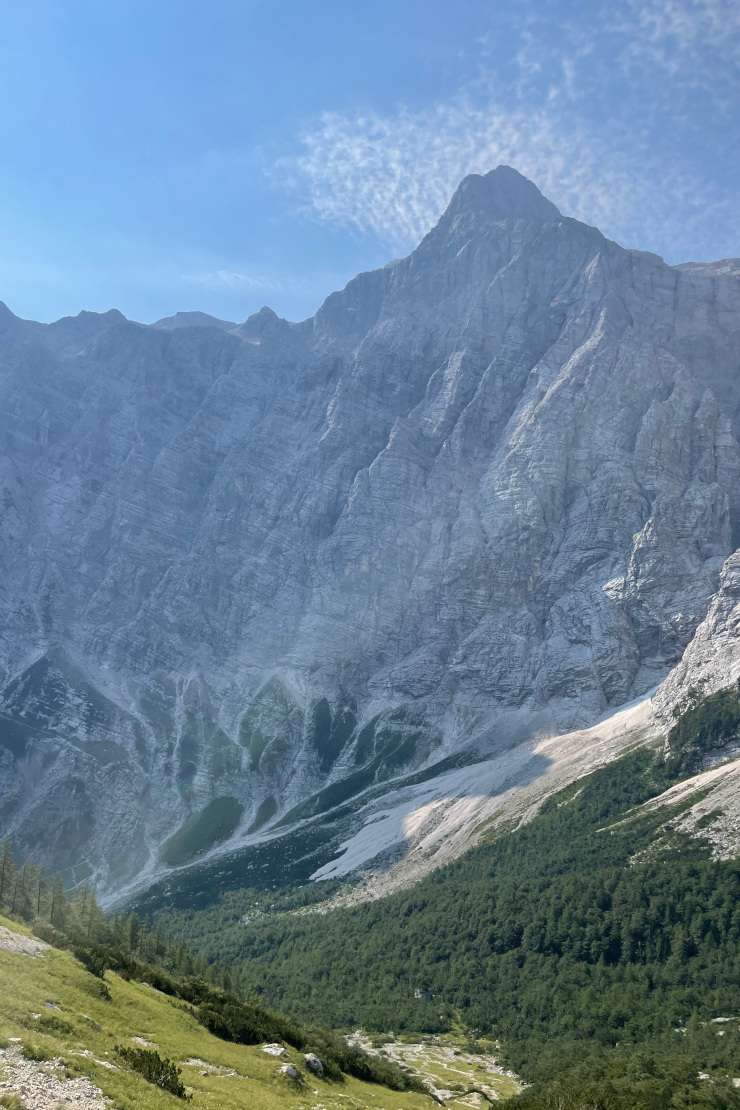
The path zigzags up Sovatna, offering fantastic views of the north face of Triglav along the way. To the right, you’ll see the steep wall of Mount Stenar, and to the left, the rocky face of Pihavec. Toward the end, the meadow transitions into rocky terrain and some gravel, featuring a short via ferrata section.
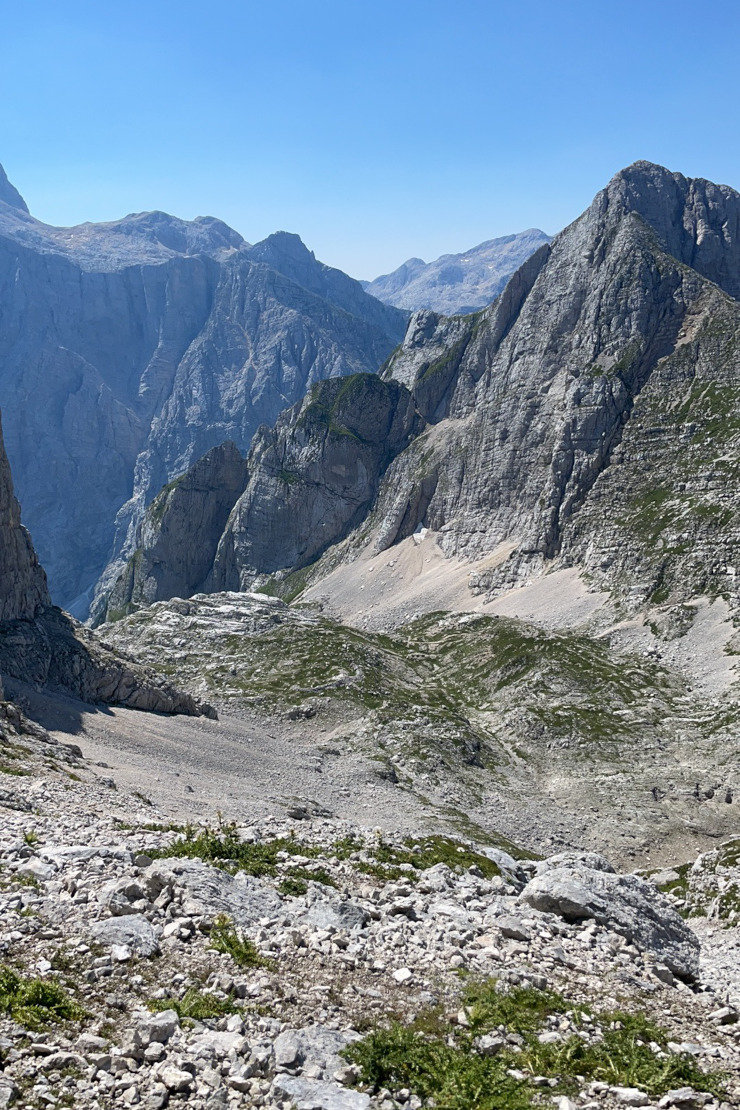
From here, the trail reaches a plateau dotted with smaller valleys. It’s not uncommon to spot herds of chamois in this area.
After about 4 hours of hiking, we reach the Dovška Vrata (Dovška Gate) pass at an altitude of 2,176 meters. Here, the path splits: to the left is the route over Kriški Podi leading to the Pogačnik Hut, while we continue to the right. From this point, it’s approximately 1 hour and 15 minutes of hiking to the summit.
Part 2 - Dovška Vrata pass - Stenar (1 hour 15 minutes)
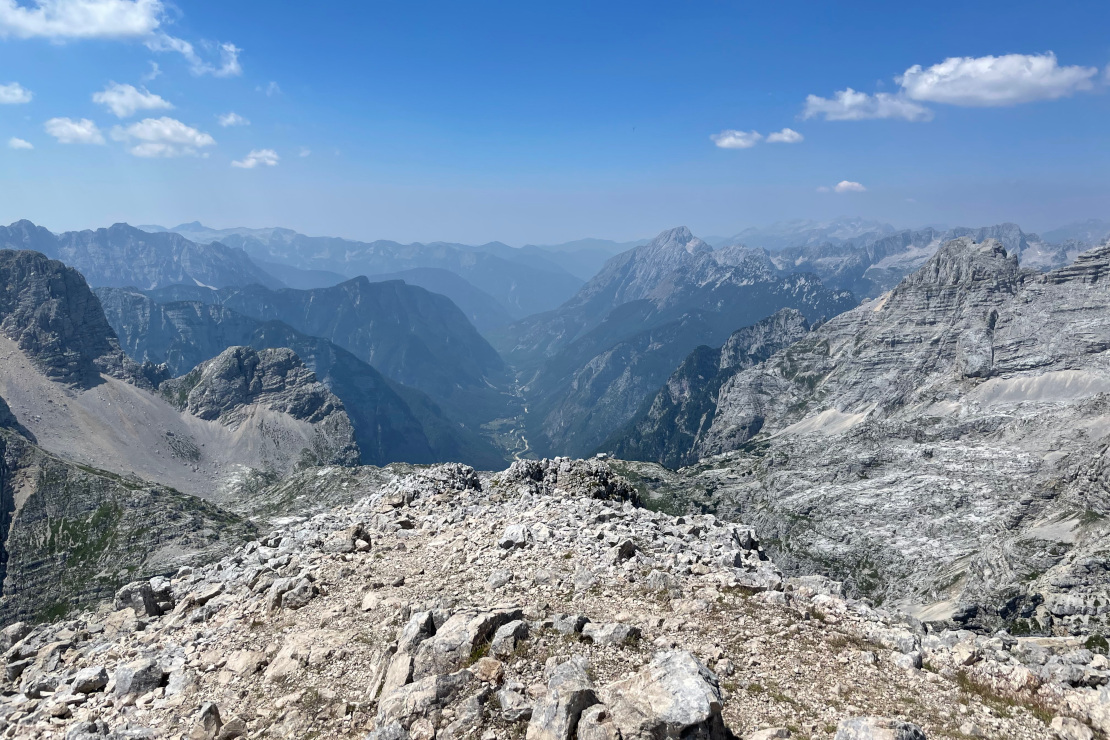
The path continues over a large rock pile. We keep to the right, ascending the Stenar slope until we finally reach the summit at 2,501 meters.
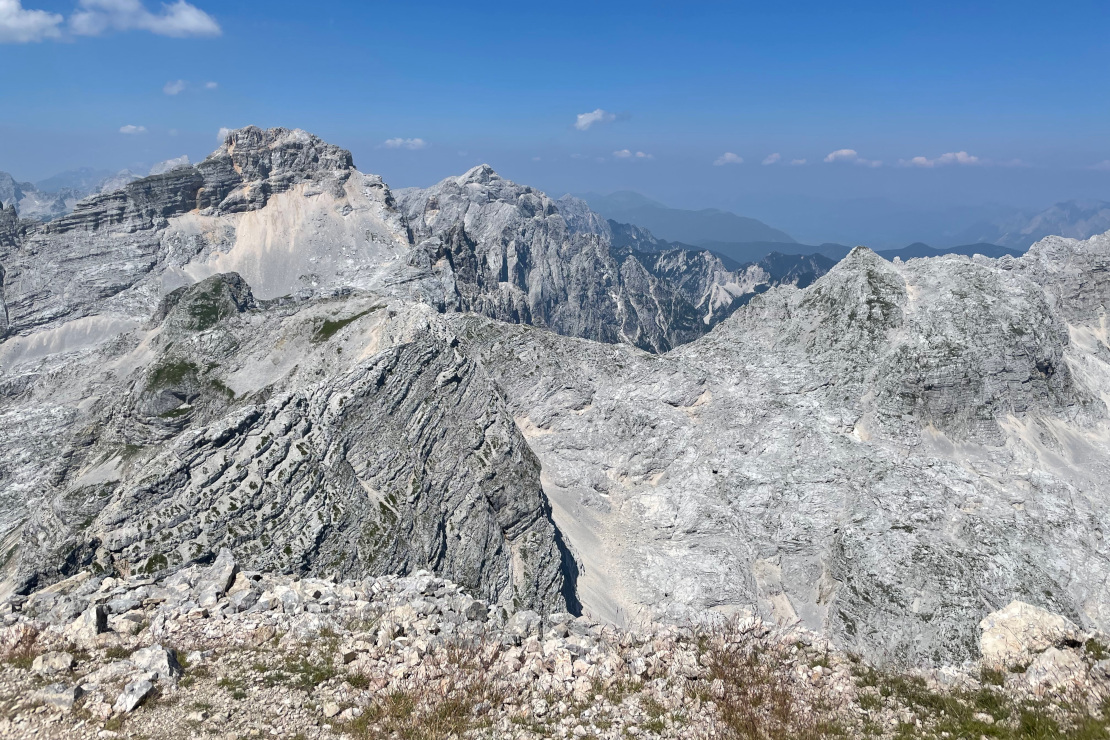
At the summit, you’re rewarded with fantastic views in all directions. The video below offers a 360-degree panorama of the surrounding landscape.
Huts on the Way
There are two huts along the trail to the summit. The first is the Aljaž Hut, located in the Vrata Valley at the start of the trail. The second is the Pogačnik Hut, situated on Kriški Podi.
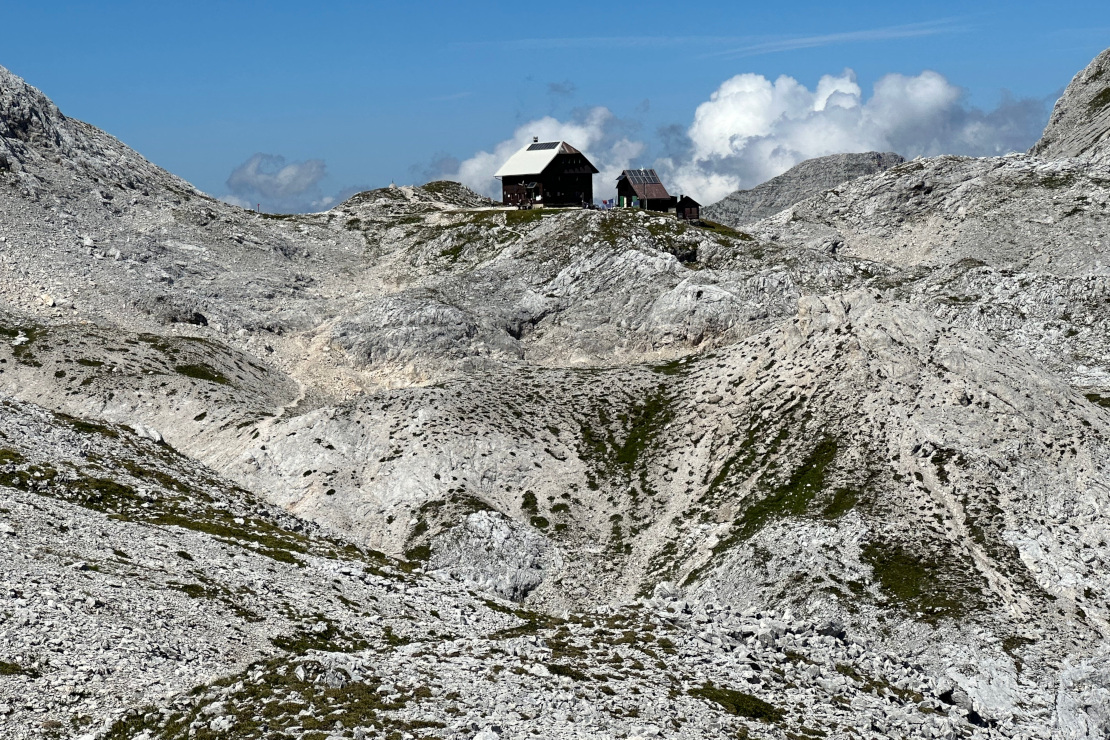
The Pogačnik Hut is not directly on the main route—you’ll need to walk about 30 minutes from the Dovška Vrata pass. If you have the energy and time, it’s well worth the detour, as the trail takes you across the Kriški Podi mountain plateau. From the hut, you also get a beautiful view down into the Trenta Valley.
If you are reading this post in our app, you can select Show on map in the app’s menu at the top right to see the location of the hut.
What to think about when hiking
We have already written about what you need to consider when hiking in the Alps. Read the sections “Hiking in the Julian Alps” in the Julian Alps post and part of the section “How to Hike up to Mount Stol” in the Mount Stol post.
Equipment
When hiking in the Julian Alps, equipment is important. You need to be able to handle a full day in the mountains and in an environment where the weather can change quickly.
- A good pair of hiking boots.
- Hiking poles (recommended, especially for the steep sections and descent).
- Appropriate clothing for the weather. If rain is possible, bring waterproof gear. Remember that the sun can be strong at high altitudes, so sun protection is also important.
- A backpack with provisions, including plenty of water and food for the climb. Nutrition bars or energy snacks are useful for quick refueling.
Where to Stay
- Mountain View Glamping - Offers apartments for rent with fantstic views of Vrata Valley.
- Villas and apartments - Several villas and apartments are available for rent in Mojstrana and near the entrance to Vrata Valley.
Where to Eat
In the Vrata Valley, you’ll find the Aljaž Hut, and along the trail is the Pogačnik Hut, where you can stop to eat and drink. Both serve traditional Slovenian alpine cuisine. It is good to bring some cash with you.
- Aljaž hut - Located in Vrata Valley, the hut serves traditional Slovenian alpine cuisine.
- Pogačnik hut - Located on Kriški Podi a 30 minutes walk from Dovška Vrata pass with a fantastic view of the Trenta Valley.

