
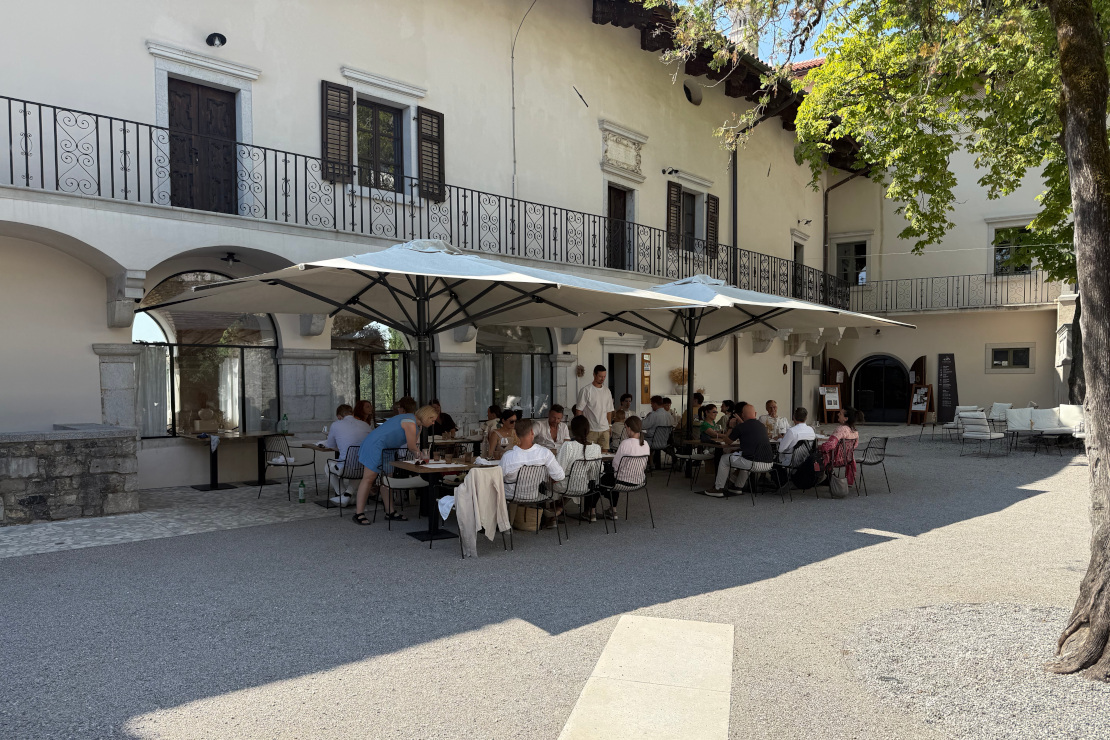
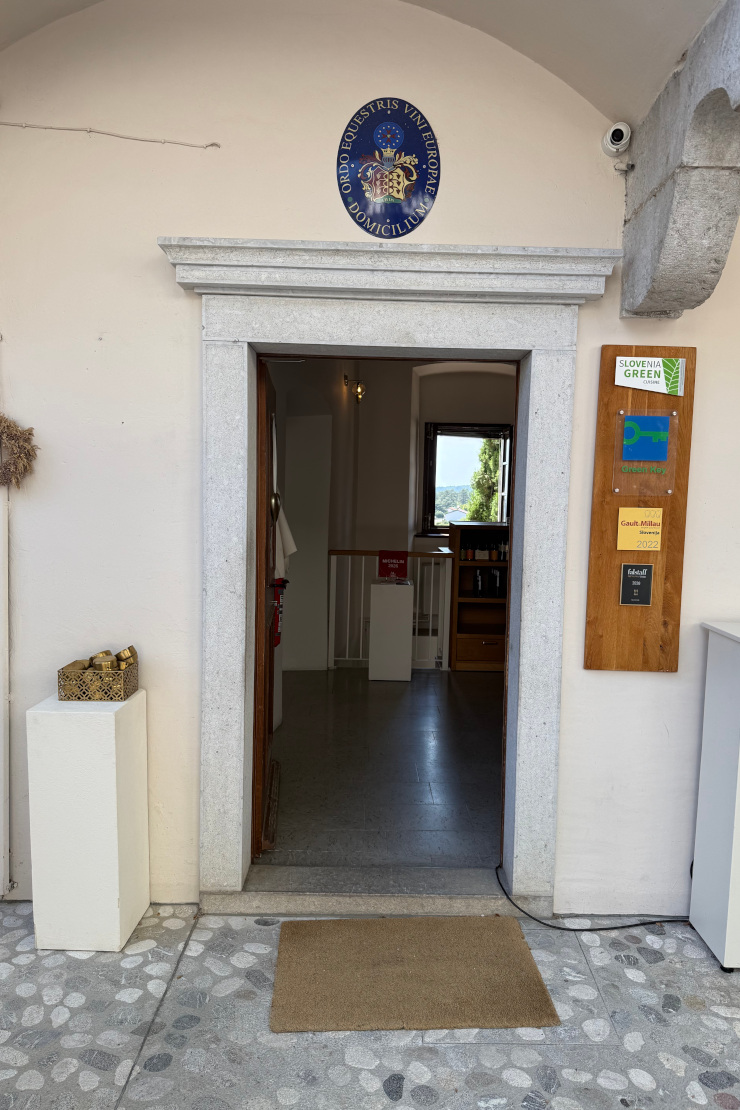
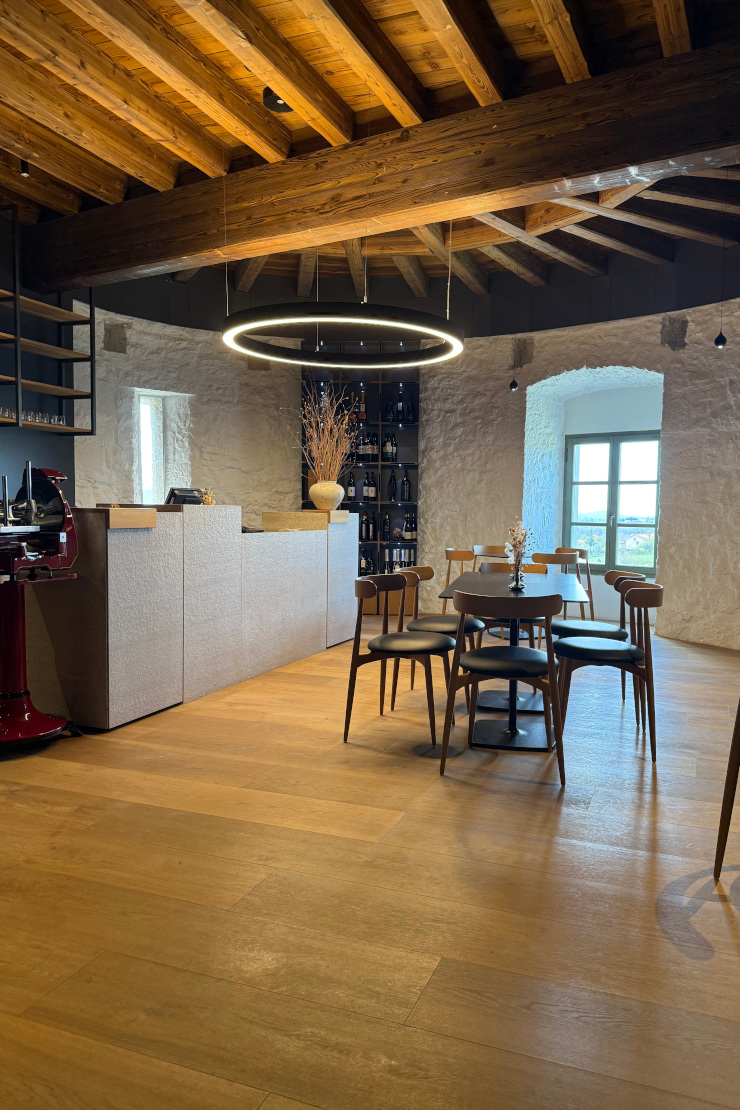
In the medieval village of Štanjel in the Slovenian Karst region, you will find Restaurant Grad Štanjel (Castle Štanjel). It is located in the restored castle at the center of the village. The castle has a beautiful courtyard, where the restaurant has a fantastic outdoor terrace. The Karst region and its climate provide the perfect place for a unique dining experience. We visited the restaurant in early August and enjoyed a fantastic three-course lunch. The restaurant is listed in the Michelin Guide — very well deserved!
You can best read about and plan visits to the places we write about by downloading our app Slovestories app.
Restaurant Grad Štanjel (Castle Štanjel) is run by the Komel family, whose ambition is to create refined dishes inspired by the food eaten by previous generations in the Karst region. The philosophy centres on homemade, authentic and regional cuisine. The goal is to source the freshest and best ingredients from as close to the restaurant as possible. They call this the “0-kilometre philosophy”. The menu is not fixed but changes with the seasons, depending on which ingredients are available.
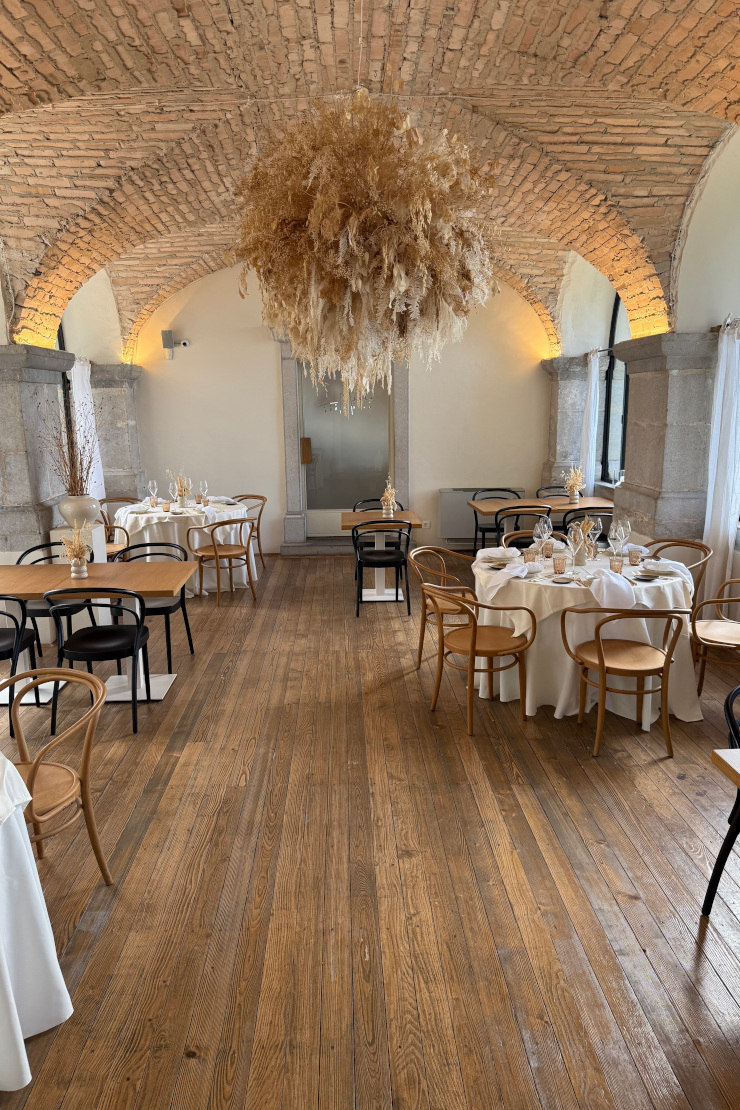
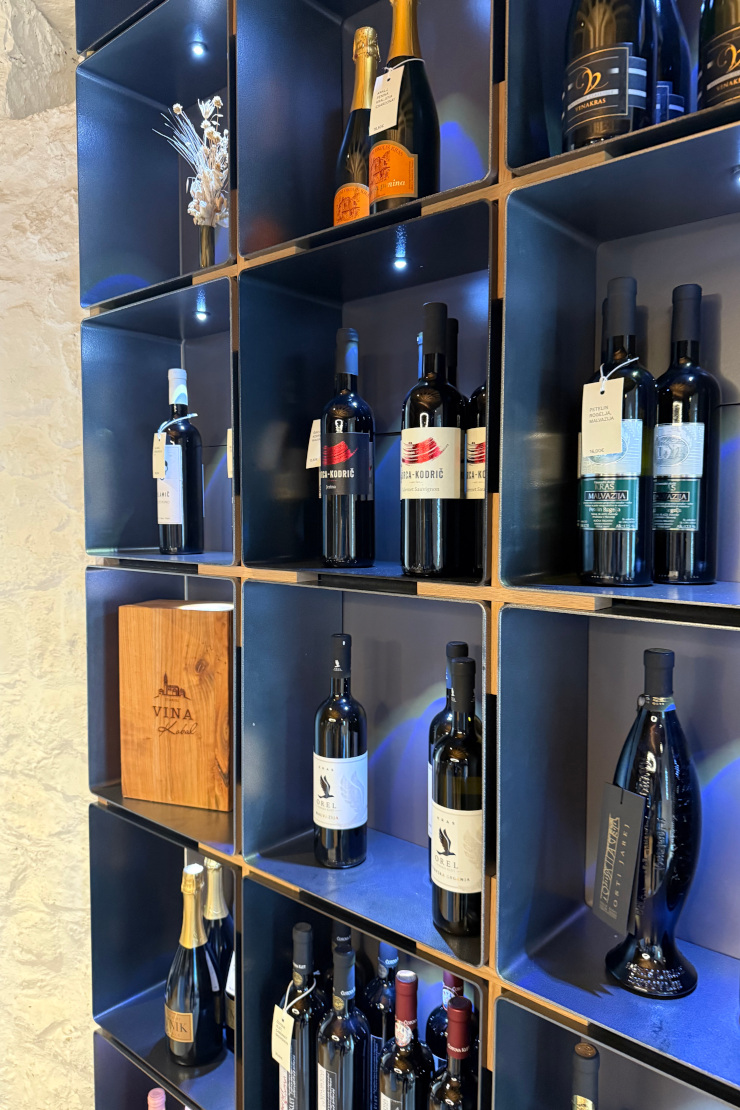
During the warmer months, guests can dine in the fantastic castle courtyard, where the restaurant has its outdoor seating. During the colder months, there is a dedicated and beautifully decorated dining room. The restaurant also has a separate wine-tasting room, where you can sample local wines from the Karst region alongside the restaurant’s own Pršut (prosciutto).
About Karst
The Karst is a subregion of Primorska in Slovenia, with a distinctive geography and climate. It is a plateau lying at an elevation of 200–400 metres, situated between the Adriatic Sea and the mountains of Slovenia’s interior. The Karst also extends into Italy, north of Trieste, making it a region shared by Slovenia and Italy. However, the larger part lies in Slovenia, where the population is predominantly Slovenian. The region has been inhabited by Slovenes since the Middle Ages.
Geographically, the plateau consists mainly of limestone, with extensive cavities beneath the surface. The landscape is surprisingly dry despite receiving a lot of rainfall, as water quickly drains through the porous limestone. The soil is a distinctive red colour, known as Terra Rossa in Italian.
The climate is hot and dry in summer, influenced by the proximity of the Adriatic Sea and the Gulf of Trieste, while winters can bring periods of cold weather. From the mountains of Slovenia’s interior, the cold, dry and often very gusty Bora wind can blow across the region. Despite the relatively high rainfall, the landscape remains dry because water quickly disappears into the porous, limestone soil, while the Bora further contributes to the dry conditions. The climate is a unique mixture of Mediterranean and continental-alpine influences. Both the geography and the climate provide very special conditions for food and wine production that are not found elsewhere.
Karst cuisine
The gastronomic identity of the Karst is strongly linked to its microclimate and geography, particularly its Terra Rossa soil and dry climate.
- Karst Pršut (Karst Prosciutto) - A dry-cured ham whose distinctive flavour is strongly influenced by the climate and geography of the Karst region. Compared with its Italian counterpart, it is usually drier, saltier and more intensely flavoured. The Bora wind makes it possible to air-dry the ham naturally, something that is not possible in all regions. The ham is cured for at least 12 months. Due to its distinctive character and traditional production methods, Karst Pršut is protected by the EU.
- Cheeses - The cheeses produced in the area are mainly hard cheeses, such as Nanos cheese, named after the highest mountain in the region. It has a distinctive nutty flavour with a slightly spicy character.
- Njoki (Gnocchi) - The Slovenian version of Gnocchi.
- Honey - Beekeeping is popular in the Karst region, as it is throughout much of Slovenia. What makes Karst honey special is the region’s distinctive climate and flora, which produce honey with a concentrated aroma and a dry, complex character.
- Vegetables - Vegetable cultivation in the Karst is mostly small-scale, as the geography and climate do not favour large-scale farming. However, the vegetables that are grown are of high quality, with fresh and aromatic flavours. Many restaurants grow their own vegetables or work with local growers to source the best produce.
Karst wine
Just like the food from the Karst, the wines from the region also have a distinctive character that is difficult to find anywhere else.
- Teran - A red wine made from the Refošk (Refosco) grape. However, Teran tastes quite different from wines made from the same grape in other regions. It has higher acidity and more pronounced tannins. Its distinctive character is closely linked to the Terra Rossa soil and the dry climate in which the grapes are grown. The unique combination of the Karst’s climate and geography produces a wine with a character that is difficult to find anywhere else. Teran is protected by the EU.
- Vitovska - A white grape variety that originates in the Karst and is grown almost exclusively in the region. Wines made from Vitovska are not particularly well known outside Slovenia, giving visitors a chance to try a distinctive local wine with notes of citrus, fruit, flowers and herbs. The grape is also well suited to producing orange wines made with extended skin contact.
Getting to Grad Štanjel
From Ljubljana, it takes about 1 hour and 20 minutes to drive to Štanjel. Most of the journey is along the A1 motorway towards Koper. You leave the motorway at Senožeče and continue on smaller country roads for about 20 kilometres. In total, the distance from Ljubljana to Štanjel is approximately 85 kilometres.
Below the medieval village, there is a large car park, and it is usually easy to find a parking space.
If you are reading this in our app, you can select Show on map from the upper-right menu to get directions from your current location.
Our Lunch at Restaurant Grad Štanjel
We visited the restaurant for lunch on the first Sunday in August. It was a somewhat late lunch at 14:00, and we chose the three-course menu. Before the meal, we opted for a platter of the restaurant’s own Pršut, served together with local cheeses.
Since we visited the restaurant at the beginning of August, we were able to sit outside in the castle courtyard. Unfortunately, the weather was a little too warm for our taste, but it was still much better than rain and cold.
The service was friendly, attentive and informal, while at the same time being highly professional. As guests, we felt very well looked after.
You can read more about Restaurant Grad Štanjel on their website. Tables can be reserved via email info@gradstanjel.si or by phone at +386 (0)5 731 00 70.
What we Ate
- Charcuterie board - The restaurant’s charcuterie board with homemade Pršut in three different stages of ageing, accompanied by local cheeses such as Nanos and sheep’s cheese. Incredibly good!
- Gazpacho soup - Cold gazpacho made with fresh local tomatoes and cucumber, topped with strawberries.
- Njoki - Njoki (Gnocchi) with oxtail and milk foam, topped with aged hard cheese from the Karst.
- Dessert - Ice cream with mascarpone cream and citrus.
With all the dishes, we tried the local wine Jazbec Teran and wines made from the local Vitovska grape.
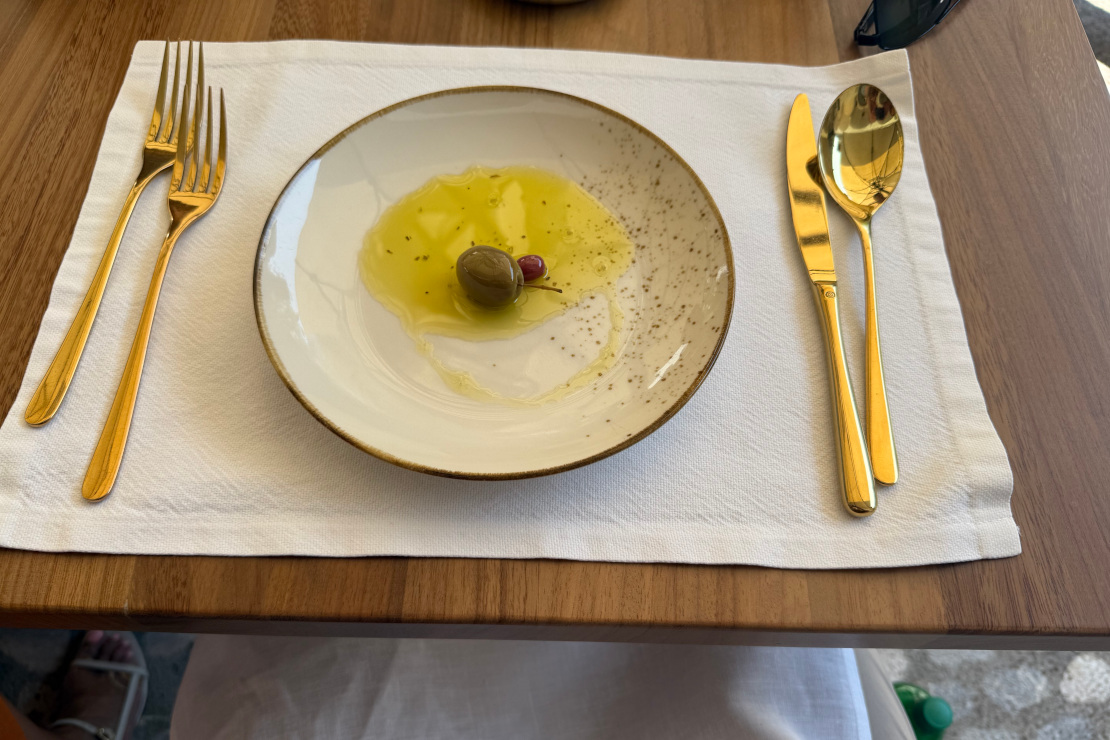
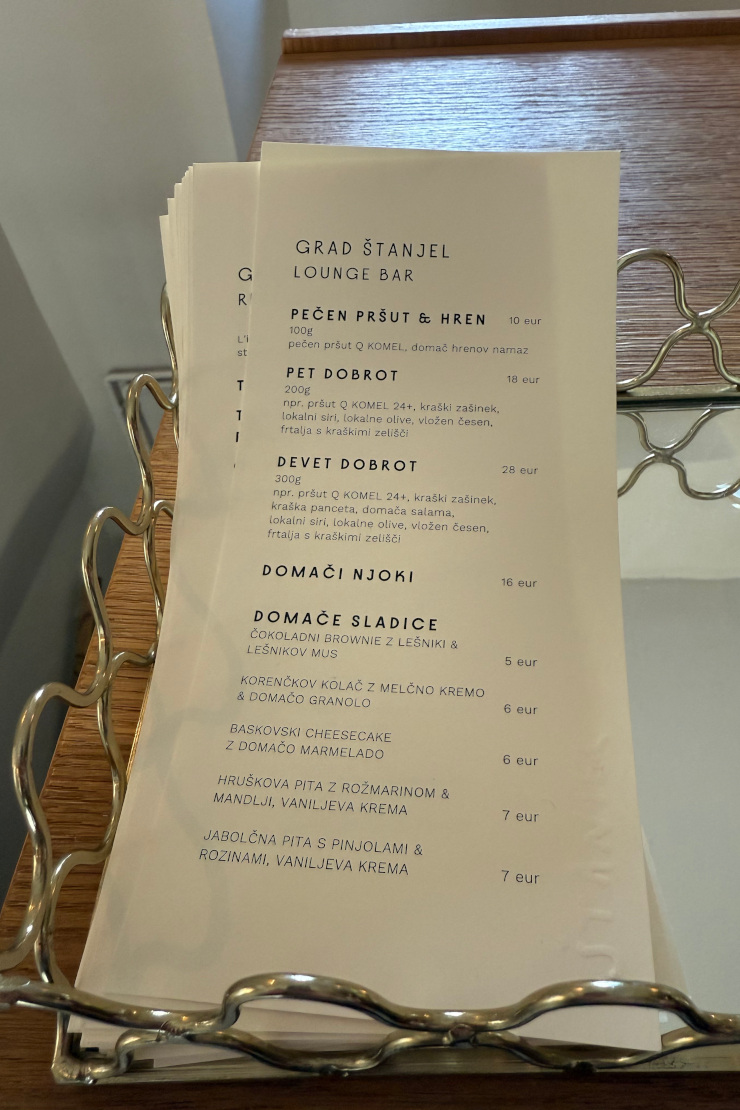
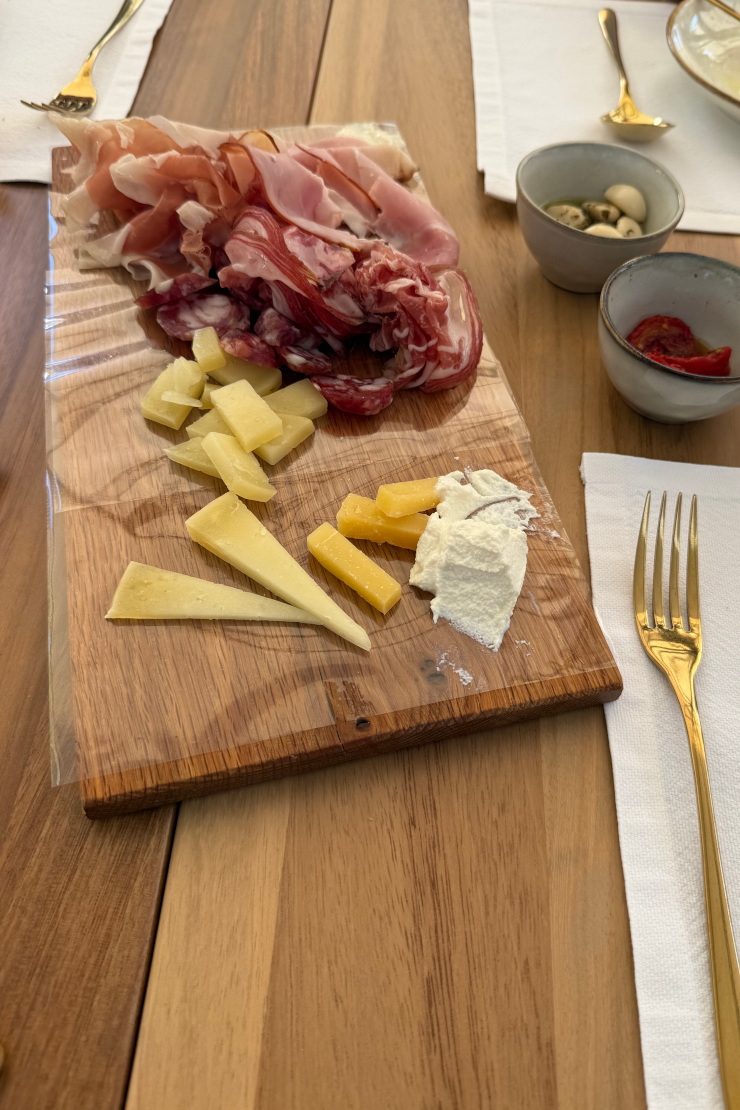
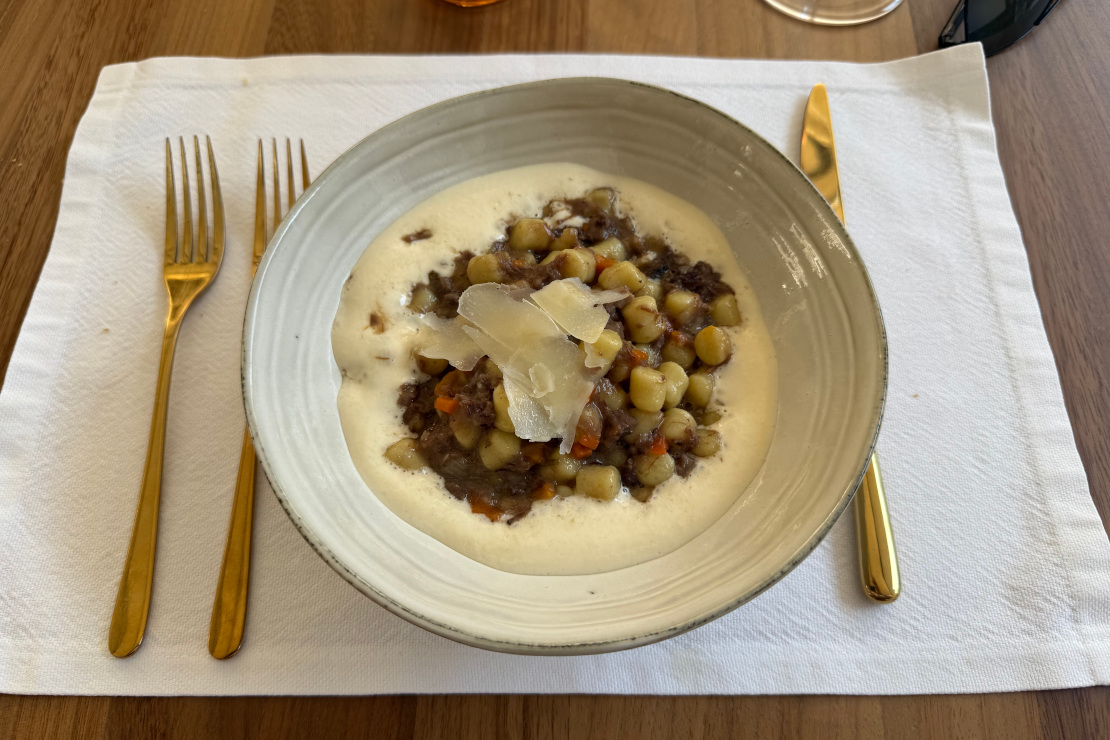
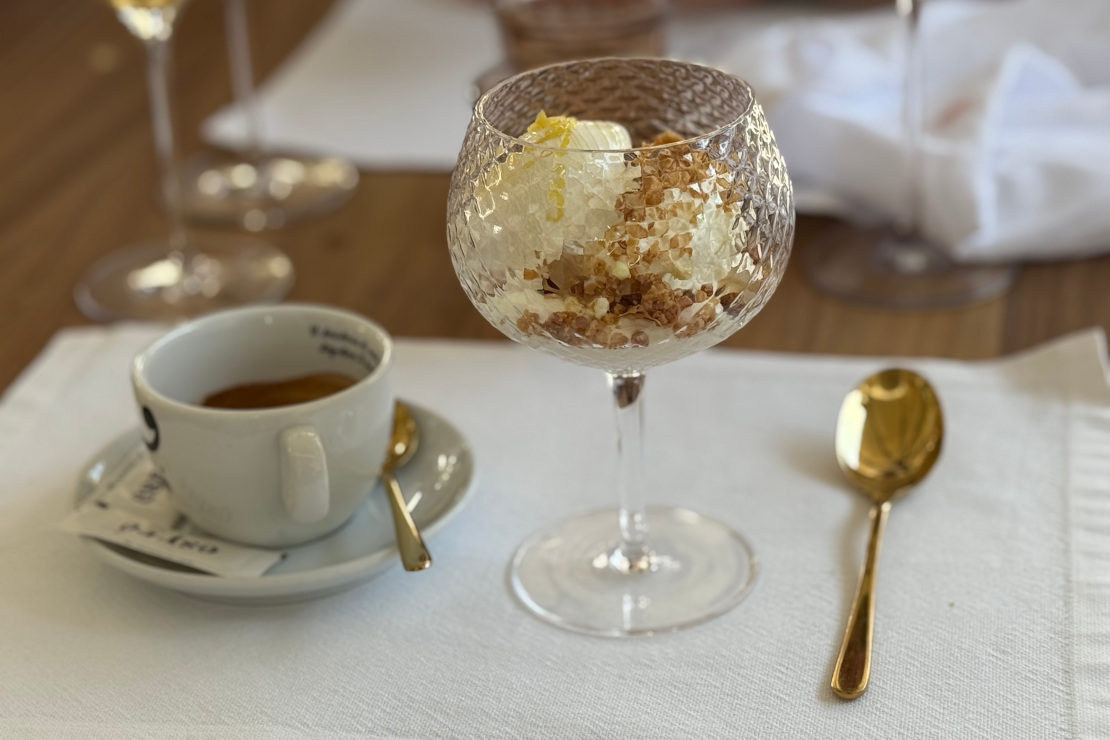
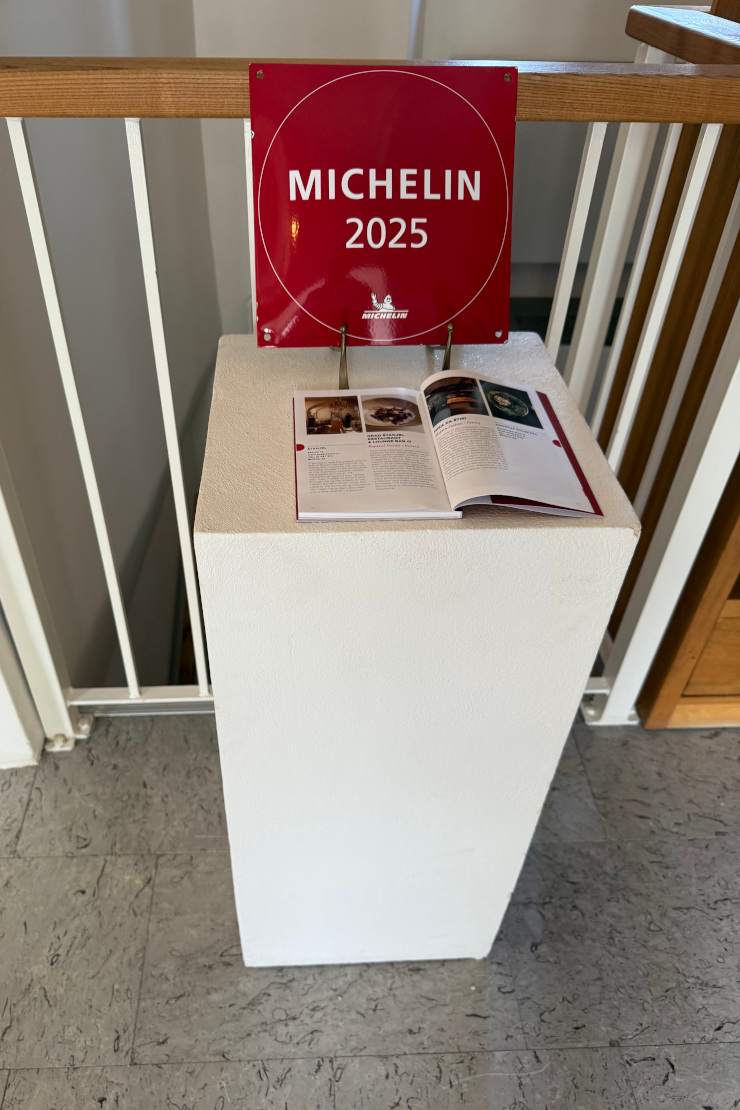
Overall, we were incredibly satisfied with our visit. The dishes were of exceptionally high quality, made with fine ingredients. Each dish had its own character while remaining deeply rooted in the culinary traditions of the Karst region. The restaurant’s beautiful surroundings also contributed to the special experience. We would be more than happy to return.
Other Places in the Area
Here are some other places worth visiting in the Karst region.
- Štemberger Wines - It is a small producer of high-quality biodynamic wines. The winery is located in the village of Šepulje, a few kilometres from Štanjel. Here, you will find both wines typical of the Karst region and other varieties. The local wines have a distinctive character and are of excellent quality.
- Ferrari Garden - The Ferrari Garden was built for Enrico Ferrari, a prominent doctor from Trieste. The garden was created between the two world wars by the renowned landscape architect Maks Fabiani.
- Cejkotova Homestead - Cejkotova Homestead is a fantastic ecotourism destination in the nearby village of Goče. You can read more about our visit in our separate blog post.
- Lipica Stud Farm - In the town of Lipica, you will find the historic Lipica Stud Farm, where Lipizzaner horses are still bred. The horses are particularly famous for their association with the Spanish Riding School in Vienna.
Where to Stay
Below are some recommendations for places to stay in the Karst region and its surroundings.
- Špacapanova Hiša - Stay overnight at this ecotourism destination in the nearby village of Komen.
- Grad Štanjel - In addition to the Grad Štanjel restaurant, there is also the option of staying overnight.
- Hotel StDaniel - This hotel is located in the nearby village of Hruševica.

