
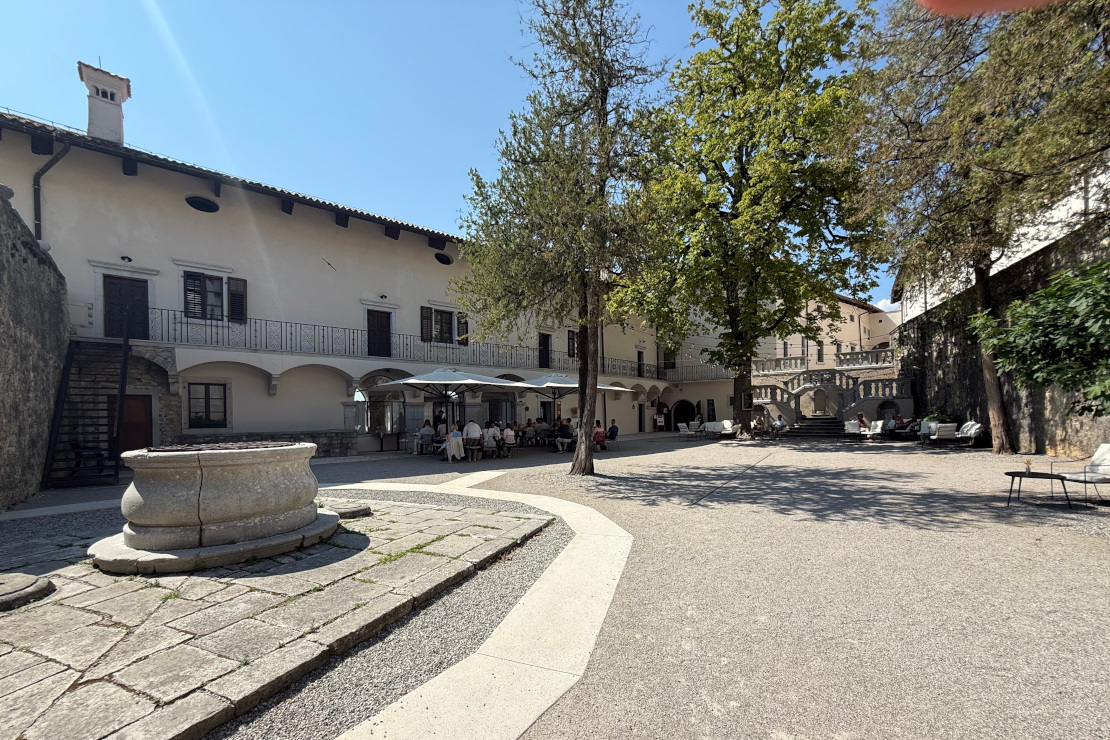
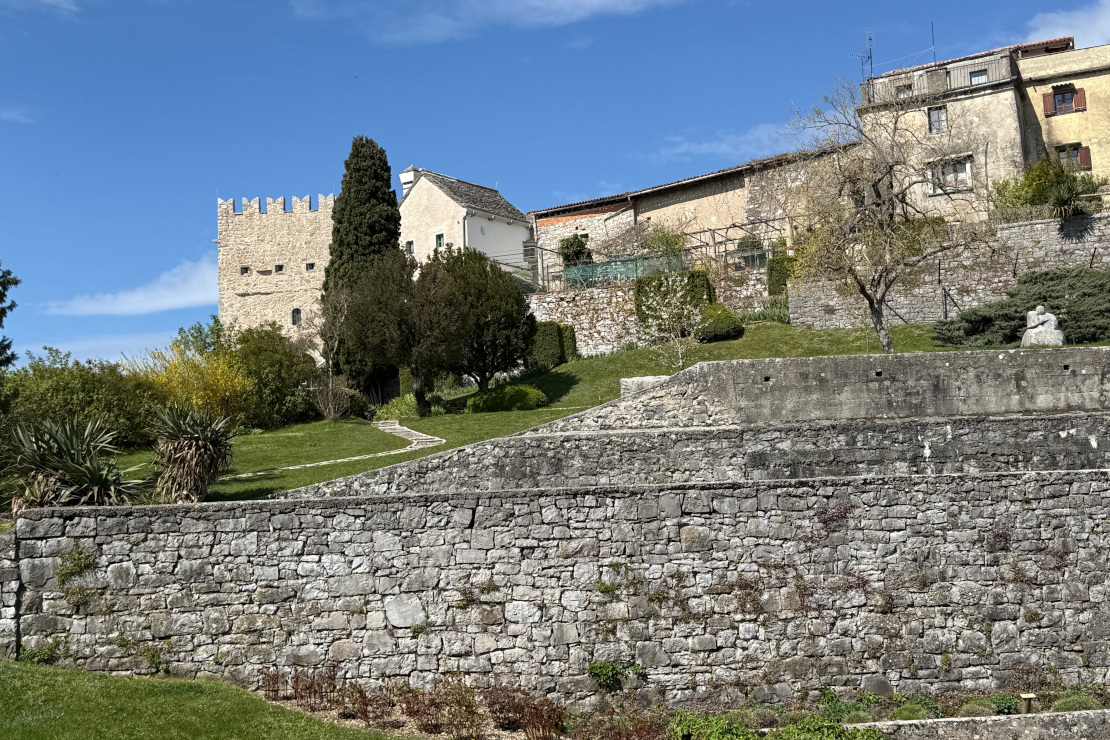
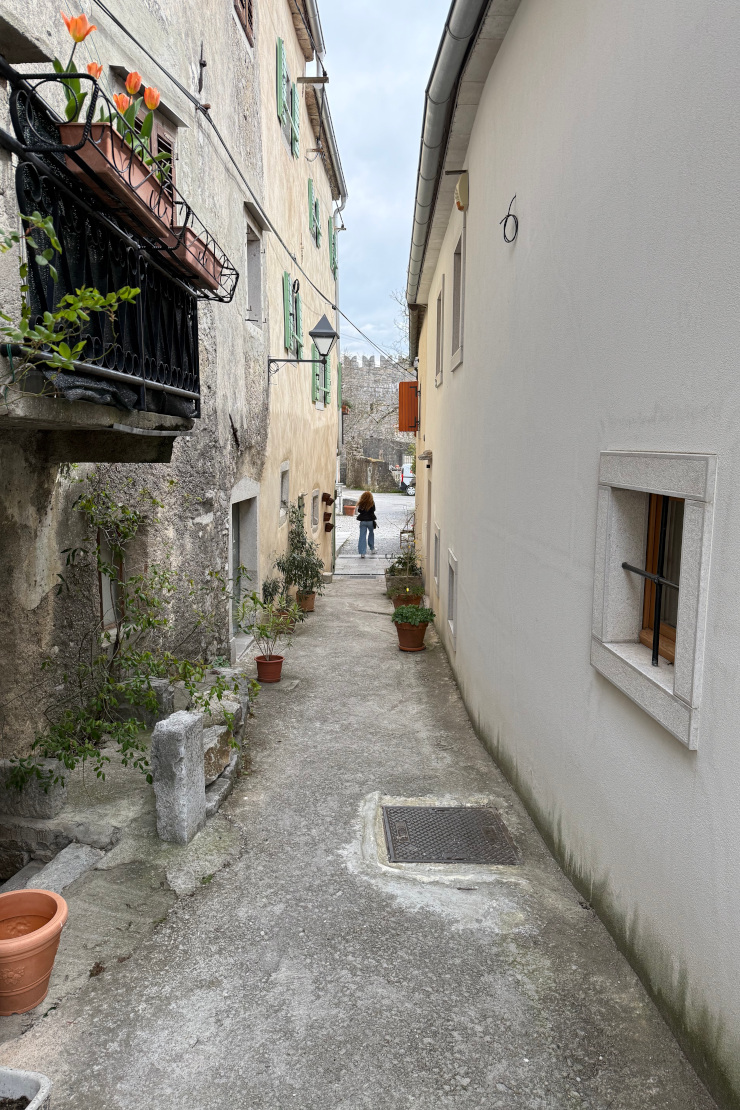
Štanjel is located in a part of Slovenia that is not heavily visited by tourists, making it something of a hidden gem in the heart of the Karst region. At the same time, it is not far from the well-trodden tourist routes, making it easy to take a detour here. The village offers a unique blend of history, beautiful scenery, culture, fantastic food and wine. It is situated on Turn Hill, commanding stunning, far-reaching views in every direction.
You can best read about and plan visits to the places we write about by downloading our app Slovestories app.
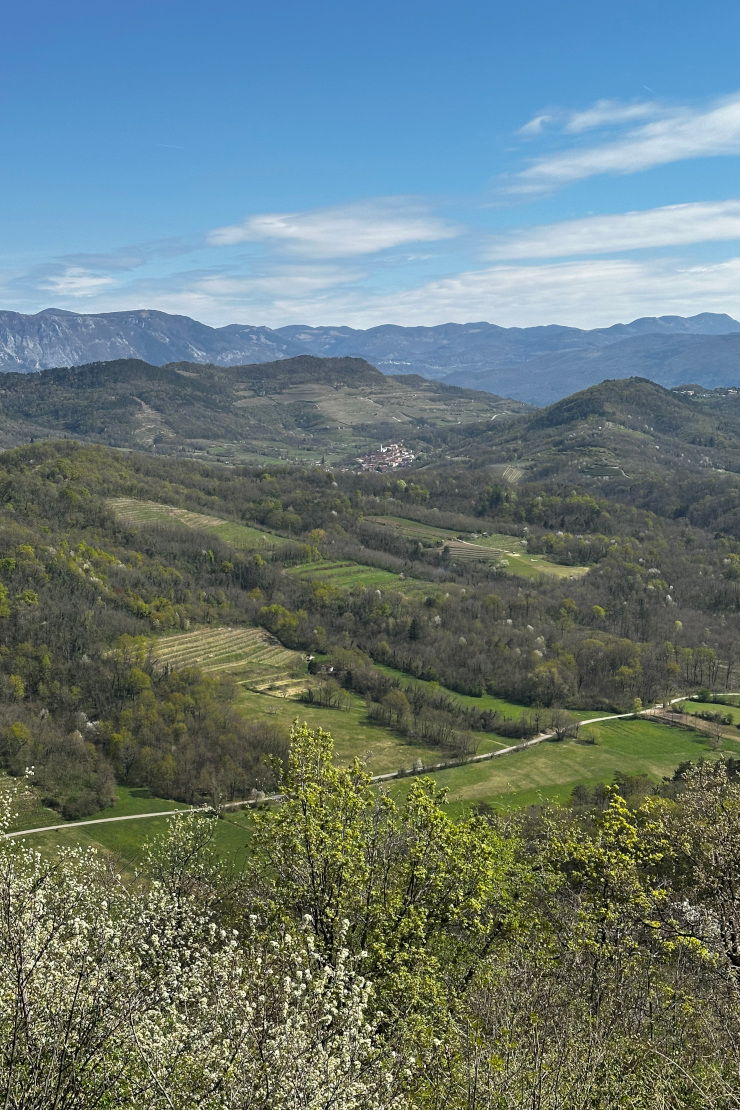
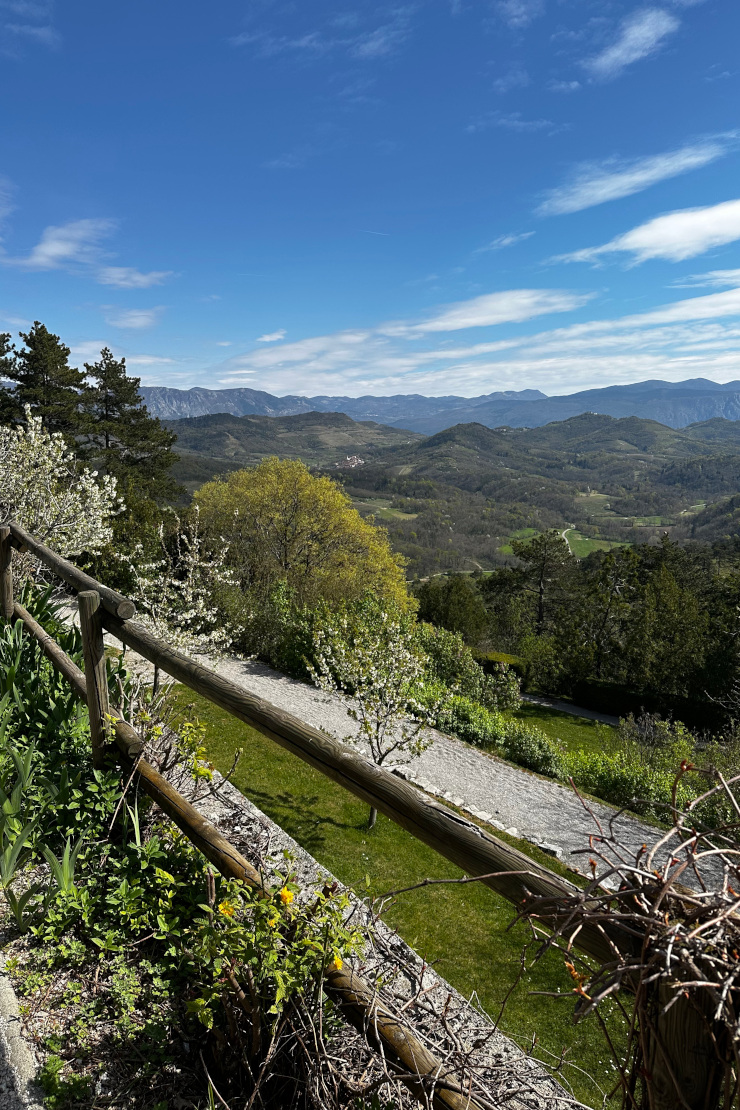
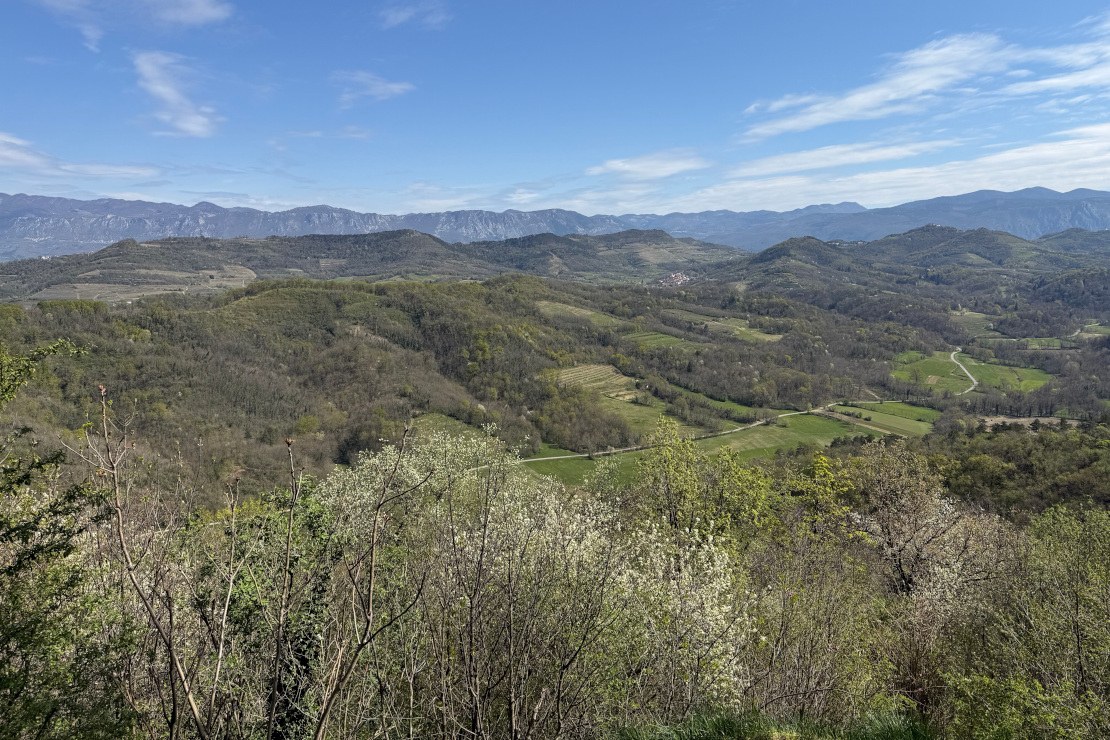
Today, Štanjel offers a blend of beautiful scenery, culture, and fantastic food and wine. The Fabiani Path, which encircles Turn Hill and the village, provides sweeping views in every direction. You can see the Vipava Valley and the mountains on the far side, including the distinctive peak of Nanos, which marks the boundary between Slovenia’s interior and its Mediterranean region. There are also expansive views across the Karst Plateau.
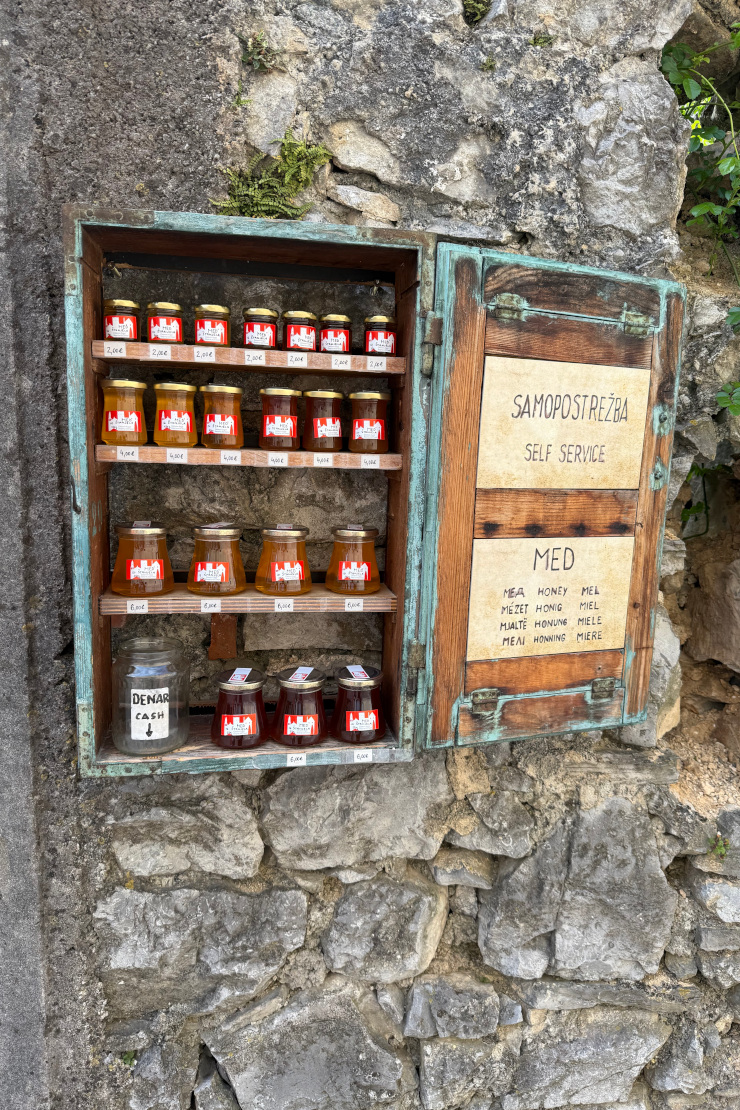
Within the village, several artists create and sell a variety of products to visitors. There are also small-scale wine producers open to visitors. One such place is Bar Panorama, where you can enjoy local wines such as Teran and white wines made from the Vitovska grape, accompanied by Karst prosciutto and local cheeses. Locally produced honey is also available to buy.
The castle is home to the award-winning Restaurant Grad Štanjel. You can read more about it in our dedicated blog post. The post also includes more information about Karst cuisine and wine.
About Karst
The Karst is a subregion of Primorska in Slovenia, with a distinctive geography and climate. It is a plateau lying at an elevation of 200–400 metres, situated between the Adriatic Sea and the mountains of Slovenia’s interior. The Karst also extends into Italy, north of Trieste, making it a region shared by Slovenia and Italy. However, the larger part lies in Slovenia, where the population is predominantly Slovenian. The region has been inhabited by Slovenes since the Middle Ages.
Geographically, the plateau consists mainly of limestone, with extensive cavities beneath the surface. The landscape is surprisingly dry despite receiving a lot of rainfall, as water quickly drains through the porous limestone. The soil is a distinctive red colour, known as Terra Rossa in Italian.
The climate is hot and dry in summer, influenced by the proximity of the Adriatic Sea and the Gulf of Trieste, while winters can bring periods of cold weather. From the mountains of Slovenia’s interior, the cold, dry and often very gusty Bora wind can blow across the region. Despite the relatively high rainfall, the landscape remains dry because water quickly disappears into the porous, limestone soil, while the Bora further contributes to the dry conditions. The climate is a unique mixture of Mediterranean and continental-alpine influences. Both the geography and the climate provide very special conditions for food and wine production that are not found elsewhere.
The History of Štanjel
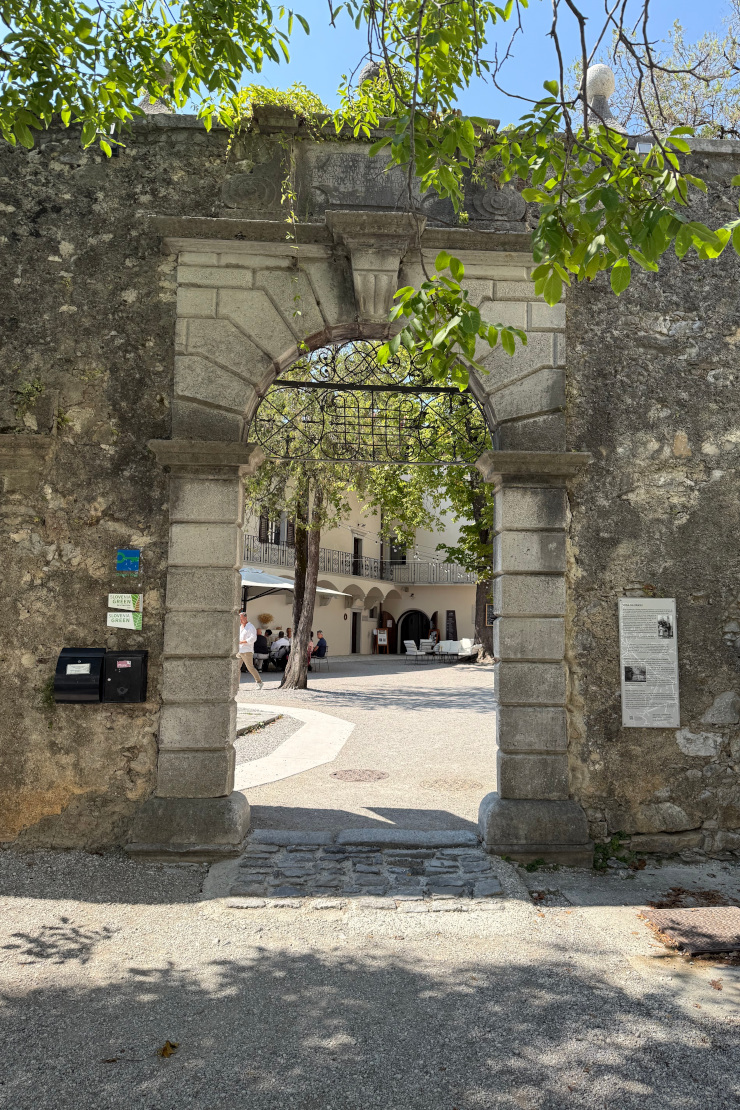
The hill has been inhabited since prehistoric times. Štanjel was first mentioned in written records in the 15th century. The village is named after its patron saint, Saint Daniel. Štanjel was one of the first parts of the Karst region to be settled. In the 16th century, a wall was built around the village to protect it from raids by the Ottoman Empire. The village reached the height of its development during the 16th and 17th centuries.
In German, the village is known as St. Daniel im Karst. The entire Karst region, along with Slovenia and Trieste, was part of the Austro-Hungarian Empire. Significant development took place in Štanjel during the interwar period, largely due to the architect Maks Fabiani, who carefully redesigned and renovated the village. He also renovated Villa Ferrari and designed the Ferrari Garden for Enrico Ferrari, a renowned physician and mayor of Trieste.
Maks Fabiani was born in 1865 in Kobdilj, next to Štanjel. At the time, the area was part of the Austro-Hungarian Empire. He spoke Slovenian, German and Italian. For much of his career as an architect, he worked in Vienna, close to the imperial court. At the age of 70, he became the mayor of Štanjel.
During World War II, a large part of the village, including the castle, was damaged and burned by German occupation forces. Since the 1960s, the village has undergone extensive renovation and revitalisation.
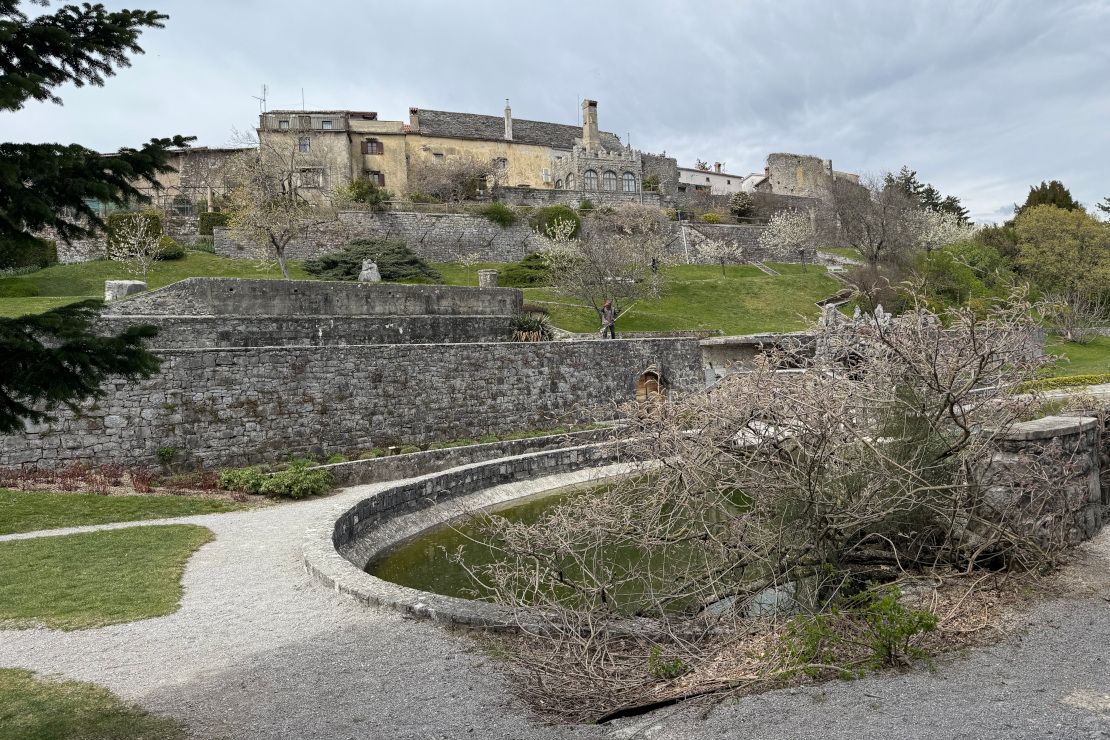
Ferrari Garden
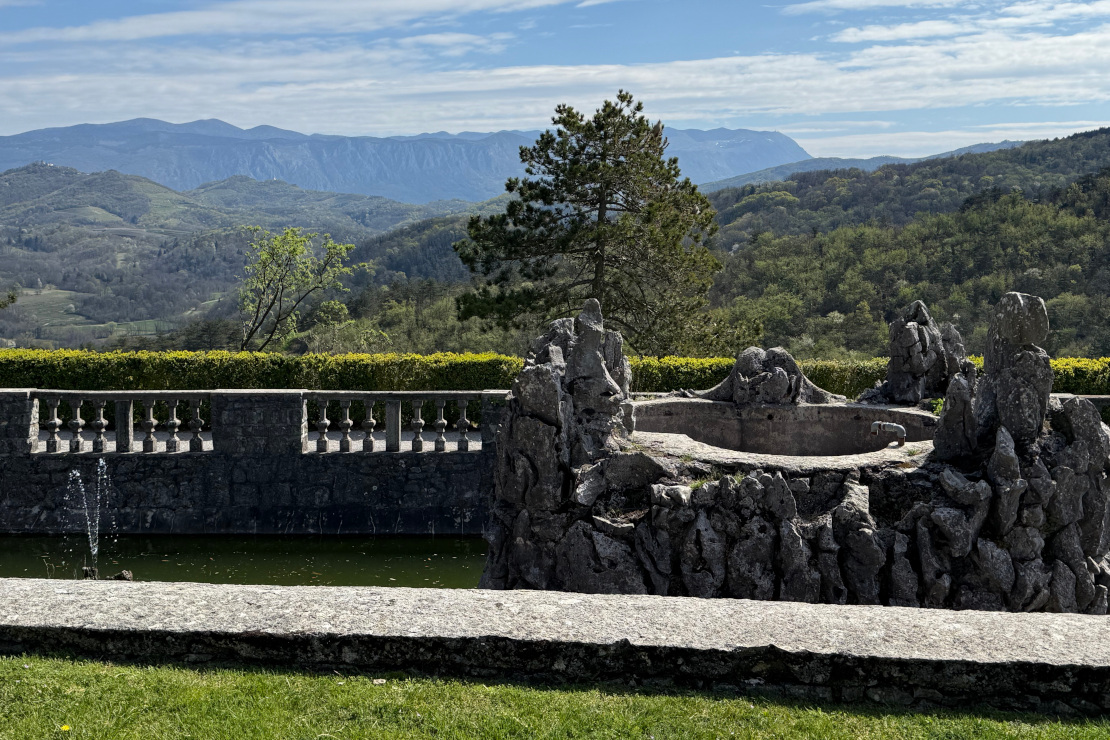
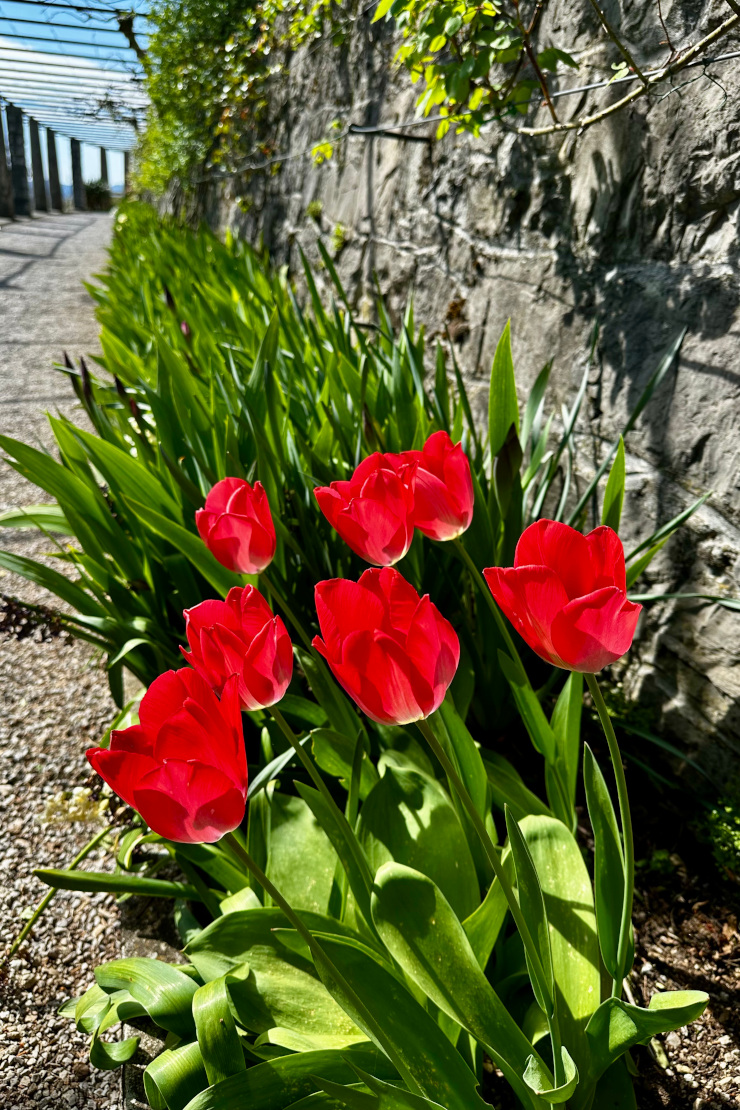
The Ferrari Garden is located at the rear of the village. The best time to visit is in spring, when everything is in bloom. In summer, the Karst region is often very hot and dry, which can leave the garden looking rather parched.
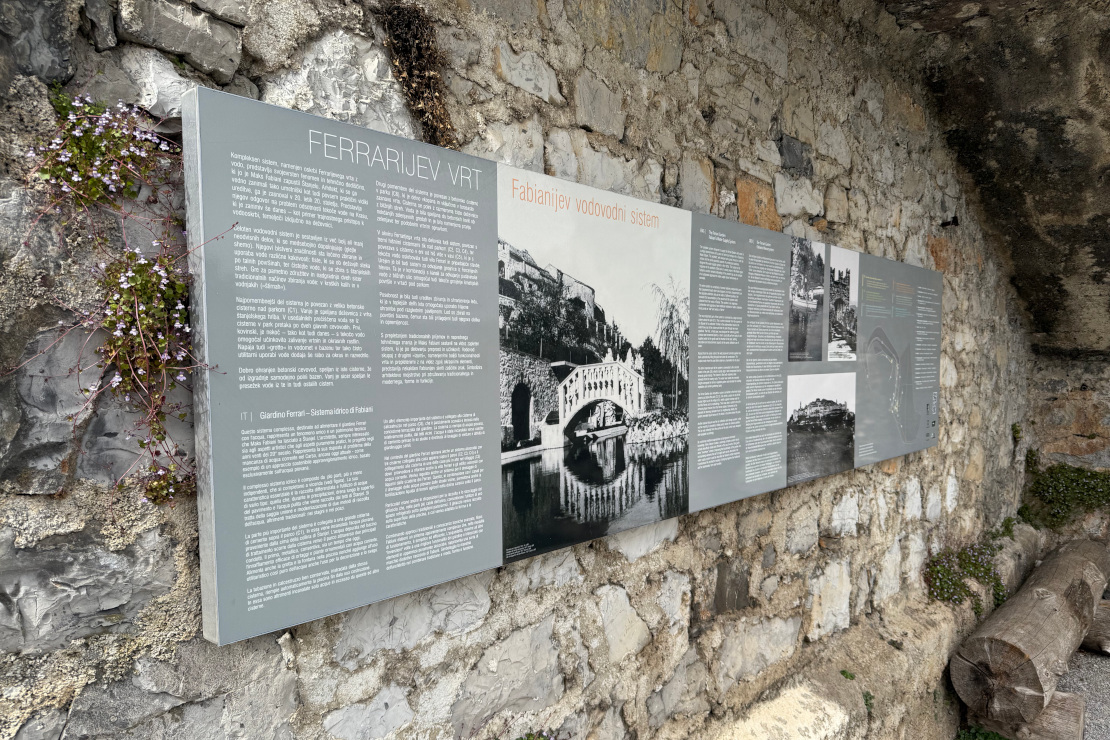
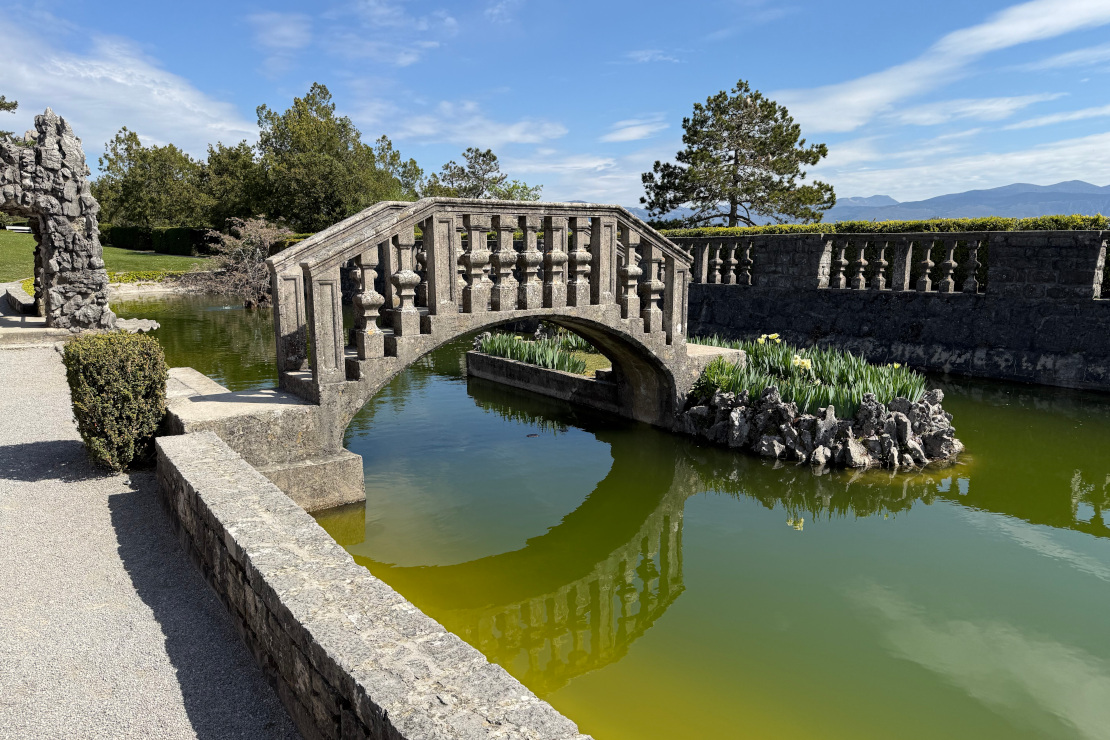
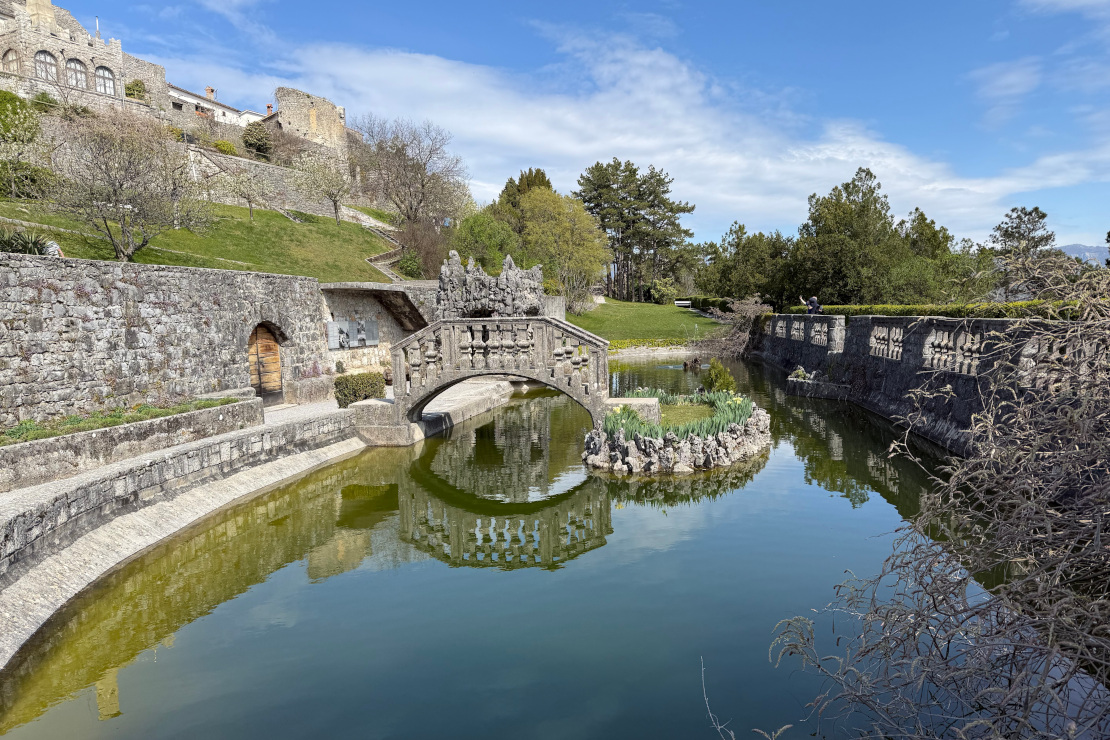
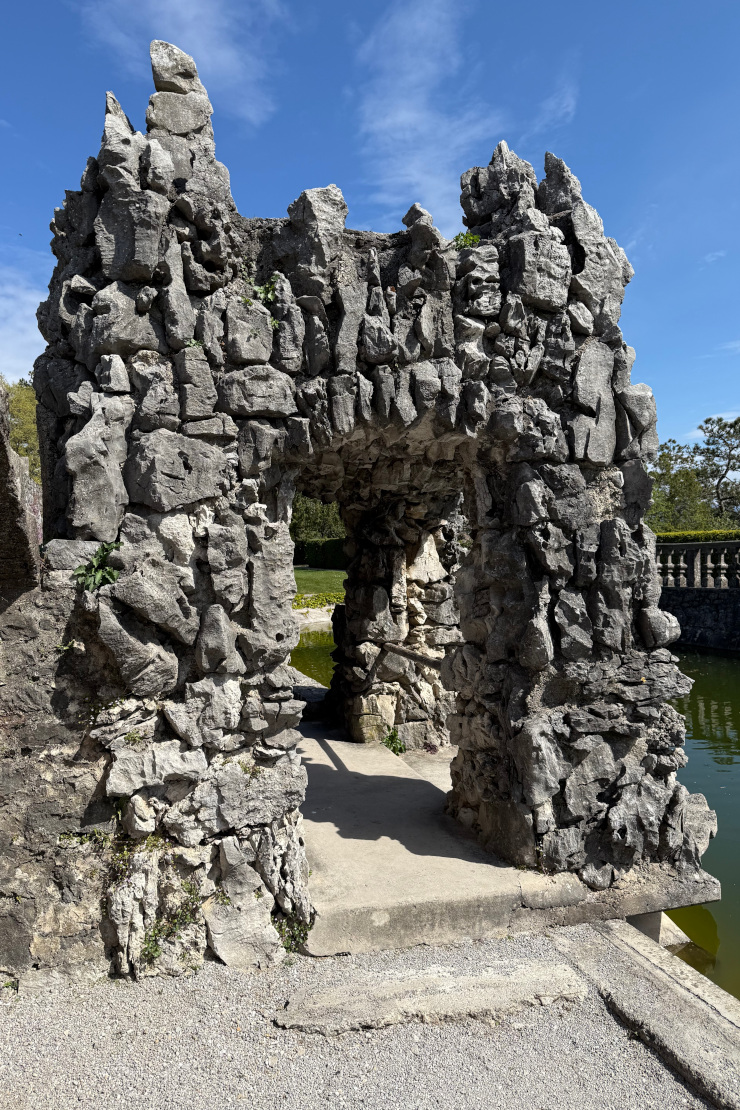
The garden was designed by Maks Fabiani between the two world wars for Enrico Ferrari, a renowned doctor and mayor of Trieste. It features traditional stone walls typical of the Karst region, staircases, a pavilion with panoramic views, fountains and an artificial grotto. The garden also incorporates an advanced, self-sustaining underground water system.
Today, the garden is a cultural heritage site of national importance.
How to Get to Štanjel
From Ljubljana, it takes about 1 hour and 20 minutes to drive to Štanjel. Most of the journey is along the A1 motorway towards Koper. Leave the motorway at Senožeče and continue on smaller country roads for about 20 kilometres. In total, the distance from Ljubljana to Štanjel is approximately 85 kilometres.
There is a large car park below the medieval village, and it is usually easy to find a parking space.
If you are reading this in our app, you can select Show on map from the upper-right menu to get directions from your current location.
Interesting places
Below are some interesting places to visit in Štanjel. Some of them have already been mentioned above.
- Fabiani Trail – The Fabiani Trail circles the village and offers fantastic views of the Vipava Valley. The path leads to the rear of the village, where the Ferrari Garden is located.
- Ana & Gaja Art Gallery – Located right at the entrance to the village, this gallery produces a variety of items, including ceramics, clothing, sculptures and handbags.
- Lokal Gallery – A local art shop specialising primarily in wood products.
- Honey self-service shop – A self-service shop where you can buy locally produced honey of the highest quality.
- Bar Panorama – A small bar overlooking the Karst Plateau. They serve local wines and organise wine tastings. For a snack, you can order platters of cured meats, including Karst prosciutto, and local cheeses.
Where to Stay
Below are some recommendations for places to stay in the Karst region and its surroundings.
- Špacapanova Hiša - Stay overnight at this ecotourism destination in the nearby village of Komen.
- Grad Štanjel - In addition to the Grad Štanjel restaurant, there is also the option of staying overnight.
- Hotel StDaniel - This hotel is located in the nearby village of Hruševica.
Where to Eat and Drink
- Grad Štanjel Restaurant – Read about our visit to Restaurant Grad Štanjel in our separate blog post. The Karst region and its climate provide the perfect setting for a unique dining experience. The restaurant is listed in the Michelin Guide – very well deserved!
- Cejkotova Homestead – Read more about Cejkotova Homestead in our dedicated blog post. This place offers a very special culinary experience, with all the organic food and wine produced on-site or sourced from the immediate surroundings.

