
Vršič Pass is Slovenia’s highest mountain pass open to road traffic. The road connects Kranjska Gora on the northern side of the Julian Alps with the Trenta and Soča valleys and the town of Bovec on the southern side. It is an exceptionally scenic route that attracts large numbers of drivers, motorcyclists, and cyclists during the summer months. However, the history of the pass, and the reasons for its construction, is not so beautiful.
You can best read about and plan visits to the places we write about by downloading our app Slovestories app.
There is one road in Slovenia that climbs higher than the road over Vršič Pass: the road to Mangart Saddle. However, it is technically not a mountain pass, as the road ends at the saddle rather than crossing it. You can read more about our visit to the Mangart saddle in our dedicated blog post.
The History of Vršič Pass
The road over the Vršič Pass is also called the Russian Road after it was built by Russian prisoners of war in the years 1915 - 1917. The Austro-Hungarian Monarchy wanted to improve logistics to the Soča Front where major battles were fought between the monarchy and Italy. While building the road, the prisoners of war also built a chapel for their religious needs. During the construction of the road, around 300 of the prisoners of war died in an avalanche. The chapel is now dedicated to these victims. It is a well-known place to visit on the way up to the pass. These days, not entirely without controversy, given the war in Ukraine.
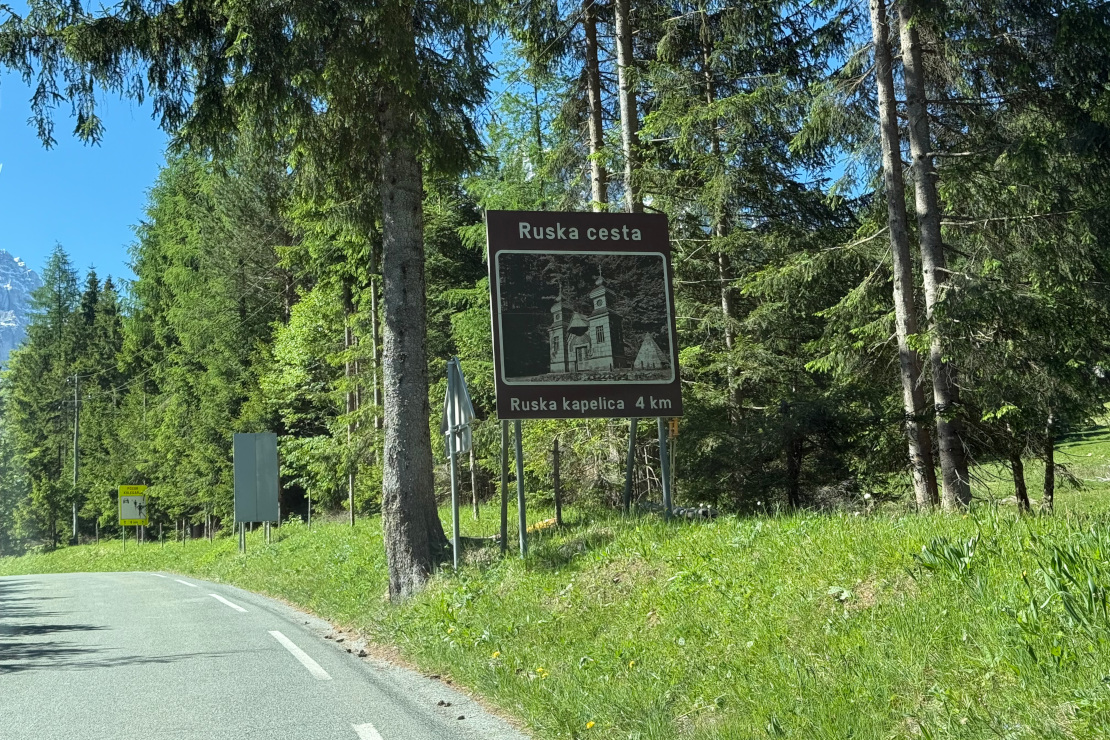
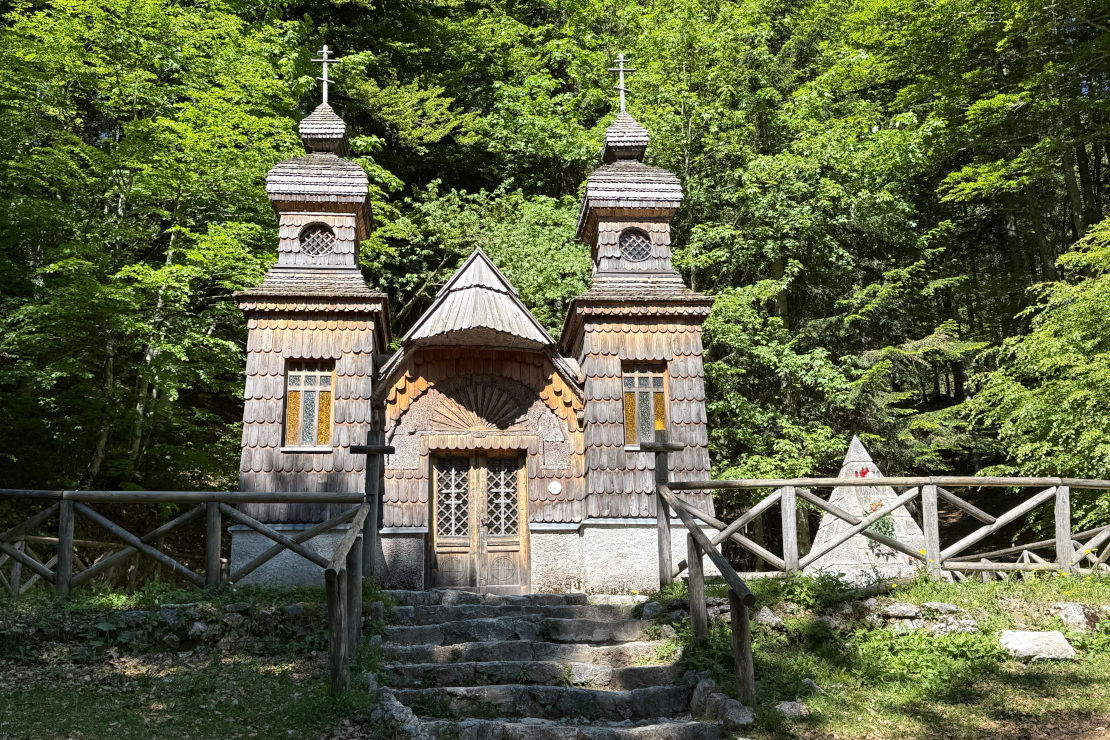
Before the Second World War, the pass marked part of the border between Yugoslavia and Italy. After the war, however, the area around the pass, together with the Trenta and Soča valleys, became part of Yugoslavia and later, following Slovenia’s independence, part of Slovenia.
The Road to Vršič Pass
Despite its tragic history, the road is today a very popular excursion destination in the summer months and on weekends among car drivers, motorcyclists, and cyclists, largely because of the fantastic views and natural scenery along the route.
From Kranjska Gora to the summit of Vršič Pass it is about 13 kilometres and takes roughly 20–25 minutes to drive. However, you should allow significantly more time, as you will likely want to stop at several points along the way to take in the views and sights.
Roadwork
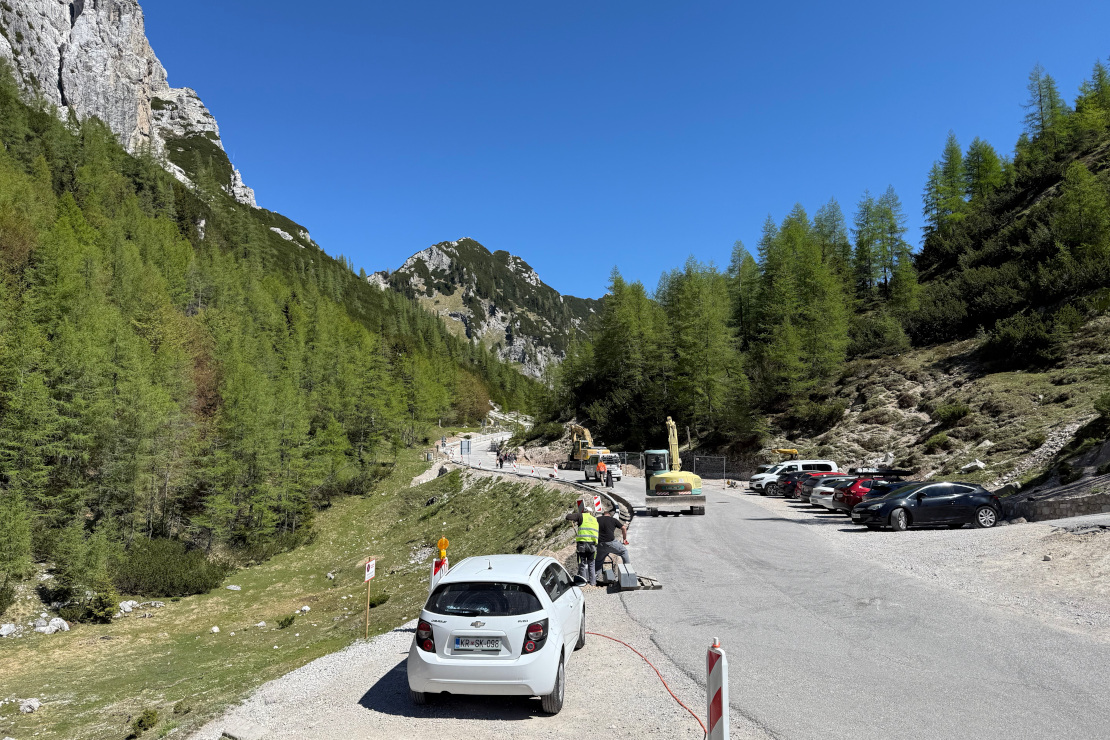
At the time of writing, roadworks are ongoing at the top of the pass, and it is currently not possible to park there. There are also plans to introduce a fee for driving over the pass, with an additional charge for parking at the summit. However, parking capacity at the top is expected to be limited. When we visited at the end of May, access was still free.
A little below the summit of the pass, at Erjavčeva Hut, there are also parking areas that serve as an alternative. The hut is located three to four hairpin bends below the top.
The road up to the top
As a driver, you also need to watch out for cyclists riding slowly along the road and motorcyclists who are often in a hurry. At the same time, you must handle the winding curves on both the ascent and descent. It is best to be an experienced driver.
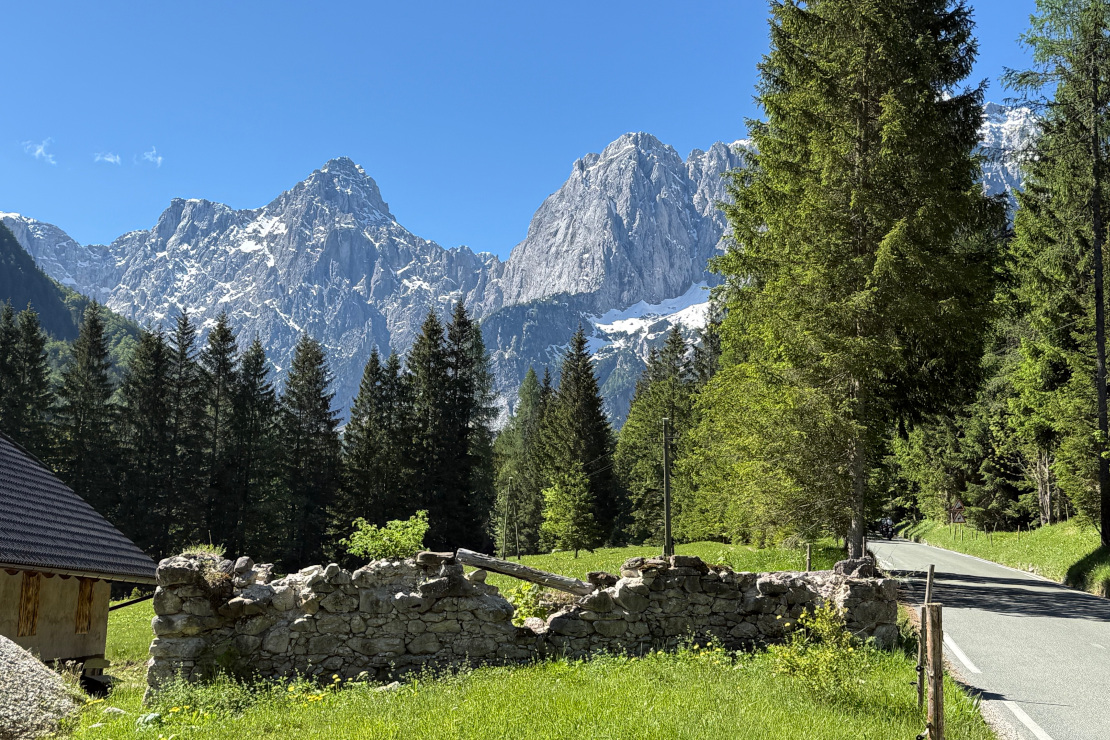
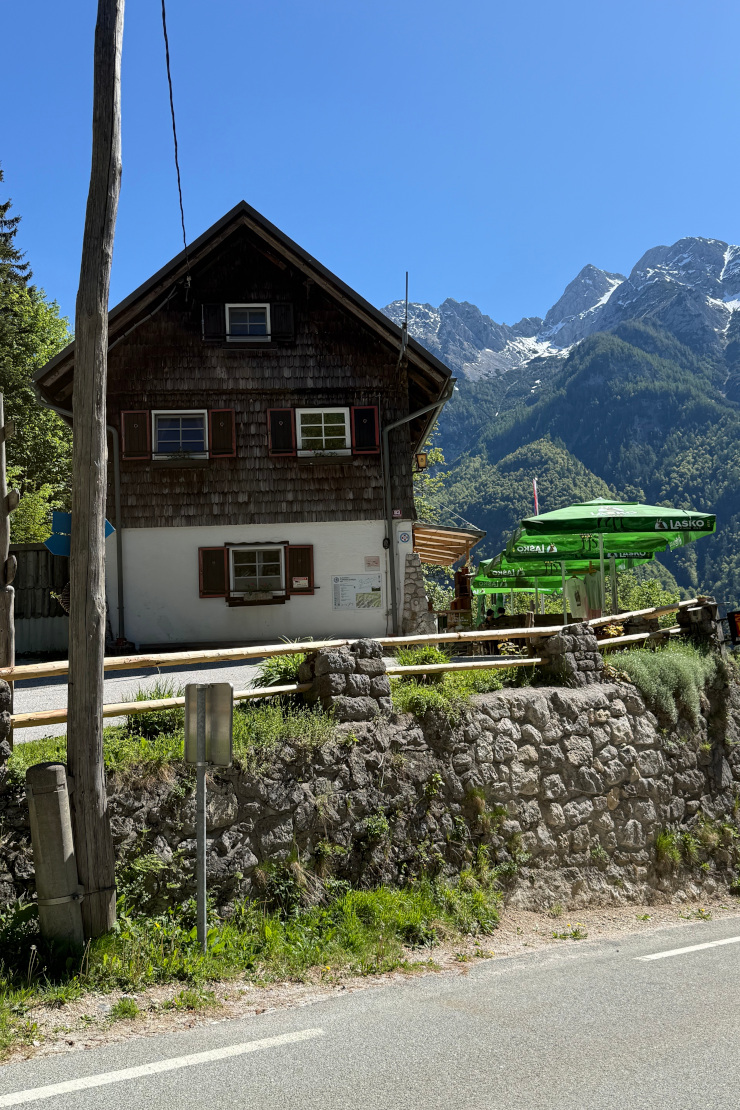
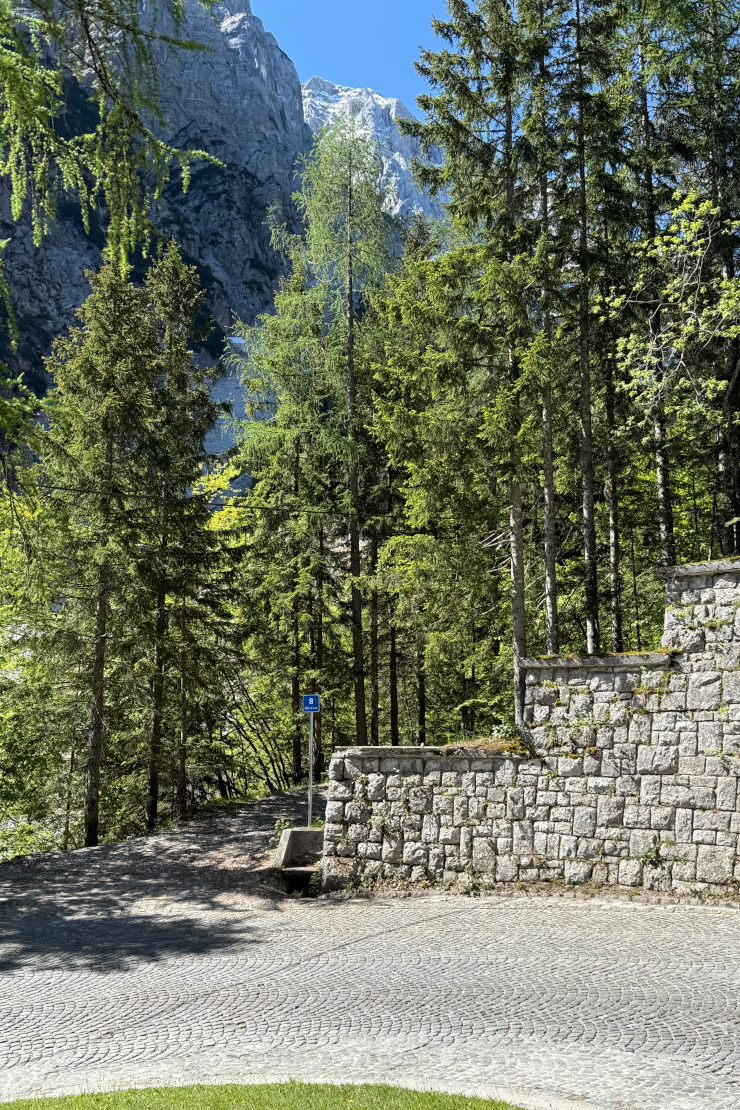
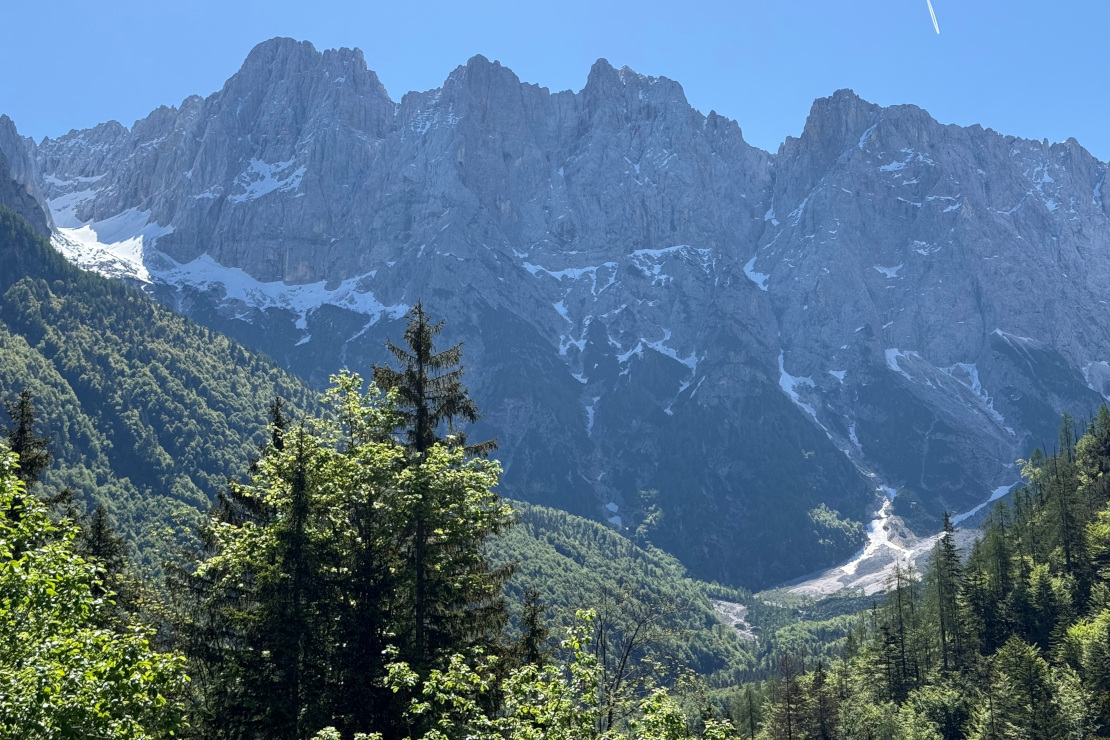
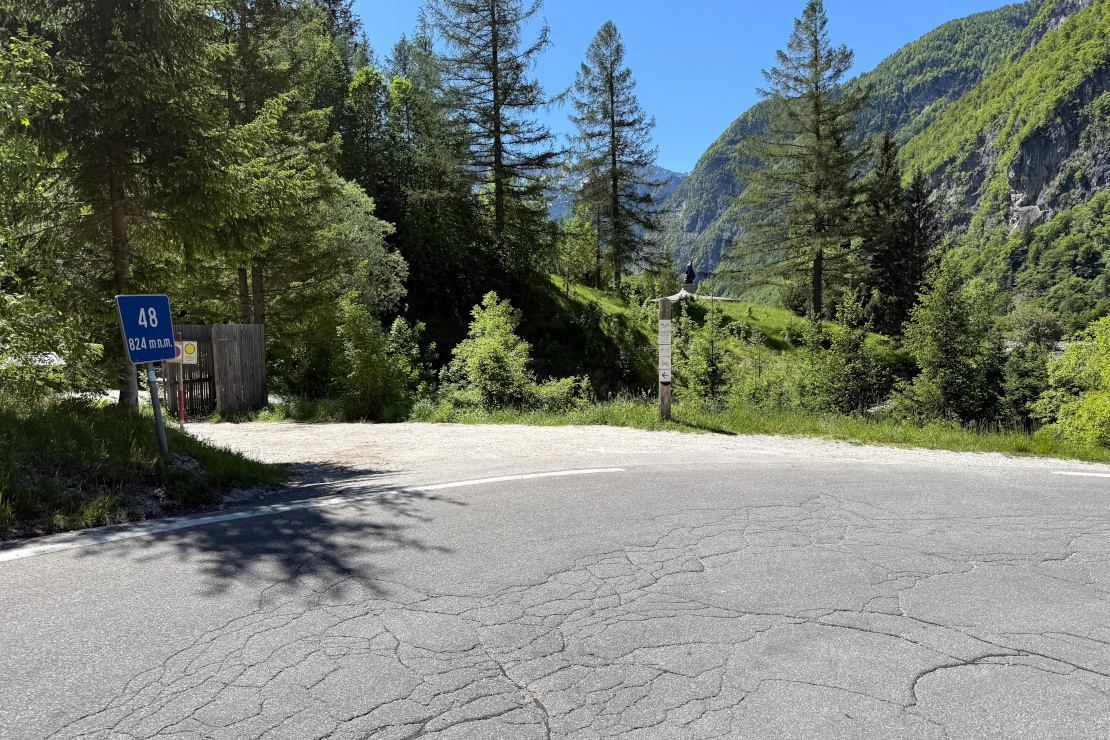
The road features 50 hairpin bends between Kranjska Gora and the Trenta Valley. The summit of the pass lies at an altitude of 1,611 metres, while Kranjska Gora is situated at around 800 metres above sea level. Each hairpin bend is marked with a distinctive blue sign indicating the bend number and its elevation in metres.
On the Kranjska Gora side, there are 24 hairpin bends as the road climbs the mountainside towards the summit of the pass. Along the way, you look down into the Krnica Valley, and the higher you ascend, the more spectacular the views become. On the opposite side of the valley, several peaks rise dramatically, including Špik (2,472 m), Škrlatica (2,740 m), Dolkova Špica (2,591 m), Razor (2,601 m), and the massive Prisojnik (2,547 m).
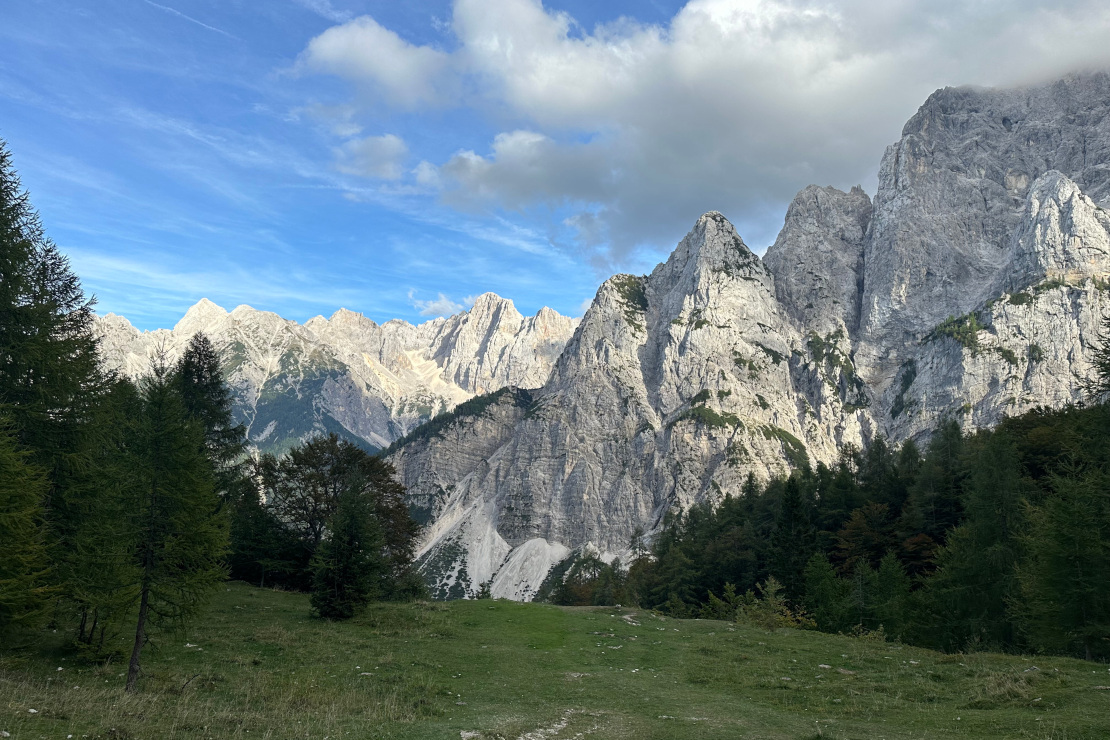
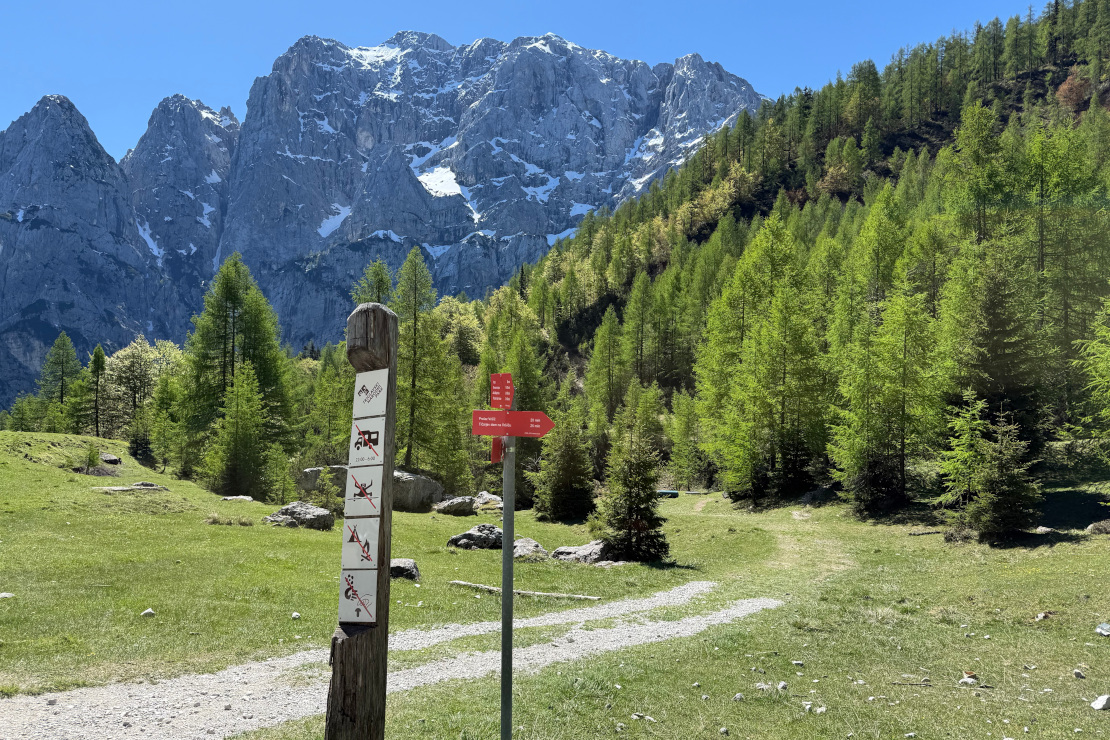
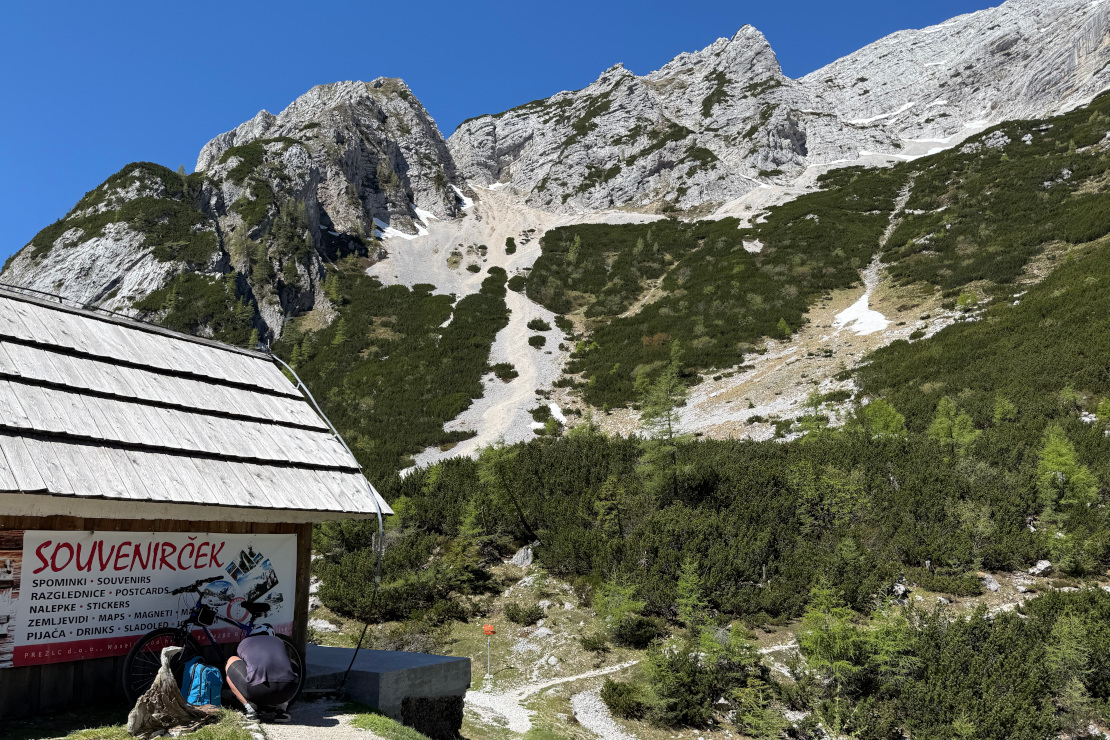
Along the road, there are also several mountain huts where you can stop, including Miha’s Hut, Koča na Gozdu, and Erjavčeva Hut. At the top of the pass is also the Poštarski dom (Postman’s Hut). The summit area of the pass is about 800 metres long.
The road down
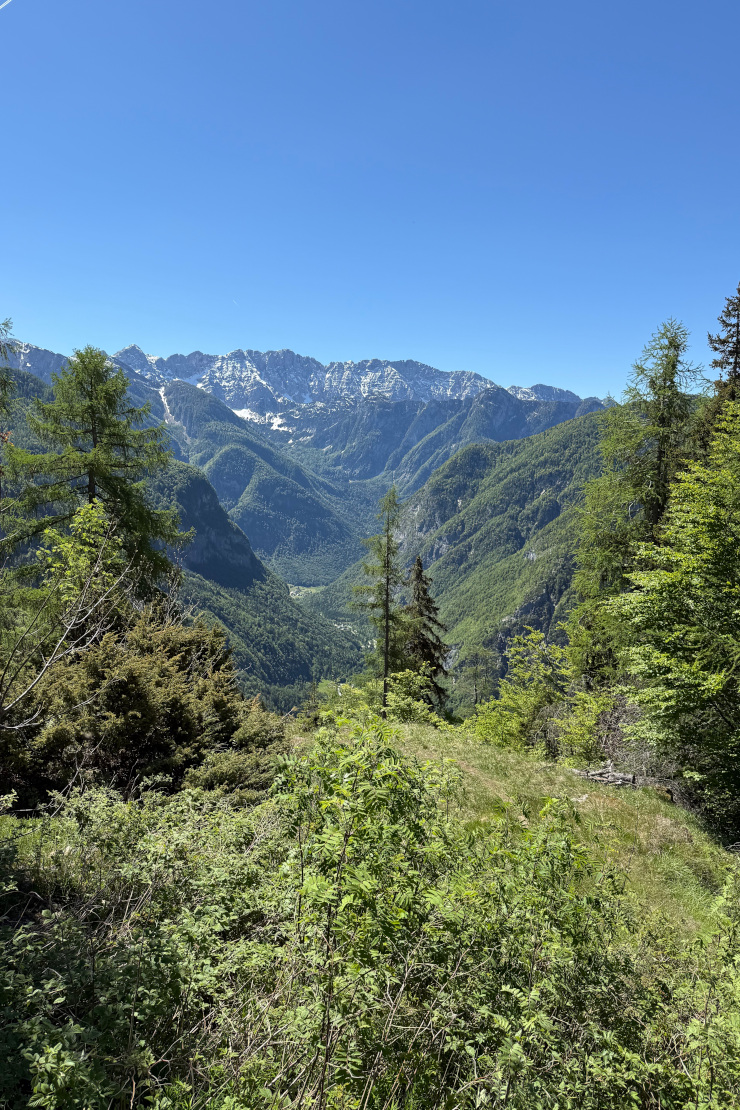
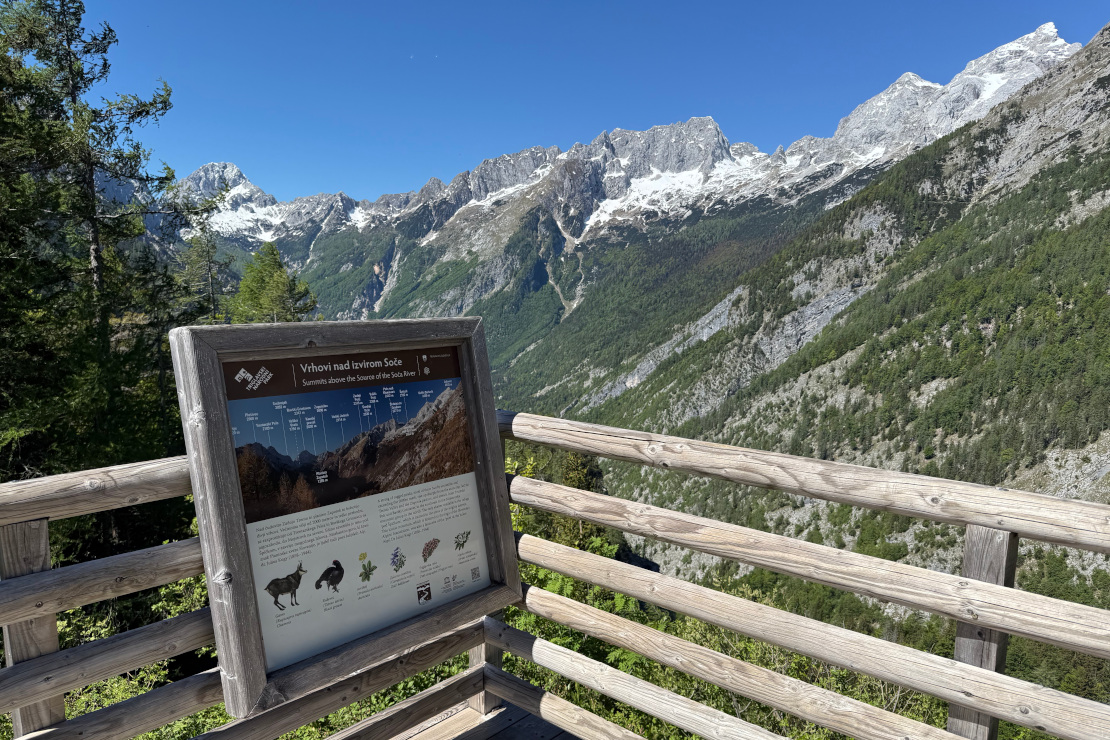
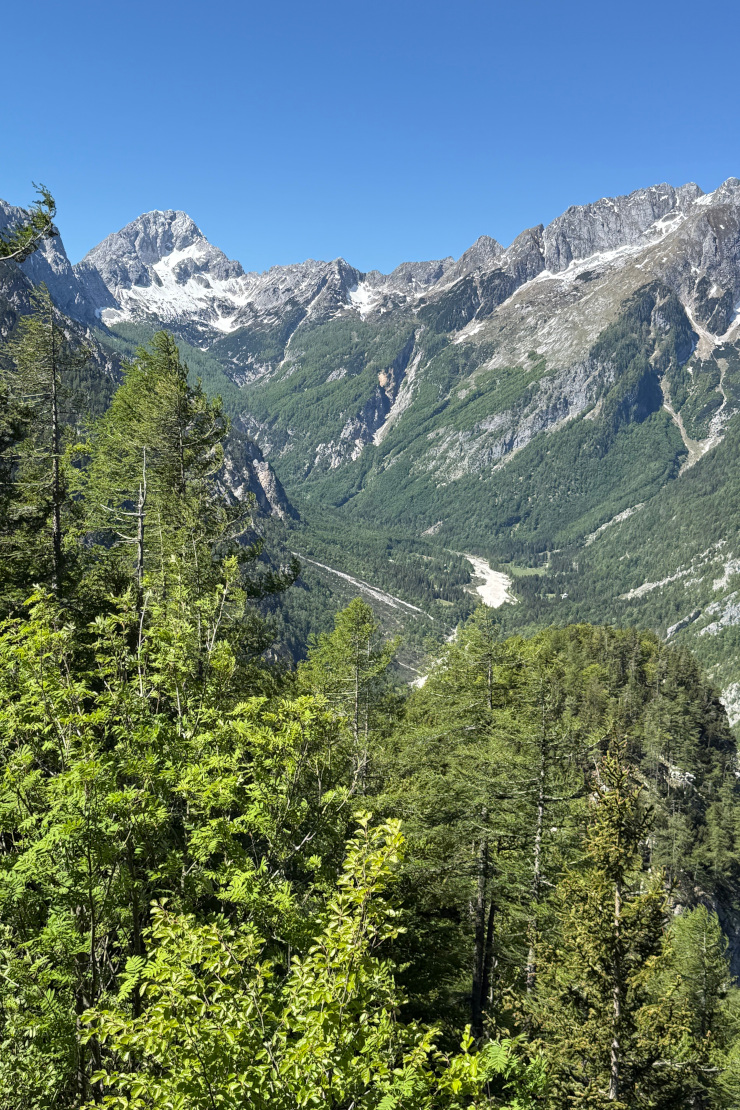
The road down into the Trenta Valley features 26 hairpin bends. This section is more secluded, with fewer places to stop along the way. One viewpoint that is definitely worth a stop is the Supca lookout point. From here, you get a fantastic view down into the Zadnja Trenta Valley and the surrounding peaks, including Jalovec (2,645 m), Bavški Grintavec (2,558 m), and others.
Getting to Vršič Pass
From Ljubljana, it is about 85 kilometres to Kranjska Gora, where the road up to Vršič Pass begins on the northern side. The drive takes around 1 hour and 20 minutes, partly due to roadworks. If you are coming from the south, you must first travel through the entire Soča Valley to the town of Bovec, and then continue through the Trenta Valley. This is a considerably longer journey.
If you are reading this in our app, you can select Show on map from the upper-right menu to get directions from your current location.
More to See and Do
- Russian chapel - The Russian Chapel featured in this blog post, built in 1915.
- Mihas Hut - A cosy hut located along the road between Kranjska Gora and Vršič Pass. It is a great place to stop for a cup of coffee and enjoy the views of the mountains across the Krnica Valley.
- Lake Jasna - Lake Jasna is located just after Kranjska Gora on the way up to Vršič Pass. Stop to admire the view or enjoy a coffee or lunch at one of the restaurants. You can read more about Lake Jasna in our dedicated blog post.
- Kekčeva Homestead - In the Zadnja Trenta Valley, this homestead is set in an incredibly beautiful location. Stop for a coffee or lunch and enjoy the view.
Things to Do
The area around Vršič Pass offers many other places worth visiting. Below are a few of the most interesting spots.
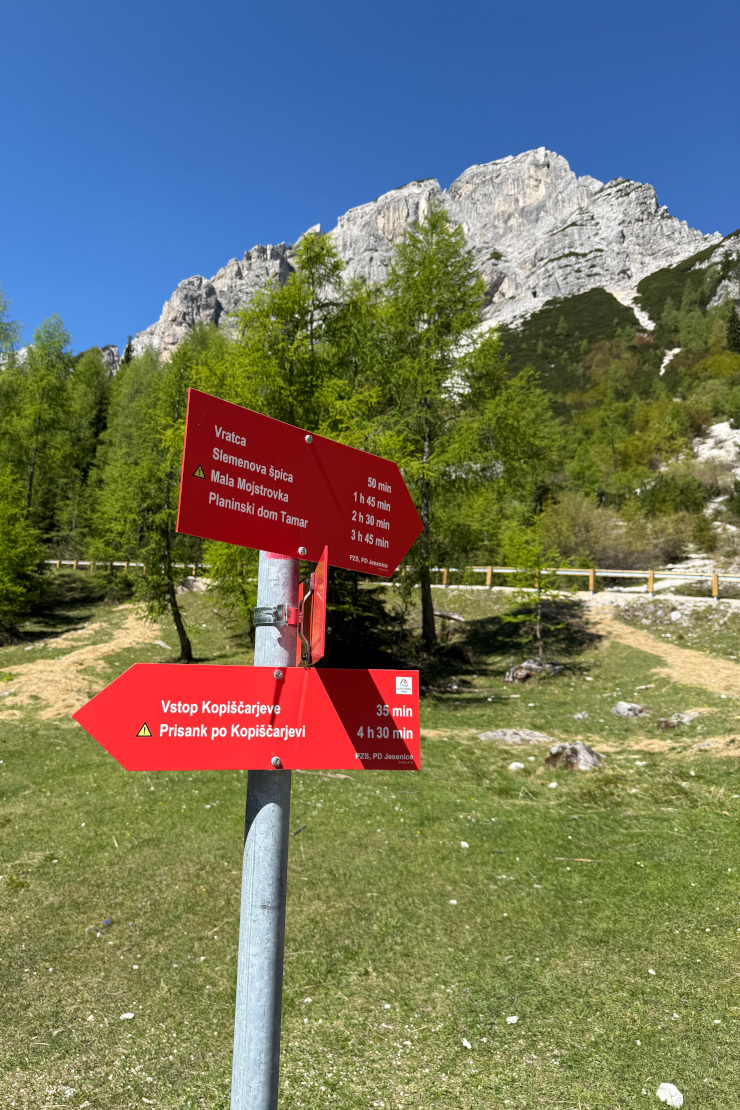
- Hiking - From the Vršič Pass and its surroundings, there are many hikes and trails to choose from. Several peaks rise around the pass, including Mojstrovka (2,332 m), Prisojnik (2,547 m), and Razor (2,601 m). We describe these peaks in our blog post about the Julian Alps.
- Bicycling - A very popular activity is cycling up to the Vršič Pass from Kranjska Gora. I have cycled this route twice myself: once when I was young, and again a few years ago when my ego wanted to see if I could still manage it. Bikes can be rented at several sports shops in Kranjska Gora.
Places to Stay
There are many places to stay around Vršič Pass, ranging from small cottages and alpine huts to luxury hotels, something for everyone. Below is a selection.
- Milka Boutique Hotel - Milka is both a high-end restaurant and hotel next to lake Jasna below the Vršič pass.
- Erjavčeva Hut - Located just below the Vršič Pass on the Kranjska Gora side, the hut offers fantastic views of the valley below and the surrounding mountains, including Prisojnik, Škrlatica, and Dolkova Špica.
- Tičarjev Hut - An alpine hut located on the Vršič Pass.
Where to Eat
Here are some options for dining and drinks near Vršič Pass.
- Milka - A 2 star Michelin restaurant that focuses on modern & classic dishes taking their ingredients from the surrounding alpine environment. You can reserve a table on their website.
- Tičar Hut - Alpine hut located on the Vršič pass. They serve typical Slovenian alpine food.
- Erjavčeva Hut - This hut also serves traditional Slovenian alpine food. Have a look at their webiste for information about their menu.
- Kekčeva Homestead - Try typical Trenta valley authentic food. Email kekec.trenta@gmail.com or call +386(0) 41 413 087 to reserve a table.


