
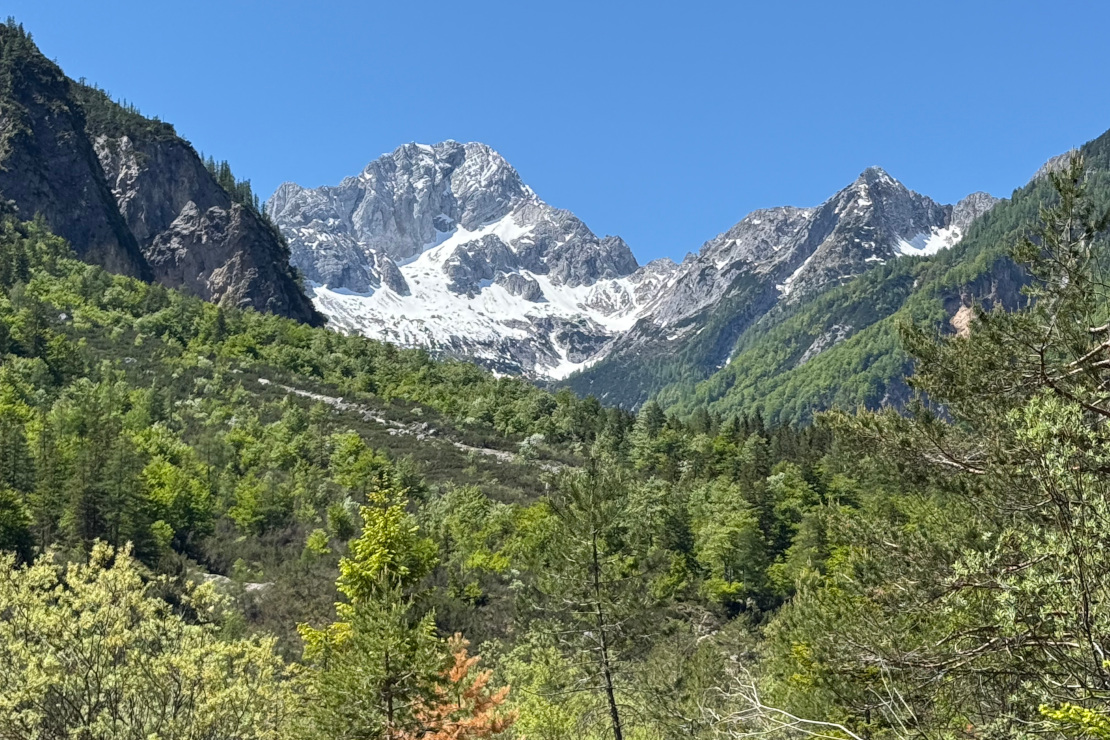
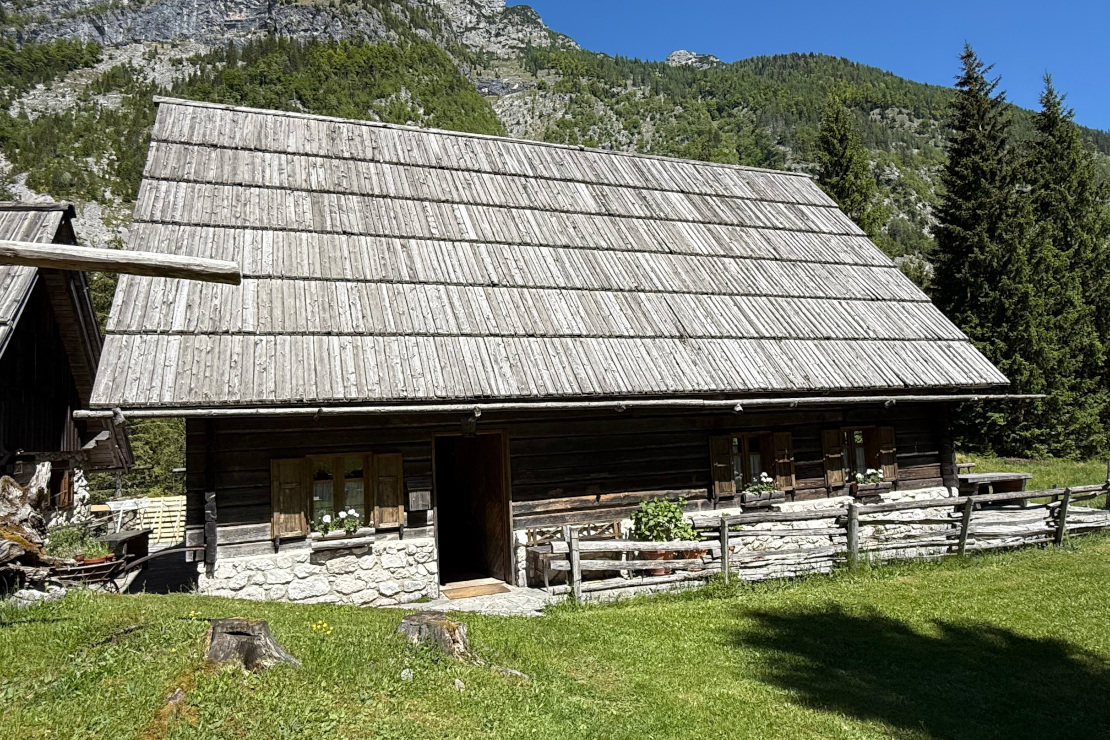
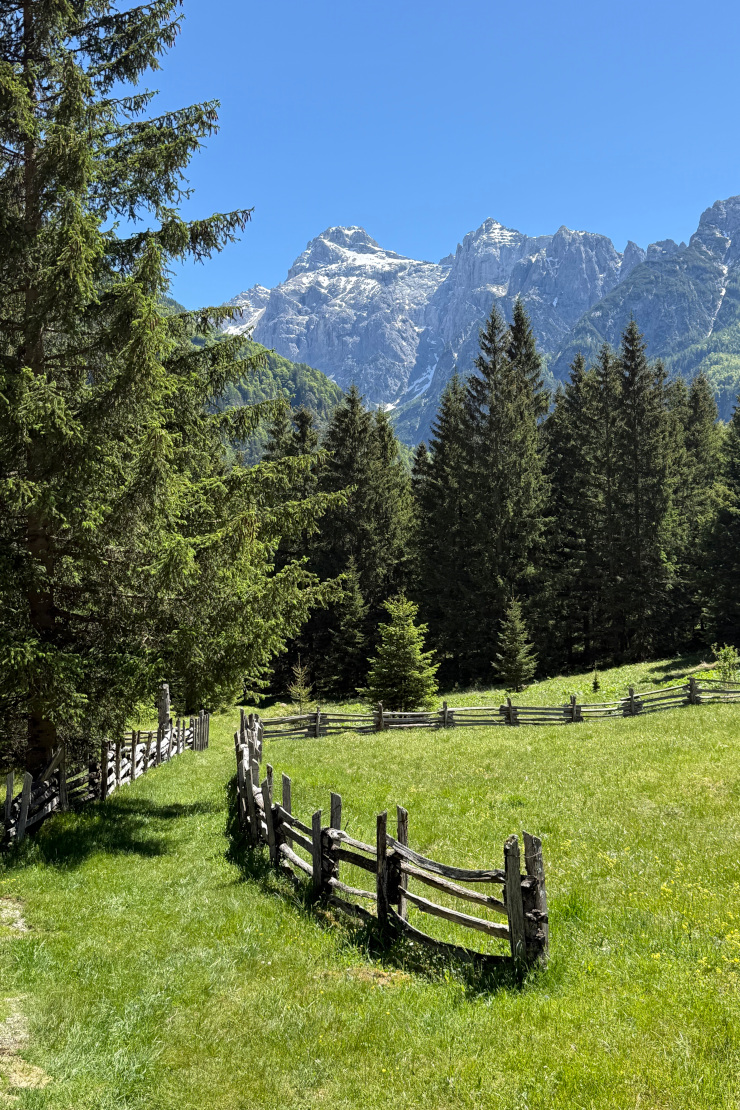
Zadnja Trenta is the highest and most remote part of the Trenta Valley. In our opinion, it is also the valley’s most beautiful part, where towering peaks meet crystal-clear streams, riverbeds, rich flora and fauna in a spectacular landscape. Although more and more visitors are discovering this hidden corner of Slovenia, it still feels as though time has stood still. The traditional houses and architecture have changed little over the centuries. The valley is part of Triglav National Park and is therefore a protected area.
You can best read about and plan visits to the places we write about by downloading our app Slovestories app.
How to get to Zadnja Trenta
From Ljubljana, the fastest way to reach Zadnja Trenta is to drive to Kranjska Gora and then cross the Vršič Pass. Descending from the pass on the other side brings you almost directly into Zadnja Trenta. The journey is about 120 kilometers and typically takes around 1 hour and 45 minutes.
Keep in mind that the Vršič Pass may be closed depending on the season and weather conditions. If that’s the case, an alternative route is to drive through Tarvisio in Italy and then re-enter Slovenia via the Predel Pass.
If you are coming from southern Slovenia, the fastest route to Zadnja Trenta is through the Vipava Valley and the Soča Valley, continuing up to Bovec before entering the Trenta Valley.
If you are reading this in our app, you can select Show on map in the top right menu to see how to get to Zadnja Trenta by car from your current location.
You can drive to the Soča River Source Hut, where there is a car park. If you are prepared to drive on a rough road, you can continue a few kilometres further to Kekčeva Homestead. To explore the valley beyond that point, you will need to continue on foot.
Zadnja Trenta
The name Trenta is derived from Friulian and was later adopted into Slovene as a loanword. Friulian is a minority language spoken in the Friuli region of northeastern Italy, just across the border. The name is believed to have evolved from Tridenta, meaning “three-toothed”, a reference to the valley’s geography, where it branches into three smaller valleys.
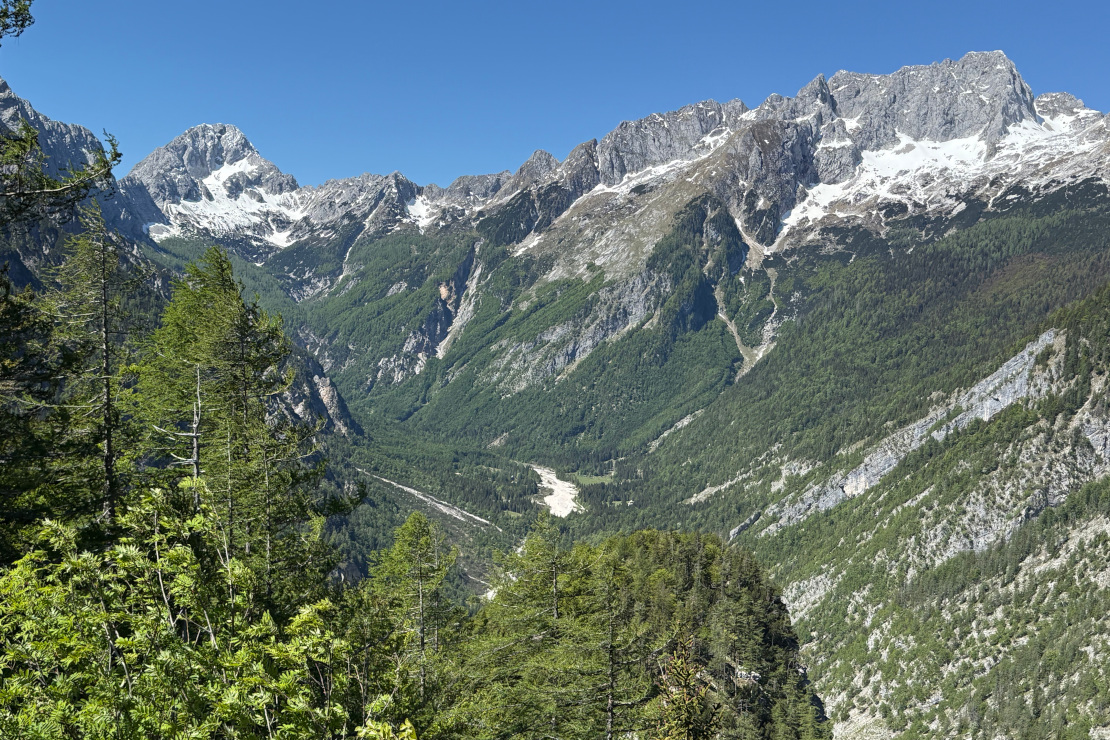
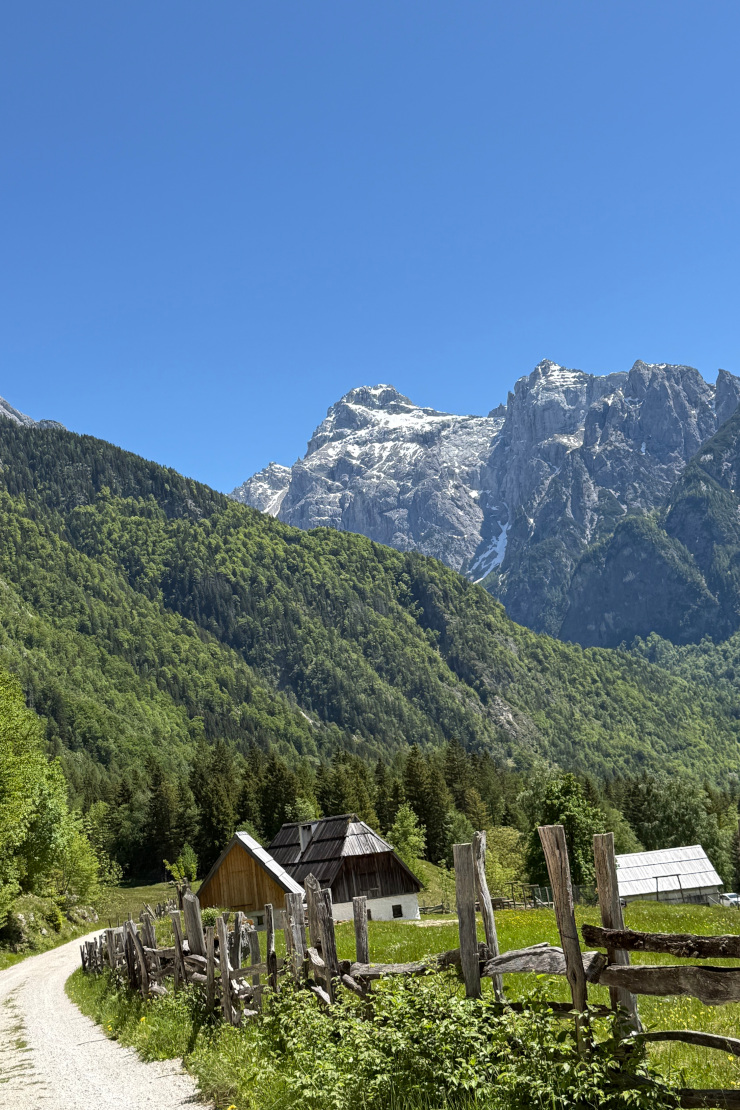
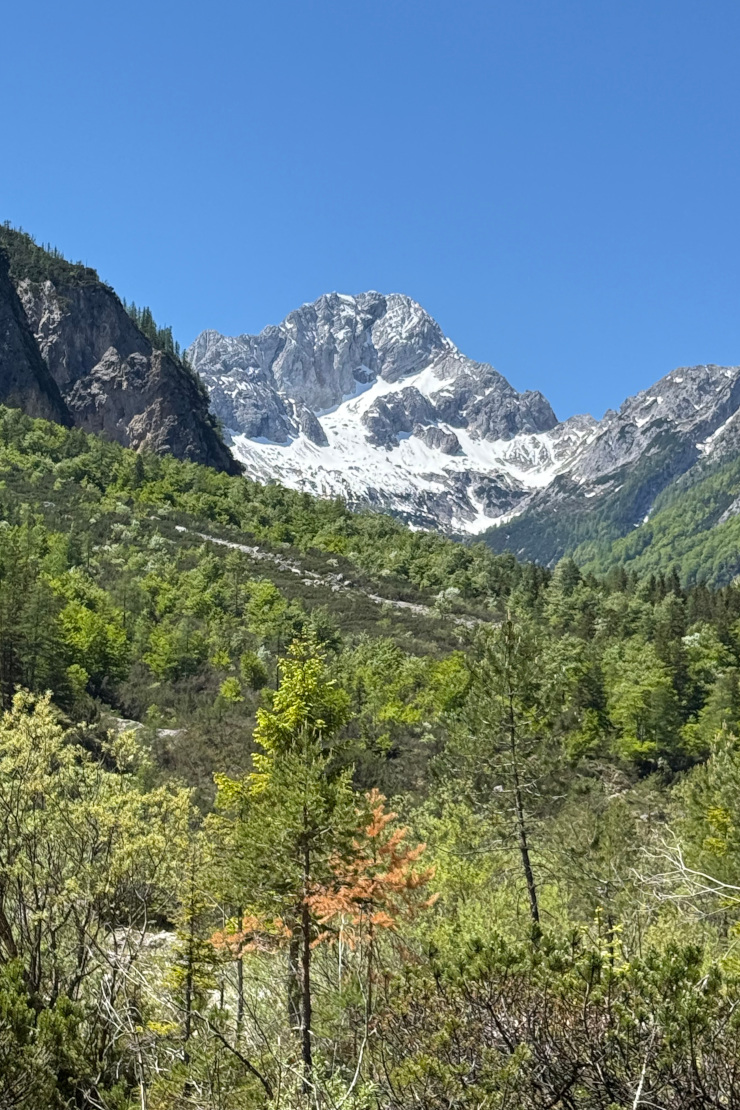
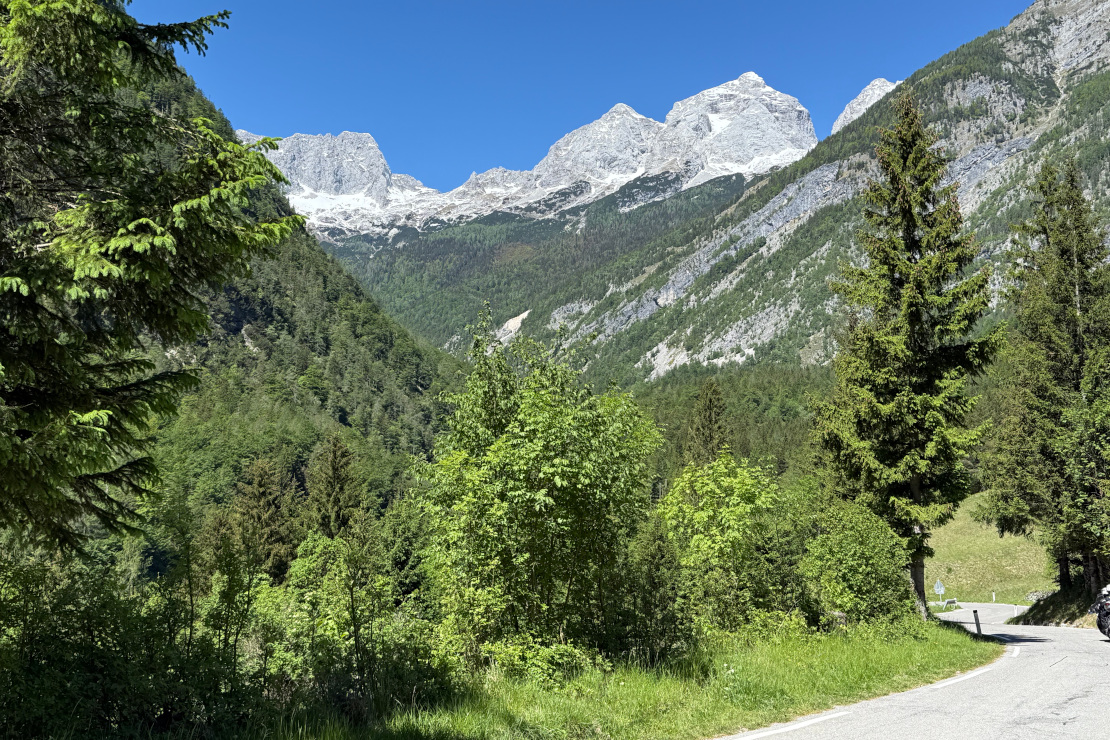
Zadnja Trenta is the uppermost part of the Trenta Valley and is both its most beautiful and most secluded section. It is the last inhabited part of the valley, where a small community still lives a simple, traditional way of life. In the past, the local population made their living through forestry, livestock farming, and mining.
We have previously written about the all of the Trenta valley. You can find our blog post here.
Surrounding peaks
Zadnja Trenta is surrounded by several high peaks of the Julian Alps.
- Jalovec (2,645 m) - Often referred to as the King of the Julian Alps because of its striking pyramid shaped northern face, Jalovec has a very different appearance when viewed from Zadnja Trenta.
- Bavški Grintavec (2,347 m) - Located at the southern end of the valley, this prominent peak is visible from almost everywhere in Zadnja Trenta.
- Trentski Pelc (2,116 m) - Rising on the southeastern side of the valley, Trentski Pelc offers fantastic views over the entire Trenta Valley, including Zadnja Trenta. From the summit, you can also enjoy spectacular panoramas of many of the Julian Alps’ highest peaks.
The peaks of Prisojnik and Razor are also clearly visible from the valley.
Julius Kugy
It is impossible to write about Zadnja Trenta without mentioning Julius Kugy. He was born in 1858 in the city of Gorizia. Kugy was a Slovene writer, mountaineer, and humanist who advocated peaceful coexistence between the Slovenes, Italians, and Austrians living in the region during the Austro-Hungarian Monarchy.
Julius Kugy was a great explorer of the Julian Alps and was the first to climb many of its peaks. He is considered one of the fathers of modern mountaineering in the Julian Alps.
Despite his Slovene background, he did not speak Slovene. He knew German, Italian, and Friulian, and all his books were written in German. He embodies the cultural diversity and mixture of peoples that have shaped this part of the world. Born in Gorizia as a Slovene, he lived in Trieste, explored the Julian Alps, and served on the Austro-Hungarian side during the First World War.
His statue stands on the way down from Vršič Pass, just before reaching Zadnja Trenta.
Kekčeva Homestead
Since Zadnja Trenta is part of Triglav National Park, it is a protected area. As a result, there are practically no restaurants or hotels in the valley. The exception is Kekčeva Homestead, a converted traditional farm where you can experience the authentic surroundings and enjoy typical dishes from the valley. Overnight stays are also available.
Kekčeva Homestead is named after Kekec, a beloved Slovenian children’s character who is portrayed as a clever young shepherd.
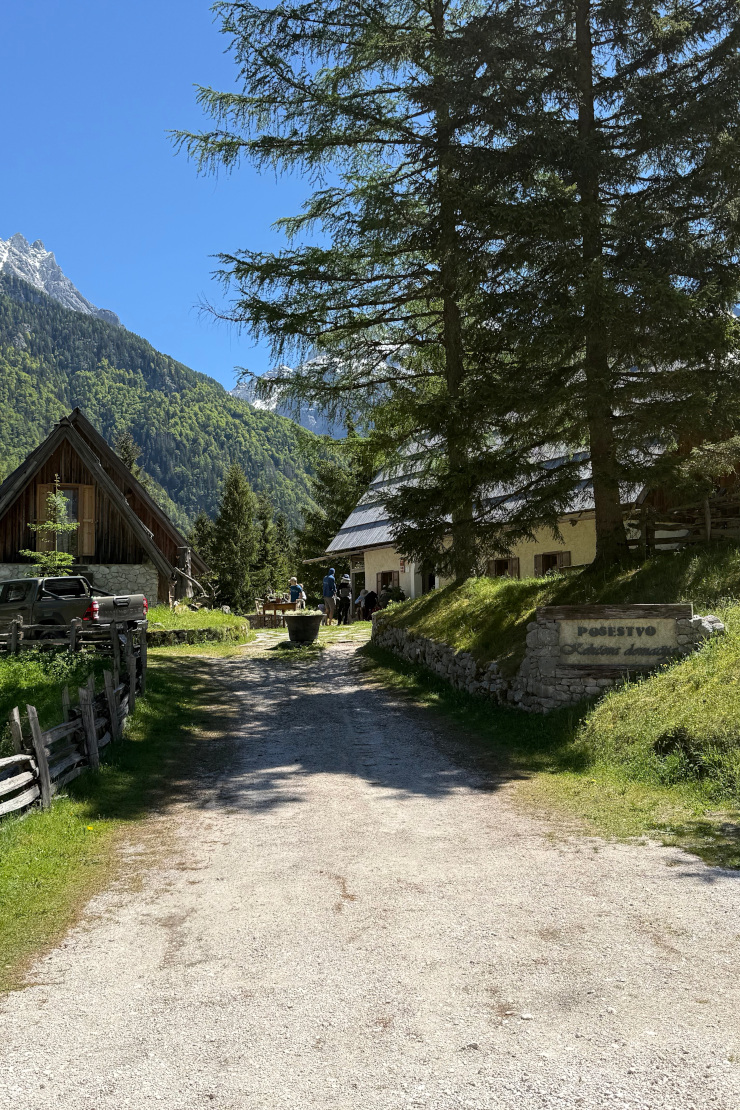
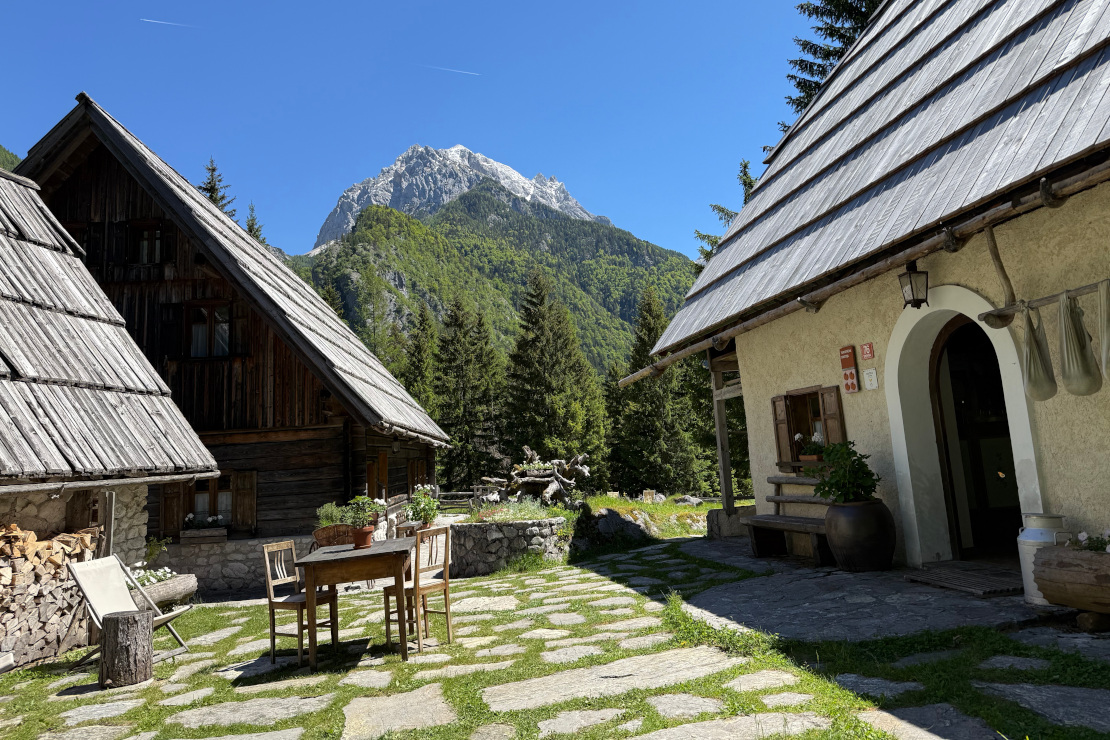
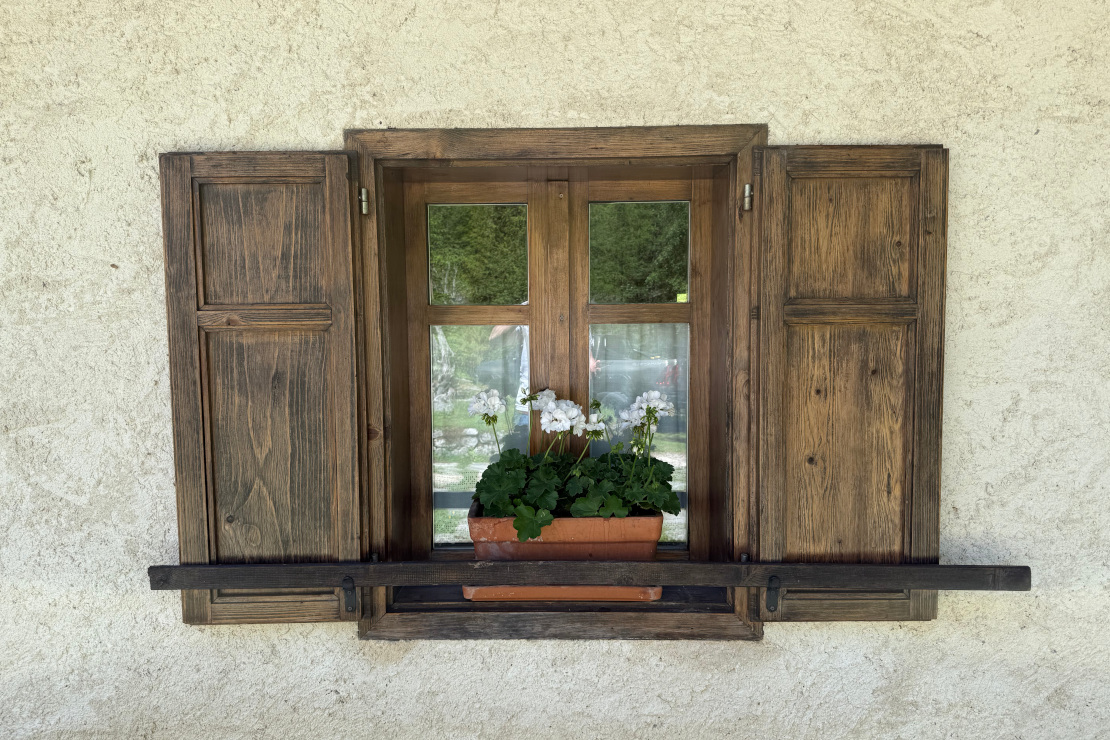
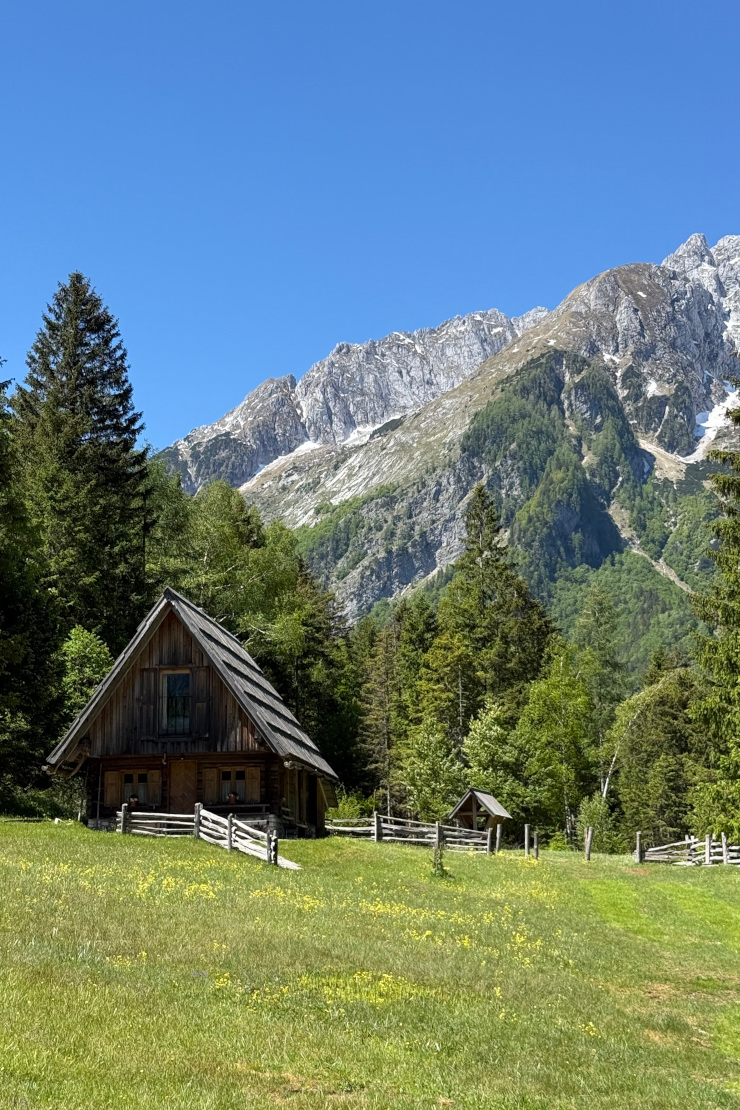
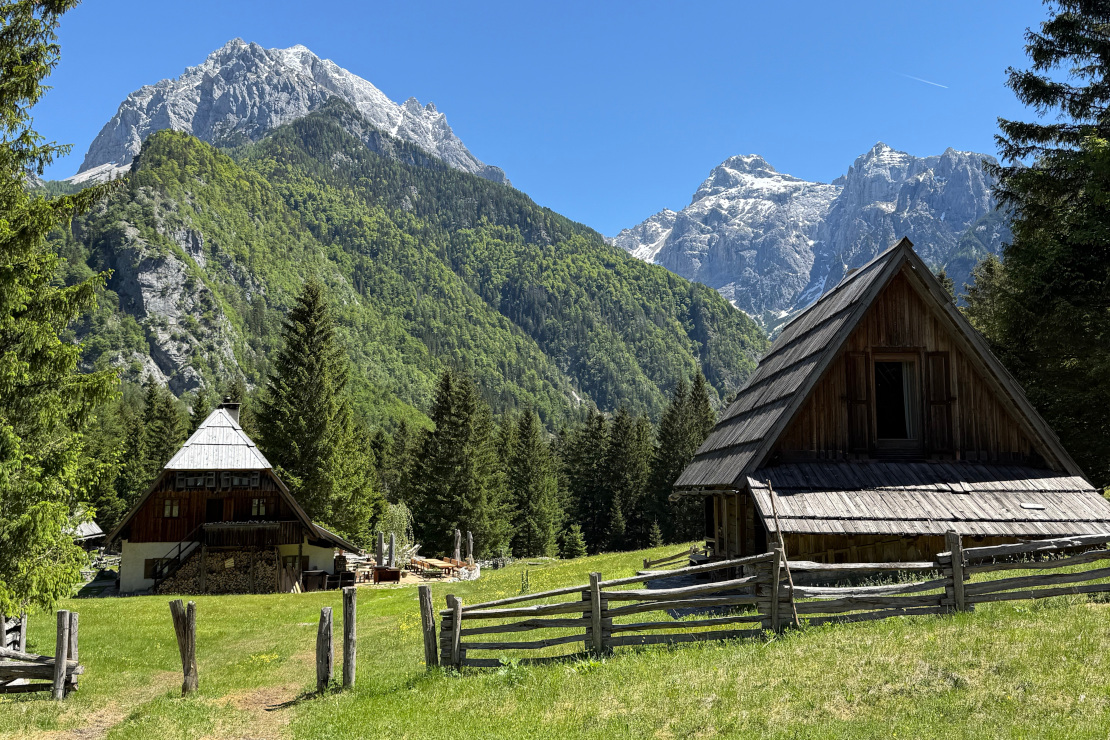
Kekčeva homestead is built in a style typical of the Trenta Valley. It is built with steeply pitched wooden roofs, covered with split larch or pine shingles.
You can read more about Kekčeva Homestead - on their homepage. You can email kekec.trenta@gmail.com or call +386(0) 41 413 087 to reserve a table.
Things to Do
- Soča river source - The source of the Soča River is located at the entrance to Zadnja Trenta. You can read more about the source in our dedicated blog post, which you can find here.
- Hiking - The Trenta Valley is located within Triglav National Park, making it a central starting point for hikes into the Julian Alps and its peaks.
Places to Stay
- Soča river source hut - Stay right next to the Soča River source in the Trenta Valley.
- Pristava Lepena - Stay surrounded by the beautiful nature of the Trenta Valley, just next to the beautiful gorges of the Soča River.
- Dobra Vila - A small, high-end boutique hotel located in the town of Bovec, in the neighboring Soča Valley.
- Villas and apartments - Villas, homesteads and apartments for rent in the Trenta valley.
Where to Eat
- Kekčeva Homestead - Enjoy authentic Trenta Valley cuisine in a traditional setting. To reserve a table, email kekec.trenta@gmail.com or call +386(0) 41 413 087.
- Pristava Lepena - Taste local dishes typical of the Soča and Trenta Valleys. To reserve a table, email info@pristavalepena.com or call +386(0) 41 671 981.


